Beyond the Thesis With Papa PhD
Real PhDs. Real Journeys. Beyond Academia.
Listen on:








Episodes
Thursday Sep 22, 2022
Thursday Sep 22, 2022
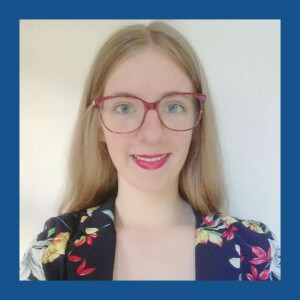
Cette semaine sur Papa PhD, on parle de cette aventure qu'est de quitter son pays pour son doctorat. Avec mon invitée, Charlotte Hendryckx, on explore les choses à faire et à ne pas faire pour en faire une expérience positive et dans laquelle vous pourrez vous épanouir en tant que personne et en tant que jeune chercheuse ou chercheur.
VIDÉO
https://youtu.be/A7Zk8_bCWO0Neuropsychologue belge formée à l’Université Libre de Bruxelles, Charlotte Hendryckx réalise depuis septembre 2019 un doctorat Recherche et Intervention en neuropsychologie clinique à l’Université de Montréal (Québec, Canada) sous la supervision conjointe de Pr Carolina Bottari au CRIR et Pr Nadia Gosselin au CEAMS.En Belgique, Charlotte développé une expérience clinique d’évaluation et de rééducation dans son travail dans les services de neurologie destinés aux adultes au Centre Neurologique William Lennox ainsi qu’à la clinique du Bois de la Pierre. Elle a travaillé avec des populations présentant des affections neurologiques diverses, dont les traumatismes crâniocérébraux (TCC).Actuellement, Charlotte réalise sa thèse sur les comportements problématiques, comme l’agressivité physique ou verbale ou encore l’impulsivité, chez des adultes ayant subi un TCC et vivant dans la communauté. Plus précisément, elle s’intéresse aux stratégies quotidiennes qu’ils mettent en place, eux et leurs proches aidants familiaux, pour faire face et gérer leurs comportements problématiques afin de réduire les impacts associés.Charlotte accorde aussi une grande importance au transfert de connaissances et à la vulgarisation scientifique, dans son projet de thèse et sur le traumatisme crânien en général. Elle donne ainsi des conférences cliniques et je diffuse mes résultats au domaine scientifique, afin de sensibiliser le plus large public possible.
Les ressources de cet épisode :
Charlotte Hendryckx | LinkedIn
Merci Charlotte !
Si cet entretien avec Charlotte Hendryckx t'a plu, fais-nous en part en cliquant sur les liens ci-dessous et en nous laissant un message :Clique ici pour remercier Charlotte Hendryckx sur Twitter !Clique ici pour partager avec David le principal message que tu retiens de cet épisode !Si tu trouves de la valeur dans le contenu que je t'apporte chaque semaine, clique sur l'un des boutons ci-dessous et renvoie-moi l'ascenceur :)
Don sécuritaire sur PayPal
Deviens supporter sur Patreon !
Ou paye-moi un café :)
Tu aimeras aussi ces épisodes :
Myriam Beaudry - L'importance de rencontrer d'autres chercheur.e.s pendant ton doctorat : PapaPhD.com/183Émilie Deschênes – Le doctorat, nous prépare-t-il à enseigner ? : PapaPhD.com/191Jean-Patrick Toussaint – Mieux préparer les doctorants à l'emploi : PapaPhD.com/155Catherine Cimon-Paquet – L'importance de vulgariser : PapaPhD.com/177
Thursday Sep 15, 2022
Thursday Sep 15, 2022
VIDEO
Welcome to another collab episode of the PhD Dojo with The 2nd Lab.https://www.youtube.com/watch?v=CD2dmV8D9jwThis week on the PhD Dojo, Gad Sabbatier and I answer a question from 2nd Lab mentee Romane Oliverio who asks: "What are the accessible careers outside R&D?".Thank you, Romane, for a great question that allowed Gad and I to dive deep into the great variety of positions open to PhDs in the job market, from medical writing, to patent officer, to business-related careers.What about you? What did you do after you PhD?Call for creators !I'm looking for sidekicks to be part of the Papa PhD team! If you're interested in podcasting and social media, and want to help me with the production of Papa PhD or the PhD Dojo in any way, email me at david@papaphd.com and let's talk!Happy listening! And happy sharing!
This episode’s resources:
The 2nd Lab | TwitterThe 2nd Lab | LinkedInThe 2nd Lab | WebsiteIf you find value in Papa PhD and in the content I bring you every week, click on one of the buttons below and send some of that value back to me :) Now with the added perk of receiving the brand new Papa PhD and PhD Dojo stickers, if you become a monthly supporter on Patreon or BuyMeACoffee!
Donate safely through PayPal
Support the show on Patreon !
Or buy me a coffee :)
Get the Papa PhD Career Readiness Tool kit !
You might also like the following episodes:
Sara Vero - Being Field-Ready for the Postdoc and Job SearchPhD Dojo – When Should I Pivot to Industry?PhD Dojo – How to Gain Confidence for Job InterviewsPhD Dojo – First Year PhD - Assembling the Expedition Team
Thursday Sep 08, 2022
Thursday Sep 08, 2022
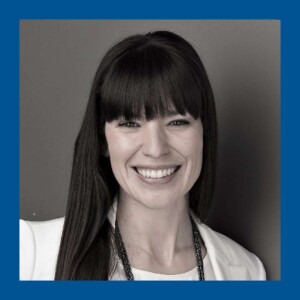
Cette semaine sur Papa PhD, j'ai le plaisir de vous apporter une exploration avec mon invitée - Émilie Deschênes - sur les défis que présente le passage à l'enseignement, après le doctorat. Pendant notre conversation, nous avons aussi abordé des sujets plus larges dans le contexte de la carrière académique et, en particulier, du doctorat.
Un parcours atypique et un regard lucide sur le parcours professoral - merci, Émilie !
VIDÉO
https://www.youtube.com/watch?v=oUPCZBmDJHI?sub_confirmation=1
Émilie Deschênes, professeure à l’université du Québec en Abitibi-Témiscamingue, est titulaire d’un doctorat en éducation et d’une maîtrise en administration des affaires. Elle possède plus d’une quinzaine d’années d’expérience comme enseignante et en gestion de l’éducation, plus spécifiquement dans le domaine de la gestion de l’éducation au sein des communautés des Premières nations et des villages inuits. Avant de commencer ses fonctions comme professeure à l’UQAT, qu’elle occupe depuis le printemps 2020, Émilie a consacré près de deux années à la réalisation d’un postdoctorat en management interculturel portant entre autres sur l’insertion socioprofessionnelle des Premières Nations. Aussi, ses deux champs de spécialisation portent sur la gestion de l’éducation en contexte autochtone et l’éducation et la formation à tous les ordres d’enseignement des apprenants des Premières Nations et Inuit et à la suite, sur l’insertion en emploi de ces mêmes personnes.
Présentement, ses recherches concernent principalement la décolonisation (notamment des institutions scolaires québécoises), la valorisation et l’inclusion des perspectives des Premières Nations et Inuit en enseignement et la persévérance des apprenants des Premières Nations et Inuit, notamment en lien avec les transitions qu’ils vivent entre leurs communautés et les milieux urbains où ils doivent déménager pour étudier et celles vers leur milieu professionnel, pour l’emploi.
Les ressources de cet épisode :
Émilie Deschênes | LinkedIn
Merci Émilie !
Si cet entretien avec Émilie Deschênes t'a plu, fais-nous en part en cliquant sur les liens ci-dessous et en nous laissant un message :
Clique ici pour remercier Émilie Deschênes sur LinkedIn !
Clique ici pour partager avec David le principal message que tu retiens de cet épisode !
Si tu trouves de la valeur dans le contenu que je t'apporte chaque semaine, clique sur l'un des boutons ci-dessous et renvoie-moi l'ascenceur :)
Don sécuritaire sur PayPal
Deviens supporter sur Patreon !
Ou paye-moi un café :)
Tu aimeras aussi ces épisodes :
Myriam Beaudry - L'importance de rencontrer d'autres chercheur.e.s pendant ton doctorat : PapaPhD.com/183
Anne-Claire Huard – Comment tisser des liens professionnels : PapaPhD.com/181
Jean-Patrick Toussaint – Mieux préparer les doctorants à l'emploi : PapaPhD.com/155
Catherine Cimon-Paquet – L'importance de vulgariser : PapaPhD.com/175
Thursday Sep 01, 2022
Thursday Sep 01, 2022
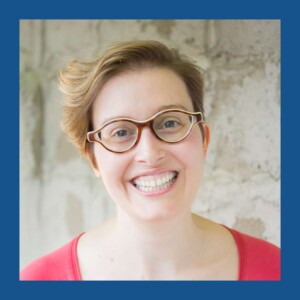
Welcome to Season 4 of Papa PhD!To kick of this new season, I have the great pleasure of bringing you my recent conversation with someone I've been looking up to since before the launch of the podcast, someone who has been hard at work to help PhDs figure out their careers for a long time - Jen Polk or From PhD to Life!Join us on this conversation about a question many of you may have asked yourselves already: is leaving academia tantamount to being a sellout?
VIDEO
https://youtu.be/uFs7_zRHRIsJennifer Polk, PhD, is a career coach and educator. In addition to her work with individuals, she regularly facilitates professional development workshops and delivers presentations for graduate students and postdocs. Jen currently serves on the board of directors for CAGS, the Canadian Association for Graduate Studies. She earned her PhD in history from the University of Toronto. Visit her website, FromPhDtoLife.com, to read her writing and learn more about her other services and activities.
Thank you, Jen Polk!
If you enjoyed this conversation with Jen, let her know by clicking the link below and leaving her a message on Twitter:Send Jen Polk a thank you message!Click here to share your key take-away from this interview with David!
This episode’s resources:
Jen Polk | LinkedInFrom PhD to Life | TwitterFrom PhD to Life | FacebookFrom PhD to Life | WebsiteIf you find value in Papa PhD and in the content I bring you every week, click on one of the buttons below and send some of that value back to me :) Now with the added perk of receiving the brand new Papa PhD and PhD Dojo stickers, if you become a monthly supporter on Patreon or BuyMeACoffee!
Donate safely through PayPal
Support the show on Patreon !
Or buy me a coffee :)
Get the Papa PhD Career Readiness Tool kit !
You might also like the following episodes:
Sarah Habibi - Becoming a Full-Time Science CommunicatorFederica Bressan – Do researchers have time for scicomm?Chris Emdin – Reimagining a More Inclusive STEMPhD Dojo – First Year PhD - Assembling the Expedition Team
Thursday Aug 25, 2022
Thursday Aug 25, 2022
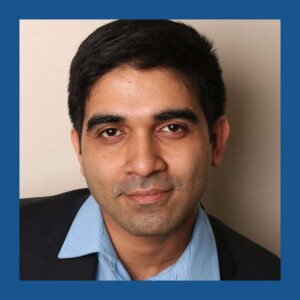
This week on Papa PhD, I'm bringing you another great conversation from Season 2 of the show.This interview was recorded during Thanksgiving, so you might hear some background noise throughout. But please bear with us, because the advice Parag shares is pure gold. For example, we talked about Parag's experience interviewing for jobs – early after his PhD, but also in his most recent career moves.
What you’ll learn about in this episode:
Not everyone that enrolls into a PhD is bound to do researchNot all temperaments thrive in the academic research timeframe, in terms of results and their impact on society at largeThe positive impact being part of clubs and taking extracurricular courses can have on your mental healthParag's way of making time for extra-curricular projectsThe advantages and disadvantages of choosing a well established, tenured professor, versus a young professor vying for tenure as a PhD supervisorParag's experience of the consulting pathThe advanteges of doing informational interviews when you don't need a jobRejections are not about your abilities, they are about a mutual fit that didn't happen + you should always ask for feedback after your application was rejectedWhy advice from a community is much more valuable than the advice you get from a single personThe job hunt is a process - you get better at it as you go
Parag Mahanti received his Ph.D. in Chemistry and Chemical Biology in 2013 from Cornell University where his research was focused on nuclear hormone receptors, steroid signaling, and metabolomics. Since then he has moved careers thrice first to consulting then to finance, and currently in pharma.Outside of life sciences and biopharma strategy, Parag’s passions include music, both playing and listening, biotech startups and understanding the evolution of scientific reasoning and leadership skills. Parag takes an active interest in career progression of PhD students and has created a fast growing LinkedIn Group that currently has ~7500+ members. Parag also serves as a mentor for the Entrepreneurship Lab (ELabNYC) originally launched by the New York City Economic Development Corporation to provide mentorship to biotech/health-tech start-ups in the New York area.
Thank you, Parag Mahanti!
If you enjoyed this interview with Parag, let him know by clicking the link below and leaving him a message on Twitter:Click here to thank Parag Mahanti on Twitter!Click here to share your key take-away from this interview with David!
Parag's pearls of wisdom:
“Parag – Once I came here and I enrolled into a PhD programme, I was like, "Oh! This is awesome! This is Super cool, smart thinking stuff and I can thrive in this." And I started doing that for first year and second year, and then by third year, I was like, "No way...". Like, I like the smart thinking part of it, I like the science, but I don't want to do this for the rest of my life. And I think the main reason was, I love the science. In fact, I've stayed very close to the science most of my career, but it was the impact of it, right? Like, for some reason, I always thought the stuff that I was doing, you would see maybe a return or a clinical development of it in, like, 10, 15, 20 years. So there's no immediate translation of this work. David – "Talk about delayed gratification, there, right?" Parag – Exactly!”“Parag – The same guy had told me that any job, if you don't like the interview process, chances are you won't like the job. And this is something that I continue to feel through all the career progressions that I've made, that if you don't really enjoy the process and the people you're meeting, then you're not going to like the people that you're going to work with. David – "Because they represent the culture of..." Parag – Of the industry and of the company.”
This episode’s resources:
Parag Mahanti | LinkedInParag Mahanti | TwitterThe Grad Grid | WebsiteThe Grad Grid en Français | ...
Thursday Aug 18, 2022
Thursday Aug 18, 2022
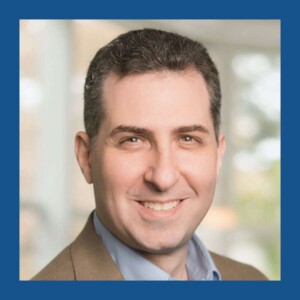
This week on Papa PhD, I'm bringing you a great conversation from Season 2 of the show.In it, Mark Herschberg shares an incredible amount of insights and advice on how to take control of your career as a PhD, be it in academia our outside of it, so be sure to have pen and paper before hitting play!
What you’ll learn about in this episode:
Mark's academic journeyThe motivation behind his book - The Career ToolkitWhy time spent developing career skills is well investedYou shouldn't take your career decisions in a vacuum - start talking to people about their careers nowHow to network as an introvertThe cultural differences between academia and industryWhy you should negotiate compensation, not only salaryHow building and updating a career plan can help youHow to find your place in an organization where you're the first PhDThe importance of building your personal brand in today's market
Mark Herschberg is the author of The Career Toolkit, Essential Skills for Success That No One Taught You. From tracking criminals and terrorists on the dark web to creating marketplaces and new authentication systems, Mark has spent his career launching and developing new ventures at startups and Fortune 500s and in academia. He helped to start the Undergraduate Practice Opportunities Program, dubbed MIT’s “career success accelerator,” where he teaches annually. At MIT, he received a B.S. in physics, a B.S. in electrical engineering & computer science, and a M.Eng. in electrical engineering & computer science, focusing on cryptography. At Harvard Business School, Mark helped create a platform used to teach finance at prominent business schools. He also works with many non-profits, including Techie Youth and Plant A Million Corals. He was one of the top-ranked ballroom dancers in the country and now lives in New York City.You can learn where to purchase "The Career Toolkit: Essential Skills for Success That No One Taught You" at:www.TheCareerToolkitBook.com
Thank you, Mark Herschberg!
If you enjoyed this interview with Mark, let him know by clicking the link below and leaving him a message on Twitter:Click here to thank Mark Herschberg on Twitter!Click here to share your key take-away from this interview with David!
Support the show on Patreon !
Or buy me a coffee :)
Get the Papa PhD Career Search Tool kit !
Mark's pearls of wisdom:
“Negotiations are a skill that you should learn. So imagine the following scenario: You get a job outside of academia, you take your first industry job. Maybe you're 30 years old. Let's say they offer you 80,000 dollars and you negotiate to 81,000. Not a massive lift, right? We can all imagine doing that. If you do nothing else, you just sit in that job the rest of your career, you spend another 35 years working at this one job – you just made 35,000 dollars. One negotiation, tiny lift – 35,000 dollars. Now, imagine that you don't just sit in one job, right? You, of course, takes other jobs. You get promotions, you negotiate those. Again, you negotiate for maybe just a few thousand more. These aren't heavy lifts, you're not some world class negotiator – you're just doing a little better. You can literally add tens of thousands, even hundreds of thousands of dollars to your lifetime income.”“I am naturally an introvert. Here's the thing – you think about that stereotype of a networker who does go to the conference and schmoozes everyone and gives out cards. Yeah, that's not networking. It's one way to do it, but that's not the only way. If you've ever had a friend, you know how to network. It is just building a relationship. Now, it doesn't mean everyone in your network is your personal fiend, right? There's some people who are my friends and they're in my network, there's some people we're just business contacts. We don't hang out on weekends, but we can call each other, reach out, and we have a relationship.
Thursday Aug 11, 2022
Thursday Aug 11, 2022
Cette semaine, je t'apporte en rediffusion une conversation où, avec Émilie Doré de Réussir son doctorat, on fait une radiographie des défis actuels de l'expérience de la thèse en sciences humaines et sociales (SHS) et où on discute des pistes à suivre pour offrir aux doctorant.e.s une expérience formatrice et davantage épanouissante.
Ce que tu apprendras dans cet épisode :
La réalité des thèses sans financement en SHS
Ce qui a mené Émilie à ne pas reconduire son contrat de postdoctorat
L'état de la santé mentale des doctorant.e.s aujourd'hui
Pourquoi le modèle des sciences exactes ou naturelles ne foncionne pas pour un doctorat en SHS
L'importance de trouver des espaces bienveillants pour échanger avec des pairs à propos de notre expérience du doctorat
L'importance d'échanger le perfectionnisme et des échéances irréalistse par la confiance et la régularité
Les changements qui se font aujourd'hui dans la formation des encadrants
Pourquoi la thèse en vaut la chandelle
Tu aimes Papa PhD ? Laisse-moi un commentaire ici - une courte phrase suffit ! Et inclus ton identifiant Twitter – comme ça je pourrai te remercier personnellement !
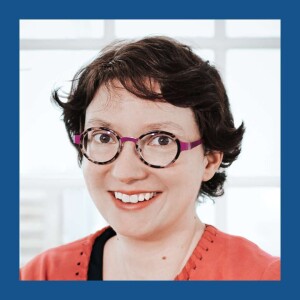
Emilie Doré a soutenu une thèse en sociologie en 2009 à l'Ecole de Hautes Etudes à Paris, puis elle a commencé une carrière de chercheuse par la voie classique : un post-doctorat. Pourtant, en 2012, Emilie décidé de trouver un chemin plus aligné avec sa vision et son rythme de vie ; elle est devenue formatrice indépendante auprès des doctorants. Son rôle ? Leur permettre d'oser exprimer leur créativité et leur singularité dans leur thèse - tout en suivant les règles du jeu académique. Sa mission : que la thèse soit pour les doctorants une expérience de plaisir intellectuel et d'affirmation personnelle !
Merci Emilie !
Si cet entretien avec Emilie Doré t'a plu, fais-lui en part en cliquant sur le lien ci-dessous et en lui laissant un message sur LinkedIn :
Clique ici pour la remercier sur LinkedIn !
Clique ici pour partager avec David le principal message que tu retiens de cet épisode !
Télécharge la "Boîte à outils pour le doctorat" maintenant !
Contribue à la production de Papa PhD sur Patreon !
Ou ravitaille David en café :)
Les perles de sagesse d'Emilie :
« Le plainte qui revient souvent c'est justement cette question du temps, à savoir "je suis trop lent, je suis trop lente – je n'arrive pas à tenir mes échéances." Et ça, c'est surtout quand on s'approche de la fin de la thèse, où la pression monte, bien sûr. Et ce qu'il y a derrière, quand on creuse un peu, c'est que le doctorant peut-être qu'il a une famille, peut-être qu'il doit travailler à côté, dans le cas des doctorantes, il peut y avoir des maternités qui arrivent. En fait, il y a la vie à coté de la thèse et ils aimeraient bien, eux, être dans un monastère, dans une bulle, et faire la thèse et ne faire que ça, s'y consacrer. Et, alors, peut-être qu'ils se disent "dans ces cas-là j'y arriverais." Mais en réalité, ça ne peut pas être comme ça. La thèse, elle se fait au sein de notre vie et elle doit se faire en harmonie avec notre vie. »
« La diversité dans la recherche, elle existe, à la base, fortement. Et puis elle existe pour les maitres de conférences – un peu moins, mais quand même, encore – et pour les professeurs, c'est-à-dire qu'en fait, plus on va monter dans les échelons, plus la diversité se perd. C'est-à-dire que ça infuse lentement, en réalité. »
« En étant plus ouverts, on ne va pas perdre en rigueur intellectuelle. On peut tout à fait avoir une recherche plus ouverte, qui donne plus d'espace à la créativité, à la singularité, à la liberté des doctorants et qui gardera sa qualité. Et, même, qui peut être plus qualitative, parce que ça n'est pas contradictoire avec la rigueur des raisonnements, de l'argumentation que peuvent mettre en place ces doctorants. »
Les ressources de cet épisode :
Emilie Doré | LinkedIn
Emilie Doré | Facebook
Réussir Sa Thèse | Site Web
Thursday Aug 04, 2022
Thursday Aug 04, 2022
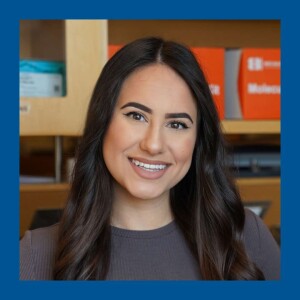
This week one Papa PhD , I'm over the moon happy to have with me Sarah Habibi, aka Science Bae, to talk about her journey into full-time science communication.During our conversation, Sarah shared her academic and scientific journey and we discussed what key choices and strategies allowed for Sarah to build a brand around STEAM education robust enough to draw the attention of major corporate sponsors, while reaching other big milestones in her professional and personal life.Want to be inspired to delve into scicomm? Then this Papa PhD interview is for you!
VIDEO
https://www.youtube.com/watch?v=OfcDIF0SLD4Sarah Habibi is a molecular biologist, educator, and digital content creator and is the founder of the brand Science Bae.Sarah uses the power of social media to promote experimentation in STEAM and enhance student learning, through her popular page Science Bae on Instagram and TikTok and uses her 4+ years of teaching and curriculum development experience, Bachelor of Education Degree, PhD in molecular biology, and Ontario Certified Teacher (OCT) designation to make her teaching educational, accessible, and engaging.
Thank you, Sarah Habibi!
If you enjoyed this conversation with Sarah, let her know by clicking the link below and leaving her a message on Twitter:Send Sarah Habibi a thank you message!Click here to share your key take-away from this interview with David!
This episode’s resources:
Sarah Habibi | Twitter
Sarah Habibi | LinkedIn
Sarah Habibi | Facebook
Get Sarah's free Science Experiment Activity Package | Website
If you find value in Papa PhD and in the content I bring you every week, click on one of the buttons below and send some of that value back to me :) Now with the added perk of receiving the brand new Papa PhD and PhD Dojo stickers, if you become a monthly supporter on Patreon or BuyMeACoffee!
Donate safely through PayPal
Support the show on Patreon !
Or buy me a coffee :)
Get the Papa PhD Career Readiness Tool kit !
You might also like the following episodes:
Sara Vero - Being Field-Ready for the Postdoc and Job SearchFederica Bressan – Do researchers have time for scicomm?Chris Emdin – Reimagining a More Inclusive STEMPhD Dojo – First Year PhD - Assembling the Expedition Team
Thursday Jul 28, 2022
Thursday Jul 28, 2022
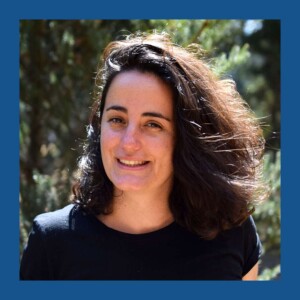
Cette semaine sur Papa PhD, je réponds à la question " Qu'est-ce que le tiers secteur de la recherche ? " avec la cofondatrice de la société à mission Narrau - Anaïs Trousselle.Au long de notre conversation, Anaïs a partagé son trajet académique, les réflexions et les passions qui ont guidé ses choix à différents moments-clés et nous avons exploré tous les contextes où les PhD peuvent s'épanouir en tant que chercheur.es, tout en contribuant étroitement à combler les besoins de leurs communautés.À écouter si tu cherches de l'inspiration et de la motivation après ton doctorat!
VIDÉO
https://www.youtube.com/watch?v=OMHwXSxw4_0?sub_confirmation=1Anaïs Trousselle est docteure en géographie sociale et ingénieure en agro-développement. Elle est la fondatrice de NARRAU, spécialisée dans la recherche-action en sciences humaines et sociales. La raison d’être de son organisation est de produire des données et des analyses, à partir d’une démarche scientifique en sciences humaines et sociales, pour documenter des phénomènes sociaux et environnementaux contemporains.
Les ressources de cet épisode :
Anaïs Trousselle | LinkedInNarrau | Site WebFilm-audio sur le projet " Migration et SARS-CoV-2 " | Vidéo
Merci Anaïs !
Si cet entretien avec Anaïs Trousselle t'a plu, fais-nous en part en cliquant sur les liens ci-dessous et en nous laissant un message :Clique ici pour remercier Anaïs Trousselle sur LinkedIn !Clique ici pour partager avec David le principal message que tu retiens de cet épisode !Si tu trouves de la valeur dans le contenu que je t'apporte chaque semaine, clique sur l'un des boutons ci-dessous et renvoie-moi l'ascenceur :)
Don sécuritaire sur PayPal
Deviens supporter sur Patreon !
Ou paye-moi un café :)
Télécharge la "Boîte à outils pour le doctorat" maintenant !
Tu aimeras aussi ces épisodes :
Myriam Beaudry - L'importance de rencontrer d'autres chercheur.e.s pendant ton doctorat : PapaPhD.com/183Anne-Claire Huard – Comment tisser des liens professionnels : PapaPhD.com/181Jean-Patrick Toussaint – Mieux préparer les doctorants à l'emploi : PapaPhD.com/155Catherine Cimon-Paquet – L'importance de vulgariser : PapaPhD.com/177
Thursday Jul 21, 2022
Thursday Jul 21, 2022
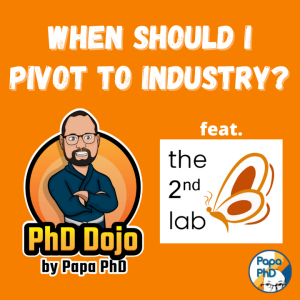
Welcome to another collab episode of the PhD Dojo with The 2nd Lab.
VIDEO
https://youtu.be/bWlAghDsGC0This week on the PhD Dojo, Gad Sabbatier and I answer a question from 2nd Lab mentee Karthick who asks: "When is an opportune time to transition from academia to industry?".Of course, there is a short answer to that question, but in this PhD Dojo, Gad and I drill down on different ways to start preparing the pivot early on in your graduate research journey.As always, don't hesitate to send us your comments or your own questions here on the website or on any of our social media platforms. We'd be thrilled to answer them and give you a shoutout on a future episode!Call for creators !I'm looking for sidekicks to be part of the Papa PhD team! If you're interested in podcasting and social media, and want to help me with the production of Papa PhD or the PhD Dojo in any way, email me at david@papaphd.com and let's talk!Happy listening! And happy sharing!
This episode’s resources:
The 2nd Lab | TwitterThe 2nd Lab | LinkedInThe 2nd Lab | WebsiteIf you find value in Papa PhD and in the content I bring you every week, click on one of the buttons below and send some of that value back to me :) Now with the added perk of receiving the brand new Papa PhD and PhD Dojo stickers, if you become a monthly supporter on Patreon or BuyMeACoffee!
Donate safely through PayPal
Support the show on Patreon !
Or buy me a coffee :)
Get the Papa PhD Career Readiness Tool kit !
You might also like the following episodes:
Sara Vero - Being Field-Ready for the Postdoc and Job SearchFederica Bressan – Do researchers have time for scicomm?Chris Emdin – Reimagining a More Inclusive STEMPhD Dojo – First Year PhD - Assembling the Expedition Team