Beyond the Thesis With Papa PhD
Real PhDs. Real Journeys. Beyond Academia.
Listen on:








Episodes

Thursday Feb 06, 2020
Thursday Feb 06, 2020
What does glitter have to do with mitochondria? This episode's guest, Paulo Oliveira, might just have the answer for you. And it probably has something to do with science communication and science outreach. In this episode of Papa PhD, I’m bringing you a great conversation where we covered Paulo’s journey into academia, as well as his take on what a 21st century researcher should be and on what skills should be part of their arsenal in the current job market.
Paulo J. Oliveira is currently Principal Investigator at the Center for Neuroscience and Cell Biology, University of Coimbra and an Invited Assistant Professor at the same University. Paulo is also the President of the European Society for Clinical Investigation, the co-founder of the start-up MitoTAG. He has a passion for mitochondrial biology in the context of aging and lifestyle diseases, and for science outreach. Part of his Doctoral and Post-doctoral training was done at the University of Minnesota-Duluth, USA, where he mixed mitochondrial research, playing football/soccer for a team called Port City and shoveling snow in the winter. His two daughters are great gymnasts, a trait that certainly they did not get from their father.
Join the Papa PhD Postgraduate Career Exploration Group!
What you’ll learn about in this episode:
How people who present you with unexpected challenges in your journey can help you grow, if you let them
What you can learn from doing a stint abroad, during your graduate studies
The wonderful world of mitochondria, andtioxidants and redox balance
The decisions and steps around turning your science into a business
How finding a scientific niche that you're passionate about can fuel your research, but also other aspects of your life as a researcher
What you can offer the public through science outreach and what science outreach can bring to you and your research
Strategies to try your hand at industry or entrepreneurship without cutting ties with academia
This episode’s pearls of wisdom:
“Communicating in terms of science is not publishing Science or Nature papers. It's going to the population and saying "This is what we do. We are using some of your money, some of your taxes, to do science that eventually can improve your life". ”
“I think one thing that's failing in most schools, universities, doctoral programs, is this teaching of diverse soft skills.”
“If you're doing research and if you think 'ok... I'm not seeing myself doing this for the next 30 years – what am I going to do?'. You start something. You think about waht society needs, what people need, what institutions need, and you can propose that. Of course, there is this startup boom all over the place, but if yoou fail once, you try again. If you fail twice, you try again. ”
“You should not be afraid or ashamed of looking for advice.”
“We live in a society where people think that failing will mark you for life, and we are all to blame on that. And we also have to blame that on our education system that teaches kids that they should not fail.”
“There are risks in everything. People have to find a place where they are more motivated, where they find the perfect ecosystem for them to work, and where they find the motivation to thrive into something. And sometimes, in academia you cannot find that.”
“What counts is that you have the expretise to do high quality work wherever you are [...]. It doesn't matter if we are top experts on protein X that does whatever.”
Paulo's links: MitoXT Group: Facebook.com/MitoXT; MitoTAG: Facebook.com/pg/mitodiets; European Researcher's Night
Leave a review on Podchaser !
Support the show on Patreon !
You might also like the following episodes:
Chris Kent – Biotech Startup CEO: PapaPhD.com/11
Sathy Rajasekharan– Science communication: PapaPhD.com/16
Fábio Rosa (PhD student), Gil Costa (scientific illustrator), Patrícia Monteiro (principal investigator): PapaPhD.com/24

Thursday Jan 30, 2020
Thursday Jan 30, 2020
The thought of transitioning into your professional life can be daunting at times. What is expecting me on the other side? Am I going to be happy? Will it be easy? How much am I going to make? If you add into the mix the question of “do I stay in academia? Am I a failure if I don’t?”, it can become an overwhelming and paralyzing place to be, emotionally. In today’s episode, Liliana Vitorino shares with us how she crossed this ford and what factors were important for her at the moment of taking hard decisions along her journey. She also talks about her experience getting into industry and growing professionally in this space.
Liliana has a PhD in microbiology from the Faculty of Sciences of the University of Lisbon, in Portugal, and is currently an international product manager for a medical devices company. Travelling a lot, working nonstop but having fun along the way and always with time for friends and family. Liliana believes that the difficult things are what challenge us to grow!
Join the Papa PhD Postgraduate Career Exploration Group!
What you’ll learn about in this episode:
What you’ll learn about in this episode:How life events and paradigm changes can impact key choices in your life, and how accepting them can help you navigate these transitions Why you should allow yourself to try new professional avenues at transition points in your academic pathHow opportunities that feel underwhelming can be steppingstones to better ones and eventually lead you to your ideal jobThe concept of a career development plan as used in industryParticularities of the industry team cultureWhy as a PhD you'll be a great asset in a team in industryHow to manage your expectations in terms of pay when you're transitioningEntry-level salaries in Europe for your first post-PhD industry jobThis episode’s pearls of wisdom:“You need to train yourself and be curious if you're moving into this field. Read books about marketing... Even now that I'm moving more towards a managing position, listening to podcasts about management, marketing. You need to be always up to date on all the topics.”“One good thing about being in industry is that there is a clear career path that they set for you and they discuss with you, and they put in your development plan: what are the gaps that I have for this job and for the future and how can I overcome those, right? And how can the company help you develop overcome those gaps.”“What we need to have is an opportunity to sit with an interviewer and show him or her all the skills that we have or that we acquired during our PhD, because it's so common for people to think that if you are doing a PhD or if you are doing research, that you are a crazy scientist who lives in a bubble.”“During the PhD, we deal with so many different stakeholders, we also need to influence our colleagues, our bench buddies, to help us, to discuss. Even if it's only our project and our colleagues in front of us are working on other projects, we don't work in silos.”
Leave a review on Podchaser !
Support the show on Patreon !
You might also like the following episodes:
David (Viva Frei) Freiheit – Youtube content creator: PapaPhD.com/15Tamarah Luk – Entertainment Law: PapaPhD.com/10Simon Moore – Industry research: PapaPhD.com/18
Launching your podcast?
If you're preparing to launch your podcast, you may be asking yourself what hosting platform to use.
I launched Papa PhD on Bluebrry because I wanted a professional service that would interface with my WordPress website, that would robustly broadcast Papa PhD to all platforms, and that would allow me to grow my podcast in years to come.
And these are the reasons why I'm recommending the Blubrry podcast hosting and syndication platform.
Click on the button below or use the promo code PapaPhDBlue on the Blubrry website to unlock a one month free trial:

Thursday Jan 23, 2020
Thursday Jan 23, 2020
We always want to project into the future as the best possible version of ourselves. But we often fall into the trap of setting our goals based on what we've been told we should aim for, or what we see our neighbors aiming for. A big part of enjoying our time in graduate school depends on being in tune with our personal values, our strengths, and with what makes us tick. This week, Falisha Karpati shares how she came into science and how the transitioned from a PhD in neuroscience to an altac position doing what she loves most.
Falisha Karpati is a skills development professional with a background in neuroscience currently based in Montreal. She completed her undergraduate studies in neuroscience at the University of Toronto, then a PhD in the Integrated Program in neuroscience at McGill University. Combining her passions for science and the arts, her PhD research investigated brain structure in musicians and dancers. She explored the field of skills development during her grad studies through part-time work designing and facilitating training activities at McGill, and jumped into this full time right after completing her PhD. She now works as a Program Officer at the Healthy Brains, Healthy Lives initiative at McGill University, where she manages a training program for students and postdocs with an interest in neuroscience.
Join the Papa PhD Postgraduate Career Exploration Group!
What you’ll learn about in this episode:
What you can gain by becoming a work/study student in terms of experience and networking
How you can expand your skillset and your network by working or volunteering in university programs or in student government
How important it is to determine what your strengths are as a graduate researcher to start planning on what you'll do after your degree
What types of skills and training may be important in preparing you for your #withaPhD life
This episode’s pearls of wisdom:
“Working or volunteering with organizations on campus, they're very understanding of the needs of grad students, so if I say I can't come to a meeting because I need to do my lab work or I need to give a presentation, they were fine with that.”
“If you want to know what it's like to work in a particular field, send them an email and ask for an hour coffee meeting – people are pretty happy to do that. But if you are going to do that, make shure that you go in prepared, because if you go in and somebody is giving up an hour of their time for you and you're like 'so... tell me something' it's not going to work. But if you have a few questions and have just a casual discussion with them, that's a great way to learn.”
“I think that's also coming from a time where there were a lot less people doing PhDs, it was less accessible, there may have been less people interested in it, so the percentage of people going from PhD to academic research was extremely high. But at this point that's not the case at all – there's a lot of people pursuing PhDs because they're passionate about the research and they want to know more about that particular topic, they want to contribute to the knowledge or treatments, or policy in that particular field.”
“I feel like really, the only failure is doing something because you feel that you have to or because you feel pressured, not because you actually want to. And if you pursue whichever career path you feel most comfortable in and that fits best with your interests and what you want to accomplish, then it is absulotely never a failure.”
Falisha’s links: McGill.ca/HBHL; Twitter: @HBHLMcGill
Leave a review on Podchaser !
Support the show on Patreon !
You might also like the following episodes:
Adriana Bankston – Science Policy: PapaPhD.com/12
Cindy Hovington – Education Specialist: PapaPhD.com/22
Emily Roberts – Graduate Financial Coach: PapaPhD.com/8
Inês Campos Costa – Career advisory: PapaPhD.com/41
Launching your podcast?
If you're preparing to launch your podcast,
Thursday Jan 16, 2020
Thursday Jan 16, 2020
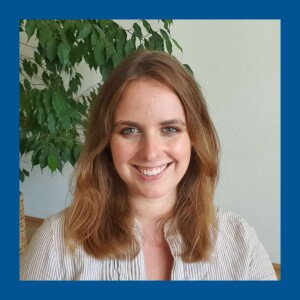
Deciding to embark on graduate studies can be a big step to take. For a lot of you out there, it represents your first leap into independent life and can carry a lot of unknowns, especially if you are a first generation graduate student. One of the big challenges this decision carries, besides having to deal with stereotypes to do with “staying in school” versus “getting a job” is that for the first time you will be fending for yourself as an active adult and negotiating your way through applications and offers for what will be, for all intents and purposes , a 5-year professional engagement leading to your degree. This week, Stefanie, the host of the Career Conversations channel on Youtube will be sharing her experience in her ongoing doctoral research and some insights she has drawn from her work on Career Conversations.
Stefanie is a PhD student in skin cancer research and as a side project, she has a Youtube channel where she helps fellow PhD students make the most of their careers by showing them the features of their careers that they are in control of.
Join the Papa PhD Postgraduate Career Exploration Group!
What you’ll learn about in this episode:
The difference in effort and amount of information from high school to university
The importance of weighing how the detailed curriculum fits with your interests when choosing a master’s program
Why you should allow yourself to come back on decisions you may have made earlier in your life – new experiences and new connections may change your outlook completely later on
How an internship in industry can rekindle your passion for research and even lead to publications
How learning to trash a project that is not working is a good skill, which is predominant in industry
Some specifics of industry culture Stefanie was not expecting at the outset
How networking can help you in your academic and non-academic applications
How a supervisor/superior who inspires loyalty drives productivity and morale up in a team
What you can learn and gain by taking active part in university/institute governing bodies
How important it is to set standards for yourself when looking for a position, minimum conditions to be met for you to consider an offer
How being detached from your results and your successes will help you keep moving forward at a healthy pace
This episode’s pearls of wisdom:
“I think that part of why I thought I hated science was really the university and the studying, and so on, which didn’t go well with me, but as soon as I had some independence, I really fell in love with science again.”
“What inspires me the most about my current supervisor is actually her leadership style, because she is a very, very kind person, but she is definitely not a pushover.”
“One thing she said to me was ‘Always show up as the best version of yourself that is available to you on each particular day.”
“As researchers, we are very often measured in citations. This is not a good way to be measured – I don’t think it says anything of the quality of a researcher, but this is still the reality of how researchers are hired, very often. It is not the only factor, but it is a huge factor. And we are not in control of whether people like our paper, but we are in control of how many people see our paper. And since I’ve realised that we can tweak the algorithm, especially of Twitter, very much, and that there are a lot of scientists on Twitter, I thought ‘Why not show people how to do this?’.”
“Just ask for whatever you want and you will be surprised by how willing people are to help you.”
“Most people don’t realize how valuable their talent really is. And I hope that there will come a day when universities will be competing for talent by offering proper work conditions.”
“In every sort of negotiation, you have to be willing to leave the table.”
This episode's links: Career Conversations YouTube channel; Twitter – @CareerConversa1; Instagram – Career_Conversations.

Thursday Jan 09, 2020
Thursday Jan 09, 2020
They say "if life gives you lemons, make lemonade." But what if life gives you the proverbial lemons, you press them, and apple juice comes out? In this episode, Pedro Resende shares with us how he came to be a researcher after a stint in industry, and how after accepting some hard noes from the universe and reorienting, he ended up being exactly where he wanted to be at the outset.
Pedro has worked in Portugal, UK and USA as a life sciences researcher, both in academic and industry roles. In parallel with his research, Pedro co-founded two professional associations and experienced roles in policy advice. Pedro is also co-founder and the director of Chaperone, an online marketplace for career development for scientists.
Join the Papa PhD Postgraduate Career Exploration Group!
What you’ll learn about in this episode:
How valuable an internship in industry can be before graduate school and how it can help you stand out when applying to PhD programs
Why you should choose a city you'll enjoy living in, of you're going abroad for your graduate studies
The importance of connecting with the expat student community when studying abroad
What you can gain by taking active part in the university/institute governing bodies as a student representative
Why you should try to take part in interdisciplinary projects and activities around you
This episode’s pearls of wisdom:
“I cannot stress enough how to found and manage professional associations can be a fantastic learning experience for roles outside acedemia, let's say – as an entrepreneur or as a community manager, or as a project manager, or anything that involves management of projects and people.”
“It's surprising how many political decisions are made without evidence. Evedence-based decisions in politics are not common and for someone who works in science, this seems shocking. But it's true. It is our role as researchers to defend that we must get the right data to the politicians and to make them be aware of this data and to use them to guide their decisions.”
“[In the US] it's recommended for people as researchers to be involved in other projects. It benefits the society, it benefits the research also, ultimately. This is true for researchers, but it's true for other fields of study. Nobody gains from everybody being closed in their environments, closed in their offices.”
Pedro’s links: Maria de Sousa Summer Research Program; All Time GABBA (ATG); European Health Parliament; Chaperone.online; Twitter: @PepeResende, @ChaperoneOnline
Leave a review on Podchaser !
Support the show on Patreon !
You might also like the following episodes:
Inês Thomas Almeida – Musicology: PapaPhD.com/27
Kirsten Sanford – Science communication: PapaPhD.com/13
Simon Moore – Industry research: PapaPhD.com/18
Tamarah Luk – Entertainment Law: PapaPhD.com/10
Launching your podcast?
If you're preparing to launch your podcast, you may be asking yourself what hosting platform to use.
I launched Papa PhD on Bluebrry because I wanted a professional service that would interface with my WordPress website, that would robustly broadcast Papa PhD to all platforms, and that would allow me to grow my podcast in years to come.
And these are the reasons why I'm recommending the Blubrry podcast hosting and syndication platform.
Click on the button below or use the promo code PapaPhDBlue on the Blubrry website to unlock a one month free trial:
Try one free month with Blubrry !
If you are starting a serious podcast project, do consider one of the first podcasting hosts out there, offering state of the art services, including IAB certified statistics, based on years of experience in the podcasting space.
Happy podcasting!

Thursday Jan 02, 2020
Thursday Jan 02, 2020
We're fresh into a new year, and this time of year is one of re-evaluation, decision-taking, and renewal for a lot of you out there. This week, you'll hear Inês Thomas Almeida's recount of 20 years starting in a biology bachelor's and leading to a PhD project in musicology, with many twists and turns in between. Inês brings a story of self-questioning, of determination, of resilience, of dealing with mental health issues, and of reinvention.
Inês Thomas Almeida was born in the Dominican Republic and grew up in Portugal. After studying biolgy and Piano in Lisbon she entered the University of Évora to study singing, where she awarded "Best Student of the University" in two consecutive years. She then moved to Germany and studied voice with Klaus Häger at the Rostock University of Music and Theater, having graduated there in 2007. As a member of the Opera Studio she performed several roles, such as the main role in Orfeo ed Euridice from Christoph Willibald Gluck and Zia Principessa in Suor Angelica from Giacomo Puccini. In 2008 she was prizewinner of the International Singing Contest Kammeroper Schloss Rheinsberg. As a prizewinner she sang in many productions at the Schloss Rheinsberg Opera. In 2011, in Berlin, Inês founded Berlinda, an NGO raising the awareness of the culture of Portuguese-speaking countries and bringing social support to the Portuguese community in Berlin. She is currently working towards a PhD in musicology at FCSH, Universidade Nova de Lisboa.
Join the Papa PhD Postgraduate Career Exploration Group!
What you’ll learn about in this episode:
How there is always place for reassessing and reorienting, at any stage of your life, irrespective of what people around you may say or think
The importance of knowing when to drop an ongoing project to level up to the next, better one
How finding mentors at different stages of your life can help you in this "leveling up" process
Why listening to your body is important in staying healthy and also in taking important life decisions
Why you should allow yourself to take opportunities, even when they arrive unannounced
Why you should always prioritize any mental health challenges that may arise along your path
This episode’s pearls of wisdom:
“I am very glad that my life turned in all these ways and in all these confusing curves and roundabouts, because now I have this maturity, which turns out is very good for me, for my PhD, and for academia. I think I would not see things the way I do if I was 20 years younger.”
“In these 20 years between going to biology for the first time and writing the PhD, now, I did such an amount of different things and all this work, with the kids, all these are life experiences which I can use for my PhD. And I do use them.”
“Age enriches you, so use your age and use all your experiences in order to follow this thing you wanted. And never think you're too old or that you should, by now, know exactly what to do and know your path. This is not true – your path comes in whichever way it has to come and you will follow it in whichever way yoou are going to see and whichever way is best for you.”
“Get professional help. If you have a mental issue, this is someting that most people see as a bad thing, or it shows that you have problems, and you're a complicated person. It's not at all. If you have a mental health issue, you're like the most normal people in the world, because almost everyone, in some point of their life, is going to have a mental issue. So it's like going to the dentist or going to the orthopedist when you have a problem in your foot.”
Leave a review on Podchaser !
Support the show on Patreon !
You might also like the following episodes:
Inês Campos Costa – Career advisory: PapaPhD.com/41
Joe Makkerh – Entrepreneurship: PapaPhD.com/2
Joana Lobo Antunes – Science Communication: PapaPhD.com/25
Susanna L Harris – Science Communication: PapaPhD.com/42
Launching your podcast?
Thursday Dec 26, 2019
Thursday Dec 26, 2019
For the last episode of the 2019 season of Papa PhD, instead of an interview, we're bringing you some of the best advice our guests have shared so far, so enjoy the insights, take the opportunity to go listen to the earlier episodes, and remember to rate and leave a comment on your podcast app, and to share any episodes that resonate with you with your friends!
Happy listening and happy sharing!
Join the Papa PhD Postgraduate Career Exploration Group!
Leave a review on Podchaser !
Support the show on Patreon !
You might also like the following episodes:
David (Viva Frei) Freiheit – Youtube content creator: PapaPhD.com/15
Tamarah Luk – Entertainment Law: PapaPhD.com/10
Kirsten Sanford – Science communication: PapaPhD.com/13
Inês Thomas Almeida – Musicology: PapaPhD.com/27
Launching your podcast?
If you're preparing to launch your podcast, you may be asking yourself what hosting platform to use.
I launched Papa PhD on Bluebrry because I wanted a professional service that would interface with my WordPress website, that would robustly broadcast Papa PhD to all platforms, and that would allow me to grow my podcast in years to come.
And these are the reasons why I'm recommending the Blubrry podcast hosting and syndication platform.
Click on the button below or use the promo code PapaPhDBlue on the Blubrry website to unlock a one month free trial:
Try one free month with Blubrry !
If you are starting a serious podcast project, do consider one of the first podcasting hosts out there, offering state of the art services, including IAB certified statistics, based on years of experience in the podcasting space.
Happy podcasting!

Thursday Dec 19, 2019
Thursday Dec 19, 2019
Life isn't a straight line. In particular, professional life is not as much of a straight line as it was in the past. As scientists, as researchers, the path we follow is determined by our choices, but also by our collaborations and by opportunities that arise along the way. In this episode, Joana Lobo Antunes will share with us the interesting path that brought her from pharmacy and organic chemistry to a full-time career in science communication.
Joana Lobo Antunes is Head of Communications at Instituto Superior Técnico, lecturer in Science Communication and Social Media for Scientists, FCSH NOVA and Universidade Nova de Lisboa Doctoral School, coordinator of science radio show 90 Segundos de Ciência, and founder and current president of the Portuguese Science Communicators Network SciComPT. Joana has previous experience as a researcher (PhD in Organic Chemistry) and as a university professor, having transitioned to a position as a professional science communicator at ITQB, Universidade Nova de Lisboa, in 2012. Her main interests are the use of theatre improvisation techniques and storytelling in science communication. Joana has also been engaging scientists to use social media tools to connect and interact with peers and lay persons, improving science visibility and the public image of scientists.
Join the Papa PhD Postgraduate Career Exploration Group!
What you’ll learn about in this episode:
The positive impact an international experience can have on you scientifically, but also personally
Why you shouldn't be weary of reaching out to potential mentors or employers looking for insight or collaboration opportunities
How interdisciplinary work can cross-pollinate science and bring on new fields of study and of creation
How talking about your research to a lay public can make you a better scientist and a better job candidate
The importance of collaborations and team work to innovation and professional growth
This episode’s pearls of wisdom:
“There's so much more to science than the papers and the awards - that's not the scientific process.”
“What I learned from my supervisor and from the scientists was that you can't live being a hurricane because you'll need to constantly be moving. She taught me to anchor my ideas into the real world, because I can't keep spinning all the time - I need to be grounded and I need to build stuff.”
“Getting a PhD is not about the science that you learn - it's about the process. It's about what you learn about yourself, it's about learning how to get answers, it's to learn how to deal with a team, how to deal with a PI, how to deal with buying stuff, how to deal with the negative results. So, doing a PhD is so much more than just about the science that you do. It's about everything else that you gain by doing a PhD.”
“So, having a PhD is not just the title on your thesis - having a PhD is so much more than that. It's the skills that you acquire.”
“Women are less open to give their time to do activities other than their work. I believe it has to do with the fact that women are usually more overwhelmed than men, with a lot of tasks. This has a repercussion, which means that for girls who would like to come to science, the role models are mostly men - the ones that are interviewed, the ones that come on the television, the ones that come on the newspapers are men. And we need to address this, we need to have more women as protagonists, on the media and everywhere else, because it's important to get women doing all kinds of jobs.”
Joana's links: Instituto Superior Técnico; 90 Segundos de Ciência; SciComPTe
Leave a review on Podchaser !
Support the show on Patreon !
You might also like the following episodes:
Inês Campos Costa – Career advisory: PapaPhD.com/41
Kelly Bullock – Scientific illustration: PapaPhD.com/9
Kirsten Sanford – Science Communication: PapaPhD.com/13
Patrícia Monteiro – Science outreach: PapaPhD.com/24
Launching your podcast?

Thursday Dec 12, 2019
Thursday Dec 12, 2019
This episode is a special one – it was recorded live with three guests who were speakers at the 2019 edition of BEBday, a meeting organized by the students of my PhD program at the University of Coimbra, Portugal – the BEB PhD Program. This year's edition brought a group of scientists who had a diverse set of experiences carving their career path and shared great insights with the grad students. Around the table, for this interview, you'll hear Fábio Fiúza Rosa, a PhD student/entrepreneur, Gil Costa, a scientific designer, and Patrícia Monteiro, a researcher with a passion for knowledge transfer and science outreach.
Fábio Fiúza Rosa is graduated in Biology and holds a MSc in Biochemistry, both by University of Coimbra. He is currently a PhD student at Center for Neurosciences and Cell Biology (CNC) from University of Coimbra (PDBEB) and at the Faculty of Medicine of Lund University. He holds 3 patents and is Co-founder of two start-ups: BRT Blood Reprogramming Technologies, Lda (Coimbra, Portugal) and Asgard Therapeutics AB (Lund, Sweden). Fábio Fiúza Rosa participated in multiple accelerator programs, being awarded with Arrisca C (University of Coimbra, 2016), Entrepreneurship competition Montepio Acredita Portugal (Health Prize 2017). Recently, he was awarded with the Jury’s Best Pitch Award promoted by EIT Health (Oxford University, UK. August 2019).
Gil Costa obtained a degree in Biology (University of Coimbra) and a PhD in Neurosciences (PDBEB, University of Coimbra), integrated in Doctor Zachary F. Mainen’s laboratory at Champalimaud Foundation also in collaboration with Instituto Gulbenkian de Ciência (IGC), Lisboa. Since completing his PhD, Gil Costa has been working as Scientific Illustrator at Champalimaud Research and Gulbenkian Foundation. More recently, he established as a freelancer and here you can consult some of his works: Gil Costa | Science Design.
Patrícia Monteiro has a degree in Pharmaceutical Sciences, University of Coimbra and PhD degree in Neurosciences (PDBEB, University of Coimbra), where she worked at Doctor Guoping Feng’s laboratory at the Massachusetts Institute of Technology (MIT, USA). She was awarded with an EMBO fellowship and also a Branco Weiss fellowship to study how stress impacts brain networks. Currently, Patricia is a researcher at the Neuroscience Research Domain, ICVS/School of Medicine, University of Minho.
Join the Papa PhD Postgraduate Career Exploration Group!
What you’ll learn about in this episode:
As part of a research team, you can take part in translational projects developed in your lab
Getting to your dream job is an incremental process with different stepping stones along the way, where you gain experience and skills
The important role collaboration plays in scientific research and innovation
Why you should say yes to opportunities that arise that may be outside your comfort zone
Making use of structures supporting innovation and knowledge translation offered by your university, if you have an research-related business idea
How universities have grown to foster researchers developing outreach initiatives
How as a woman in the STEM space you can be a role model for girls and young women
This episode's pearls of wisdom:
"If you're interested in entrepreneurship and really have an opportunity to translate it or, at some point, to understand the path that you have to take to translate the idea to the clinics, grab it as hard as you can and, no matter what, work for it."
"Make sure that any idea you're generating in the early stage, you really understand it, you really know your competitors, you really know your market. And make sure you will have a place whatever what market or field you're aiming for."
"Whatever you do, do it with passion. Be the best of yourself in every hat you wear. If you're a father, be the best father you can be. If you're a scientist, be the best scientist you can be. If you're a podcaster,
Thursday Dec 05, 2019
Thursday Dec 05, 2019
What makes some people impervious to adversity? What kind of super-power do they have that allows them to get up after a major hit and find the will power to lick their wounds and come out fighting? This week, hear Mark Crandall tell his story of beating the odds and show us how we all have this power of resilience within us.
Mark Crandall is a Licensed Master’s in Social Work and a Licenced Chemical Dependency Counselor. He is also a keynote speaker, a Clinical Interventionist, Author of Embrace Your Past -Win Your Future, and the host of the Purpose Chasers podcast. Mark went from being a lost boy with countless traumatic experiences, drug addiction, prison, and an undying self-hatred to building multiple 6 figure coaching practices, and being a highly sought after Clinical interventionist.
Join the Papa PhD Postgraduate Career Exploration Group!
What you’ll learn about in this episode:
How limiting beliefs may be preventing you to perform at your best
Why it is important that your academic and your career choices be based on your deeply seated personal core values and interests
How a mentor can push you towards reaching your goals, be they academic or entrepreneurial
This episode’s pearls of wisdom:
“It doesn’t matter where you come from. It doesn’t matter who you are as a person or what you think other people will think of you. If you don’t take action to do the things you’ve been called to do, you’re never going to do the things that you’ve been called to do. My experience is – if you’re resilient, you can do anything that you want to do.”
“Why are you doing what you’re doing? You can’t hit a target that you can’t see. And if you’re shooting at targets that you can’t see, you’re going to be hitting all kinds of other people’s targets, right? You’re going to hit what other people are shooting for. When you get really, really clear and intentional on why you’re doing what you’re doing, it just becomes so cool – you get to be a part of the journey.”
“Most people take action or don’t take action based off what they think other people are going to think about them. People are not thinking about you – they’re thinking about themselves. And they’re thinking about what you’re going to do and how that’s going to make them look. So, when you really start to focus on why you’re doing what you’re doing, and what you want to do in life, and you stop thinking about what other people are thinking –which is themselves – you can get really intentional about what you want to do and you can live a life of purpose.”
Mark’s links: LinkedIn – Linkedin.com/in/mark-crandall-lmsw-lcdc-570b1280; Purpose Chasers podcast – Markcrandall.net/purpose-chasers-podcast; Facebook – Facebook.com/purposechaserspodcast; Twitter –Twitter.com/purpose_chasers.
Leave a review on Podchaser !
Support the show on Patreon !
You might also like the following episodes:
Clarissa Wright – Publishing: PapaPhD.com/34
Fiona Robinson – Patient education: PapaPhD.com/6
Liliana Vitorino – Industry: PapaPhD.com/31
Tamarah Luk – Entertainment Law: PapaPhD.com/10
Launching your podcast?
If you're preparing to launch your podcast, you may be asking yourself what hosting platform to use.
I launched Papa PhD on Bluebrry because I wanted a professional service that would interface with my WordPress website, that would robustly broadcast Papa PhD to all platforms, and that would allow me to grow my podcast in years to come.
And these are the reasons why I'm recommending the Blubrry podcast hosting and syndication platform.
Click on the button below or use the promo code PapaPhDBlue on the Blubrry website to unlock a one month free trial:
Try one free month with Blubrry !
If you are starting a serious podcast project, do consider one of the first podcasting hosts out there, offering state of the art services, including IAB certified statistics, based on years of experience in the podcasting space.
Happy podcasting!