Beyond the Thesis With Papa PhD
Real PhDs. Real Journeys. Beyond Academia.
Listen on:








Episodes
Thursday Aug 26, 2021
Thursday Aug 26, 2021
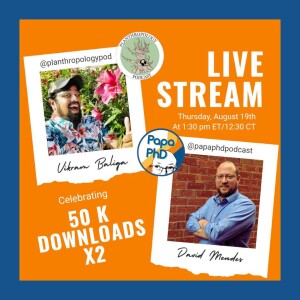
This week on Papa PhD, I'm joined by Vikram Baliga in sharing with you a celebration of a great milestone for Papa PhD and for his podcast – the Planthropology podcast.Having both started podcasting in 2019, we just reached 50.000 downloads at a few days of interval, and we decided to thank you, the listeners, by recording a special episode!I hope you enjoy getting to know Vikram and I a little better and that you share Papa PhD and Planthropology with two friends, to get us started on our way to 100.000 !
Thank you, Vikram Baliga!
If you enjoyed this conversation with Vikram, let him know by clicking the link below and leaving him a message on Twitter:Click here to thank Vikram Baliga on Twitter!Click here to share your key take-away from this interview with David!
This episode’s resources:
Vikram Baliga | LinkedInPlanthropology podcast | TwitterPlanthropology podcast | InstagramPlanthropology podcast | Website
You might also like the following episodes:
Amy Gentry – A Discussion About "Bad Habits" in AcademiaKatie Wedemeyer-Strombel – Reshaping Your Career Through Change and UncertaintyKatya Park – Staying True to Your Life Plans During the PhDKerri Twigg – Retelling Your PhD Career Story Have you checked out my course titled "PhDs and the Job Market - How to start preparing today", which is live now on the Academia.edu premium platform besides courses by Karen Kelsky, Ali Abdaal, Cathy Mazak, Damien Walter, among others?As part of an expansion of what they offer researchers through their new Premium service, Academia.edu has bet on offering them a diverse library of courses created an given by people like me – content creators from a wide range of academic and academia-adjacent spaces.All you need to do to access it is to follow the link below, register on Academia.edu if you haven't yet, and then upgrade to the premium membership.And as a bonus, if you upgrade using my affiliate link, they will be sending part of your subscription to me! So you'll be contributing to the production and improvement of the show! How cool is that?Just click on the button below and start exploring!
Access "PhDs and the Job Market - How to start preparing today" now !
And if you find value in Papa PhD and in the content I bring you every week, click on one of the buttons below and send some of that value back to me by becoming a supporter on Patreon or by buying me a coffee :)
Support the show on Patreon !
Or buy me a coffee :)
Thursday Aug 19, 2021
Thursday Aug 19, 2021
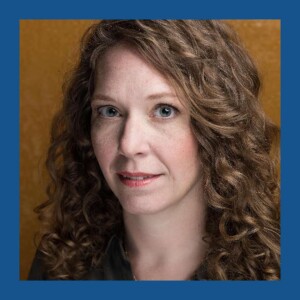
This week on Papa PhD, I'm discussing a fictional book – a thriller set within academia – with author Amy Gentry.In our conversation, I talked with Amy about her personal experience going through a PhD in the humanities and about what aspects of that experience inspired her to write “Bad Habits”.
Amy Gentry is the author of Good as Gone, a New York Times Notable Book, and Last Woman Standing. She is also a book reviewer and essayist whose work has appeared in numerous outlets, including the Chicago Tribune, Salon, the Paris Review, the Los Angeles Review of Books, and the Austin Chronicle.She holds a PhD in English from the University of Chicago and lives in Austin, Texas.
Thank you, Amy Gentry!
If you enjoyed this interview with Amy, let her know by clicking the link below and leaving her a message on Twitter:Click here to thank Amy Gentry on Twitter!Click here to share your key take-away from this interview with David!
This episode’s resources:
Amy Gentry | LinkedInAmy Gentry | TwitterAmy Gentry | WebsiteAmy Gentry - Bad Habits | Book
You might also like the following episodes:
Katie Wedemeyer-Strombel – Reshaping Your Career Through Change and UncertaintyKatya Park – Staying True to Your Life Plans During the PhDKerri Twigg – Retelling Your PhD Career StoryMonica Granados – A Vision of Graduate School For the 21st CenturyHave you checked out my course titled "PhDs and the Job Market - How to start preparing today", which is live now on the Academia.edu premium platform besides courses by Karen Kelsky, Ali Abdaal, Cathy Mazak, Damien Walter, among others?As part of an expansion of what they offer researchers through their new Premium service, Academia.edu has bet on offering them a diverse library of courses created an given by people like me – content creators from a wide range of academic and academia-adjacent spaces.All you need to do to access it is to follow the link below, register on Academia.edu if you haven't yet, and then upgrade to the premium membership.And as a bonus, if you upgrade using my affiliate link, they will be sending part of your subscription to me! So you'll be contributing to the production and improvement of the show! How cool is that?Just click on the button below and start exploring!
Access "PhDs and the Job Market - How to start preparing today" now !
And if you find value in Papa PhD and in the content I bring you every week, click on one of the buttons below and send some of that value back to me by becoming a supporter on Patreon or by buying me a coffee :)
Support the show on Patreon !
Or buy me a coffee :)
Thursday Aug 12, 2021
Thursday Aug 12, 2021
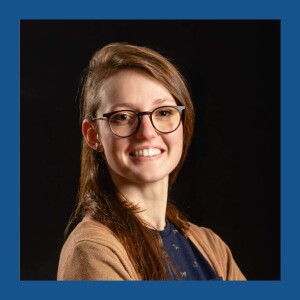
Tu aimes Papa PhD ? Laisse-moi un commentaire ici - une courte phrase suffit ! Et inclus ton identifiant Twitter – comme ça je pourrai te remercier personnellement !Est-ce qu'on peut se créer un métier en dehors de la recherche, mais sans s'éloigner de la science? Mon invitée de cette semaine - Emilie L. Dubois - s'est posé cette question et y a trouvé sa réponse dans le domaine du design graphique et de la communication scientifique, après avoir complété son doctorat dans le domaine des sciences de la vie. Dans cette entrevue, on a parlé de son trajet professionnel, mais aussi de ses réflexions à propos de son passage au doctorat.
Ce que tu apprendras dans cet épisode :
Comment Emilie a maintenu son amour de l'art tout au long de son parcours universitaireL'interface qu'Emilie a trouvé entre le design graphique et la représentation de données, pendant son doctoratLes défis auxquels fait face la communication scientifique aujourd'huiLes ressources auxquelles Emilie a eu recours pour se former en communication scientifqueComment s'améliorer et s'inspirer en observant ce qui nous entoureLa stimulation intellectuelle existe bel et bien en dehors de la rechercheLa différence entre entrepreneuriat et intrapreneuriatPourquoi docteur·es et startups font bon ménage
Emilie a obtenu un doctorat en Biologie Cellulaire et Moléculaire à l'Université Laval en 2018. Elle s'est formée en graphisme, en communication et en entrepreneuriat pour se tourner vers la communication scientifique visuelle, et fonder lagence IMPAKT Scientifik.Aujourd'hui entourée d'une belle équipe, sa mission est d'accompagner les scientifiques et les entrepreneurs technologiques à faire rayonner leurs projets, grâce à des visuels percutants et une communication de qualité. Ensemble, ils développent des formations pour améliorer la communication scientifique de chacun et la maîtrise d'outils numériques.En parallèle, elle est impliquée comme mentor pour les étudiants (CBS, Canadian Biomaterials Society), accompagne occasionnellement des entrepreneurs en devenir, et fait partie du Comité d'Éthique de la Recherche du CÉGEP Garneau.
Les ressources de cet épisode :
Emilie L. Dubois | LinkedInEmilie L. Dubois | TwitterImpakt Scientifik | Site WebComment et où se former en communication scientifique ? | Article
Merci Emilie !
Si cet entretien avec Emilie L. Dubois t'a plu, fais-lui en part en cliquant sur le lien ci-dessous et en lui laissant un message sur LinkedIn :Clique ici pour la remercier sur LinkedIn !Clique ici pour partager avec David le principal message que tu retiens de cet épisode !
Nouveauté - Sponsors
J'ai créé sur le site web une nouvelle page où je partagerai avec toi les ressources que j'utilise et que je recommande en tant que producteur et animateur de Papa PhD.Je considère ces ressources et ces services des sponsors de Papa PhD et j'ai préparé avec eux des offres exclusives pour tous les auditeurs du podcast.Clique sur le bouton ci-dessous et rends-leur visite!
Visite les sponsors de Papa PhD !
Tu aimeras aussi ces épisodes :
Alexandra Martel – Être persuasif dans notre recherche d'emploi : PapaPhD.com/102Amandine Bugnicourt – Recrutement de PhDs : PapaPhD.com/74Emilie-Jade Poliquin – Déboulonner les mythes de l'emploi après de doctorat : PapaPhD.com/116Marie Itoiz – S'outiller pour l'après-doctorat : PapaPhD.com/108
Thursday Aug 05, 2021
Thursday Aug 05, 2021
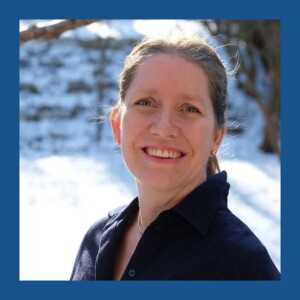
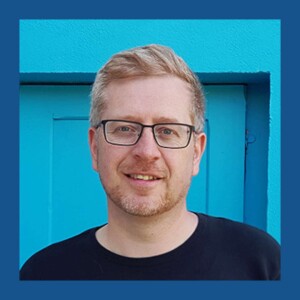
Hi! This week, I have the great pleasure of bringing you a conversation about life balance in graduate school with Katya Park. During the interview, Katya shared how during her PhD and postdoc she made sure to stay true to her life plans, namely those related to building a family, while working towards her goals, scientifically, and about how she dealt with the pressures and fears young researchers who want to start a family still experience, today.
Katya did her PhD in molecular neuroscience at the University of Toronto, she defended when she was 7 months pregnant with her third son.
Her post-doc was in molecular mechanisms involved in traumatic brain injury, and then she was the director of the Neurovascular Research team at a private health clinic.
Wanting to get a broader picture of how things work, Katya left the lab and worked at the Ministry of Health.
She currently manages a team of researchers and evaluators at the Ministry for Seniors and Accessibility. She misses science though and the conversations involved, so she and her husband (also a neuroscientist) have started their own scientific consulting company.
Thank you, Katya Park!
If you enjoyed this interview with Katya, let her know by clicking the link below and leaving her a message on LinkedIn:
Click here to thank Katya Park on LinkedIn!
Click here to share your key take-away from this interview with David!
This episode’s resources:
Katya Park | LinkedIn
Katya Park | Website
Today, I also have something very exciting to share.
A couple of months ago, I was approached by Academia.edu to produce an online course for their new premium platform, and I accepted the challenge.
And today, I can announce that my course titled "PhDs and the Job Market - How to start preparing today" is now live on the platform, besides courses by Karen Kelsky, Ali Abdaal, Cathy Mazak, Damien Walter, among others!
As part of an expansion of what they offer researchers through their new Premium service, Academia.edu has bet on offering them a diverse library of courses created an given by people like me – content creators from a wide range of academic and academia-adjacent spaces.
I've been wanting to offer you a condensed course based on my conversations on the podcast for a while, so I'm really thrilled to share the course with you, today.
All you need to do to access it is to follow the link below, register on Academia.edu if you haven't yet, and then upgrade to the premium membership.
And as a bonus, if you upgrade using my affiliate link, they will be sending part of your subscription to me! So you'll be contributing to the production and improvement of the show! How cool is that?
Just click on the button below and start exploring!
Access "PhDs and the Job Market - How to start preparing today" now !
You might also like the following episodes:
Katie Wedemeyer-Strombel – Reshaping Your Career Through Change and Uncertainty
Harinder Singh – Promoting Career Success in STEM
Parag Mahanti – Networking and Job Hunting as a PhD
Megan Kirk Chang – Bringing Down Stress
Support the show on Patreon !
Or buy me a coffee :)
Thursday Jul 29, 2021
Thursday Jul 29, 2021
Télécharge la "Boîte à outils pour le doctorat" maintenant !
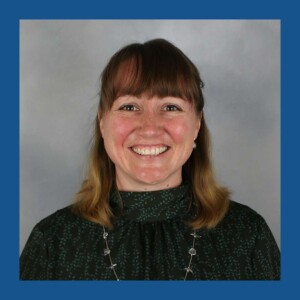
Salut! Cette semaine sur Papa PhD, je t'apporte une conversation au long de laquelle, avec mon invité, Pierre-Henri Garnier, on a parlé psychologie, transdisciplinarité et doctorat, et à la fin de laquelle il a partagé un exercice de réalité virtuelle (sans casque) qui t'aidera à maîtriser ton stress en identifiant où dans ton corps tu le ressens le plus. Bonne écoute!
Ce que tu apprendras dans cet épisode :
Un exercice d'autohypnose pour t'aider lorsque tu éprouves de l'anxiété ou du stress
L'intérêt du doctorat en tant que psychologue
L'ambivalence qu'on peut ressentir vers la fin de la thèse
L'importance de se sentir soutenu par ses pairs et par son directeur de thèse
Ce qu'est la cyberpsychologie
Ce qu'est que l'approche transnumériste en psychologie
Ce que le passage au doctorat apporte à Pierre-Henri dans son activité libérale
Comment les Doctoriales ont ouvert les horizons de Pierre-Henri à l'interdisciplinarité et à la transdisciplinarité
Tu aimes Papa PhD ? Laisse-moi un commentaire ici - une courte phrase suffit ! Et inclus ton identifiant Twitter – comme ça je pourrai te remercier personnellement !
Pierre-Henri Garnier est psychologue en libéral au centre interdisciplinaire de thérapie intégrative à Rezé près de Nantes. Il développe notamment une pratique en cyber thérapie utilisant l'hypnose associée à la réalité virtuelle. Il est également docteur en Sciences de l'information et communication. Grace à l'obtention d'une bourse ministérielle, Il a effectué son doctorat sous la direction du professeur Jean-Pierre Courtial, au sein de la maison des Sciences de l'homme à Nantes.
Après son doctorat, Pierre-Henri a notamment exercé une dizaine d'années en tant que psychologue au chu de Nantes, en diabétologie pédiatrique puis en soin de support et soin palliatifs.
Aujourd'hui il exerce en libéral et ses compétences de docteur structure sa pratique. Elles lui permettent d'être chercheur associé au sein du centre fédératif douleur soin de support et soin palliatifs du chu de Nantes.
En lien avec sa pratique de clinicien, il est également enseignant et formateur dans le domaine de la communication et éducation thérapeutique, en hypnose thérapeutique. Il développe notamment avec son ancien directeur de thèse une approche dite transnumériste dans le champ des psychothérapies et nouvelles technologies, la réalité virtuelle plus particulièrement.
Un docteur psychologue clinicien transdisciplinaire, transnumériste et passionné de la transe créative et hypnotique.
Merci Pierre-Henri !
Si cet entretien avec Pierre-Henri Garnier t'a plu, fais-lui en part en cliquant sur le lien ci-dessous et en lui laissant un message sur LinkedIn :
Clique ici pour le remercier sur LinkedIn !
Clique ici pour partager avec David le principal message que tu retiens de cet épisode !
Les perles de sagesse de Pierre-Henri :
« De mon point de vue de psychologue, il y a tout un travail à faire auprès des étudiants de repérage de ce qui sonne juste pour eux, mais au niveau corporel – pas dans la tête. Sauf que parfois, en tant que doctorant, on est un peu dissocié, on dirait en hypnose. On est plus dans la tête que dans le corps, donc ça peut être vire piégeant d'écouter davantage sa pensée et son intellect que son corps. Et donc, je rejois tout à fait ton message de prévention – chers auditeurs, écoutez votre intuition, ce que vous ressentez et généralement, ça vous guide, en fait. »
« Le stress est utile, donc il faut plutôt le filtrer et dialoguer avec lui, et trouver la juste distance entre ce qui est négatif de ce stress-là. On exorcise le côté négatif et on endorcise le côté ressource, sécurisant, positif. Mais l'astuce, c'est vraiment d'être dans le corps, dans la sensation, dans l'exception du corps qui ressent la sécurité. »
Les ressources de cet épisode :
Pierre-Henri Garnier | LinkedIn
Pierre-Henri-Garnier | Facebook
Thursday Jul 22, 2021
Thursday Jul 22, 2021
Hi! Before introducing today's guest, and to celebrate two years of Papa PhD, I'd like to extend an invitation directly to you.If you have a question about one of the episodes of Papa PhD, or if you'd like me to connect you with the people you hear on the podcast, or if you'd like to contribute in any way to Papa PhD, with suggestions or even content, email me at david@papaphd.com.I'll be happy to reply and, eventually, discuss your ideas with you. I'm currently thinking about Season 3, and it's time to brainstorm, so don't hesitate!Now - talking about things changing, In this week's episode, my guest – Katie Wedemeyer-Strombel – talks about all that has changed for her in these last two years professionally, and about how she dealt with the sudden change and uncertainty the COVID pandemic brought onto the industry she works in and onto her career journey.
What you’ll learn about in this episode:
What led Katie to do her PhDWhy you shouldn't accept emotional abuse in graduate schoolHow she dealt with switching labs during her PhD, looking for a better learning environmentThe importance of having a support network and of looking for help if graduate school is affecting your mental healthHow having academic mentors outside the lab can help you navigate difficult timesHow Katie's resourcefulness and will to help helped her navigate to a new position within her company, during the pandemic
Thank you, Katie Wedemeyer-Strombel!
If you enjoyed this interview with Katie, let her know by clicking the link below and leaving her a message on Twitter:Click here to thank Katie Wedemeyer-Strombel on Twitter!Click here to share your key take-away from this interview with David!
Support the show on Patreon !
Or buy me a coffee :)
Katie's pearls of wisdom:
“I had a lot of grief and resentment towards my PhD, and I've most recently just even gotten over it, now. It's taken therapy and a lot of self-reflection, and a lot of realizing that I did learn really valuable skills that just in academia aren't highlighted as much. Right? I have published papers, I have grants to my name... People where I work now don't care. But I'm really resourceful. If you need something figured out, I know how to do the research, to figure out what the best way to do it is. You need me to jump in somewhere. I mean, I did a lot of field work in remote locations where I had no Internet access, very little contact with my mentors or anyone outside of where I was located. So I had to McGyver or a lot of stuff. All these different skills, writing, editing, research, networking, collaboration, thinking on your feet. Those are all skills that you've learned, that you kind of underplay in academia, because it doesn't necessarily... you know, it's not your research record.”“One of the things that was tough for me to do, that I wish I would have started doing in grad school was putting together a portfolio of syllabi I had created, any guest lectures, any outreach lectures that I had done, maybe to K12 or up to undergrad classes. At a lot of places, at least in what I do, they want a portfolio – "What content have you created? - Well, I've published papers" – that's not what they want.”“Because I always liked teaching, I did seek out extra teaching opportunities and curriculum development opportunities as a PhD – that all counts as professional experience. I was in charge of developing a curriculum, four courses, as a PhD student. On my CV or on my resume, I can write: I have curriculum development experience and I've been doing it for the last five years. Was my job title learning experience designer, like it is now? No, but that's exactly what I was doing in that role. So many of the other tasks that we do have resume line items that are a big deal, and really valuable in the corporate world.”Katie Wedemeyer-Strombel loves to spend time outdoors with her husband and dog and believes t...
Thursday Jul 15, 2021
Thursday Jul 15, 2021
Contribue à la production de Papa PhD sur Patreon !
Ou ravitaille David en café :)
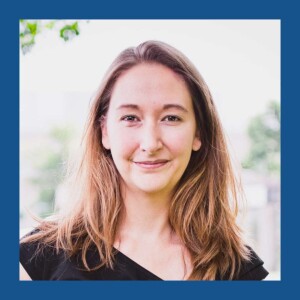
Salut! Avant de te présenter l'invitée d'aujourd'hui, et pour célébrer les deux ans de Papa PhD, j'aimerais t'étendre une invitation, directement à toi.Si un des épisodes de Papa PhD a suscité chez toi une question, ou si tu aimerais que je temette en contact avec les gens que tu vois passer sur le podcast, ou, encore, ou si tu aimerais contribuer d'une façon ou d'une autre à Papa PhD, avec des suggestions ou même du contenu, écris-moi à david@papaphd.com.Ça me fera plaisir de te répondre et, éventuellement, d'en discuter avec toi. Je réfléchis en ce moment à la Saison 3, et c'est le moment de brasser des idées! Donc, n'hésite pas!Et en parlant de brassage d'idées, dans la conversation que je partage avec toi cette semaine, j'ai le plaisir de t'apporter Emilie-Jade Poliquin, qui travaille à la direction générale de l'INRS, et avec qui j'ai parlé des mythes qui entourent la question des débouchés professionnels pour les docteur.e.s.
Ce que tu apprendras dans cet épisode :
Comment l'implication dans les associations étudiantes a enrichi le parcours académique d'Emilie-Jade et lui a apporté d'intéressantes compétences transversalesPourquoi le choix d'université est important si l'associativisme t'intéressePourquoi le mythe selon lequel la vie des étudiants aux cycles supérieurs doit être monastique est dangereuxComment échapper à l'effet tunnel pendant don doctoratLe discours pernicieux autour du plan B, au doctorat, teinté de la notion d'échecPourquoi il faut déboulonner le mythe de la surqualification des docteur.e.sL'important d'avoir des différents modèles de parcours après le doctorat sur lesquels s'inspirerLes portes qui s'ouvrent à nous quand on prend l'approche "multivers" d'options de carrièreComment répondre à la question "Mais pourquoi tu as fait un doctorat, alors?" en entrevue d'emploiTu aimes Papa PhD ? Laisse-moi un commentaire ici - une courte phrase suffit ! Et inclus ton identifiant Twitter – comme ça je pourrai te remercier personnellement !
Emilie-Jade Poliquin est conseillère en relations gouvernementales à la direction générale de l’Institut national de la recherche scientifique (INRS). Au cours de ses études aux cycles supérieurs, réalisées à l’Université Laval en cotutelle avec l’Université Toulouse II Jean-Jaurès, et de son stage postdoctoral fait à l’Université Columbia de New York, elle s’est principalement intéressée à la mise en forme de la connaissance scientifique à l’époque gréco-romaine. Ses nombreuses implications, dans des associations étudiantes notamment, ont marqué son parcours et l’ont poussé à s’interroger sur les moyens de mieux préparer la communauté étudiante aux cycles supérieurs à leur arrivée sur le marché du travail. Elle tient depuis janvier 2021 une chronique nommée « Prof ou pas » dans le magazine Affaires universitaires.
Merci Emilie-Jade!
Si cet entretien avec Emilie-Jade Poliquin t'a plu, fais-lui en part en cliquant sur le lien ci-dessous et en lui laissant un message sur LinkedIn :Clique ici pour la remercier sur LinkedIn !Clique ici pour partager avec David le principal message que tu retiens de cet épisode !
Télécharge la "Boîte à outils pour le doctorat" maintenant !
Les perles de sagesse d'Emilie-Jade :
« Moi, si j'ai un message à passer, c'Est de toujours essayer de garder un contact avec la réalité. Que ça soit par le sport, que ça soit par la culture, en faisant de la musique ou du théâtre, les implications, le bénévolat, que ça soit à l'intérieur ou à l'extérieur de l'université, c'est un moyen de garder notre tête sur nos épaules. Mais aussi, c'est particulier, parce qu'on parle beaucoup de réseautage, aussi, pour être capable d'avoir un emploi, plus tard, et ces emplois-là sont de plus en plus à l'extérieur de l'université, donc le réseautage, c'Est important.
Thursday Jul 08, 2021
Thursday Jul 08, 2021
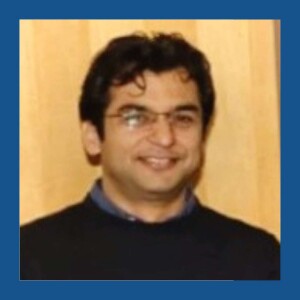
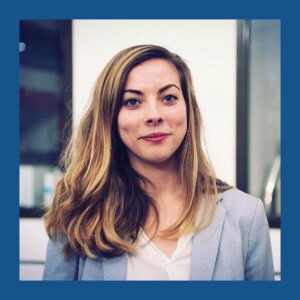
Hi! This week I have the pleasure of bringing you someone whose mission is to help graduate students and postdocs with their career development. As Director of UC Irvine's GPS-STEM Program, Harinder Singh achieves this transition support through different approaches, including training, mentoring, and networking. During our conversation, we talked about how he got interested and involved in conversations and organizations around the post-PhD career question and about his view on what the landscape is looking like today.
What you’ll learn about in this episode:
What Harinder did when he asked himself "Where do PhDs go?"The power of being part of graduate student and postdoc associationsHow Harinder busted the myth that getting involved in projects outside the lab hinders your productivityHow pairing academic training with career training increased faculty adhesion to the GPS-STEM ProgramWhy taking part student-led initiatives is an extremely enriching experience and how it brought Harinder to his current positionHow to fund your student-led symposia and other projects from your bench
Harinder Singh is Program Director, Graduate Professional Success in S.T.E.M. at UC Irvine. Previously, Harinder served as the Associate Director for the NIH-BEST funded program, GPS-BIOMED from 2018 2019. He earned his Doctorate in Cardiovascular biology from the Temple University School of Medicine, Philadelphia in 2014 and conducted Postdoctoral training in Neurosciences at the University of Illinois at Chicago from 2014 to 2018. Harinder served many executive roles in a Chicago based Scientist organization, CHIentist, dedicated to providing a networking platform for junior researchers & industry professionals. He was appointed to the Board of Directors of the science advocacy organization, Future of Research, with a mission to engage & empower early career scientists with evidence-based resources in improving the scientific research endeavor. As the leader of UC Irvine’s GPS-STEM program, Harinder is dedicated to finding solutions that broaden research training, foster relationships between academia and the private sector, and raise awareness on how academic discoveries advance society.
Thank you, Harinder Singh!
If you enjoyed this interview with Mark, let him know by clicking the link below and leaving him a message on Twitter:Click here to thank Harinder Singh on Twitter!Click here to share your key take-away from this interview with David!
Support the show on Patreon !
Or buy me a coffee :)
Harinder's pearls of wisdom:
“When you listen to this podcast and listen to me and David, you try to connect with me, do not just connect - write something in the brief note, short note. "Hello Harinder! It was wonderful listening to you for the Papa PhD podcast with David". If you liked the podcast, say that you liked it and you would like to keep in touch. There you go - my connection with you. In the future if you're applying to some job and you see that this is the company, had these other people who work in company, which you can actually see on LinkedIn, and then it will also tell you those people who are working, who they are connected to. You see that they are connected to me, now this is your gateway to getting into that company. Write a message - "Harinder, I saw that you are connected with this person, I'm applying to this position - would you be ok connecting me to them?" And when I see that you had written me a message in the past where you heard the podcast, and we connected, 99% of times, I'm going to respond to you. If I do not see a message or a history of past messages as to why you're connecting, I am not going to respond.”“If you don't have it, ask for it. If they are not doing it, you do it. You're scientists – you're entrepreneurial. You sit, read a paper, identify the void – it's almost like doing a market research. And now,
Thursday Jul 01, 2021
Thursday Jul 01, 2021
Contribue à la production de Papa PhD sur Patreon !
Ou ravitaille David en café :)
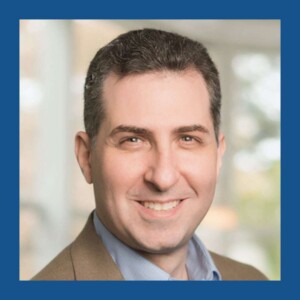
Cette semaine, j'ai le plaisir de t'apporter ma conversation avec Mathilde Maillard, créatrice du podcast "Bien dans ma thèse" et du talk show Twitch "Le doctorat part en live!" Une conversation entre deux podcasteur.e.s est souvent animée et dynamique. Avec Mathilde, le fait qu'elle est une influenceuse qui se dédie à la promotion du doctorat a rendu notre échange encore plus intéressant :)
Ce que tu apprendras dans cet épisode :
Le parcours atypique de Mathilde et l'intérêt d'un parcours interdisciplinaireL'intérêt de bouger entre stage, master et doctoratLes défis qu'apportent le COVID et le Brexit aux voyages pendant la thèseComment le podcast Bien dans ma thèse est néComment un doctorat nous prépare pour l'entrepreneuriatLes conseils de Mathilde Maillard pour être bien dans sa thèse même en temps de pandémieTu aimes Papa PhD ? Laisse-moi un commentaire ici - une courte phrase suffit ! Et inclus ton identifiant Twitter – comme ça je pourrai te remercier personnellement !
Mathilde Maillard est en troisième année de Doctorat au sein du laboratoire MATEIS à l'INSA de Lyon. Sa thèse s'intitule : Relation entre propriétés rhéologiques, mécaniques et imprimabilité de pièces mono et multi-matériaux céramiques réalisées par fabrication additives. En gros, elle utilise une imprimante 3D pour fabriquer des pièces céramiques qui seront utilisées dans le domaine biomédical.
Merci Mathilde!
Si cet entretien avec Mathilde Maillard t'a plu, fais-lui en part en cliquant sur le lien ci-dessous et en lui laissant un message sur LinkedIn :Clique ici pour la remercier sur LinkedIn !Clique ici pour partager avec David le principal message que tu retiens de cet épisode !
Télécharge la "Boîte à outils pour le doctorat" maintenant !
Les perles de sagesse de Mathilde :
« Moi, j'irais même un peu plus loin. Maintenant je trouve dommage les gens qui font toute leur scolarité, jusqu'au doctorat, au même endroit et qui font leur stage au même endroit. Et vraiment, moi je pense qu'il faut arrêter de penser comme ça, même si des fois, oui, c'est facile parce que les profs vous connaissent. Oui, c'est facile, mais en fait, ce n'est pas ça, et je pense qu'il faut aller au-delà de ça et, justement, encourager les étudiants à ne pas rester au même endroit, à ne pas faire leur stage au même endroit, à ne pas faire leur doctorat au même endroit. »« Oui, en France, il y a ce mouvement de parler de la startup, de rendre ça normal, de rendre ça possible et de dire aux gens "Vous avez les compétences, vous avez la possibilité de le faire." Malheureusement, encore une fois, ce qui peut freiner des doctorant.e.s, c'est toujours pareil - c'est l'équipe encadrante et que, malheureusement, parfois on peut se trouver face à des directeurs, directices de thèse qui sont complètement réfractaires à ce domaine-là. qui ne voient pas du tout l'intérêt de valoriser ses travaux de recherche autre que dans le domaine public. »
Les ressources de cet épisode :
Mathilde Maillard | LinkedInBien dans ma thèse | Site WebBien dans ma Thèse | YouTubeProgramme Jeunes Chercheurs Spécial Startup | Site Web
Tu aimeras aussi ces épisodes :
Elodie Chabrol – La passion pour la science et pour la vulgarisation : PapaPhD.com/33Elodie Cheyrou – Rapprocher science et société : PapaPhD.com/91Émilie Doré – Venir en aide aux doctorant.e.s en SHS : PapaPhD.com/112Martha Boeglin – Débloquer la rédaction de thèse : PapaPhD.com/96
Thursday Jun 24, 2021
Thursday Jun 24, 2021
Support the show on Patreon !
Or buy me a coffee :)
Welcome to another episode of Papa PhD. This week I have the pleasure of sharing one of the longest interviews of the season, but also one of the most jam-packed with insights and advice on how to take control of your career as a PhD, be it in academia our outside of it. So be sure to have pen and paper before hitting play on this Papa PhD interview with Mark Herschberg!
What you’ll learn about in this episode:
Mark's academic journeyThe motivation behind his book - The Career ToolkitWhy time spent developing career skills is well investedYou shouldn't take your career decisions in a vacuum - start talking to people about their careers nowHow to network as an introvertThe cultural differences between academia and industryWhy you should negotiate compensation, not only salaryHow building and updating a career plan can help youHow to find your place in an organization where you're the first PhDThe importance of building your personal brand in today's market
Mark Herschberg is the author of The Career Toolkit, Essential Skills for Success That No One Taught You. From tracking criminals and terrorists on the dark web to creating marketplaces and new authentication systems, Mark has spent his career launching and developing new ventures at startups and Fortune 500s and in academia. He helped to start the Undergraduate Practice Opportunities Program, dubbed MIT’s “career success accelerator,” where he teaches annually. At MIT, he received a B.S. in physics, a B.S. in electrical engineering & computer science, and a M.Eng. in electrical engineering & computer science, focusing on cryptography. At Harvard Business School, Mark helped create a platform used to teach finance at prominent business schools. He also works with many non-profits, including Techie Youth and Plant A Million Corals. He was one of the top-ranked ballroom dancers in the country and now lives in New York City.You can learn where to purchase "The Career Toolkit: Essential Skills for Success That No One Taught You" at:www.TheCareerToolkitBook.com
Thank you, Mark Herschberg!
If you enjoyed this interview with Mark, let him know by clicking the link below and leaving him a message on Twitter:Click here to thank Mark Herschberg on Twitter!Click here to share your key take-away from this interview with David!
Mark's pearls of wisdom:
“Negotiations are a skill that you should learn. So imagine the following scenario: You get a job outside of academia, you take your first industry job. Maybe you're 30 years old. Let's say they offer you 80,000 dollars and you negotiate to 81,000. Not a massive lift, right? We can all imagine doing that. If you do nothing else, you just sit in that job the rest of your career, you spend another 35 years working at this one job – you just made 35,000 dollars. One negotiation, tiny lift – 35,000 dollars. Now, imagine that you don't just sit in one job, right? You, of course, takes other jobs. You get promotions, you negotiate those. Again, you negotiate for maybe just a few thousand more. These aren't heavy lifts, you're not some world class negotiator – you're just doing a little better. You can literally add tens of thousands, even hundreds of thousands of dollars to your lifetime income.”“I am naturally an introvert. Here's the thing – you think about that stereotype of a networker who does go to the conference and schmoozes everyone and gives out cards. Yeah, that's not networking. It's one way to do it, but that's not the only way. If you've ever had a friend, you know how to network. It is just building a relationship. Now, it doesn't mean everyone in your network is your personal fiend, right? There's some people who are my friends and they're in my network, there's some people we're just business contacts. We don't hang out on weekends, but we can call each other, reach out,