Beyond the Thesis With Papa PhD
Real PhDs. Real Journeys. Beyond Academia.
Listen on:








Episodes
Thursday Jun 17, 2021
Thursday Jun 17, 2021
Contribue à la production de Papa PhD sur Patreon !
Ou ravitaille David en café :)
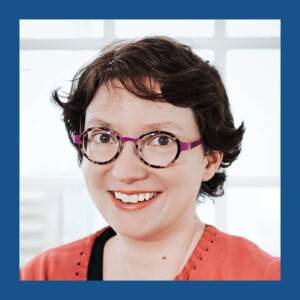
Cette semaine, je t'apporte une conversation où, avec Émilie Doré de Réussir son doctorat, on fait une radiographie des défis actuels de l'expérience de la thèse en sciences humaines et sociales (SHS) et où on discute des pistes à suivre pour offrir aux doctorant.e.s une expérience formatrice et davantage épanouissante.
Ce que tu apprendras dans cet épisode :
La réalité des thèses sans financement en SHSCe qui a mené Émilie à ne pas reconduire son contrat de postdoctoratL'état de la santé mentale des doctorant.e.s aujourd'huiPourquoi le modèle des sciences exactes ou naturelles ne foncionne pas pour un doctorat en SHSL'importance de trouver des espaces bienveillants pour échanger avec des pairs à propos de notre expérience du doctoratL'importance d'échanger le perfectionnisme et des échéances irréalistse par la confiance et la régularitéLes changements qui se font aujourd'hui dans la formation des encadrantsPourquoi la thèse en vaut la chandelleTu aimes Papa PhD ? Laisse-moi un commentaire ici - une courte phrase suffit ! Et inclus ton identifiant Twitter – comme ça je pourrai te remercier personnellement !
Emilie Doré a soutenu une thèse en sociologie en 2009 à l'Ecole de Hautes Etudes à Paris, puis elle a commencé une carrière de chercheuse par la voie classique : un post-doctorat. Pourtant, en 2012, Emilie décidé de trouver un chemin plus aligné avec sa vision et son rythme de vie ; elle est devenue formatrice indépendante auprès des doctorants. Son rôle ? Leur permettre d'oser exprimer leur créativité et leur singularité dans leur thèse - tout en suivant les règles du jeu académique. Sa mission : que la thèse soit pour les doctorants une expérience de plaisir intellectuel et d'affirmation personnelle !
Merci Emilie !
Si cet entretien avec Emilie Doré t'a plu, fais-lui en part en cliquant sur le lien ci-dessous et en lui laissant un message sur LinkedIn :Clique ici pour la remercier sur LinkedIn !Clique ici pour partager avec David le principal message que tu retiens de cet épisode !
Télécharge la "Boîte à outils pour le doctorat" maintenant !
Les perles de sagesse d'Emilie :
« Le plainte qui revient souvent c'est justement cette question du temps, à savoir "je suis trop lent, je suis trop lente – je n'arrive pas à tenir mes échéances." Et ça, c'est surtout quand on s'approche de la fin de la thèse, où la pression monte, bien sûr. Et ce qu'il y a derrière, quand on creuse un peu, c'est que le doctorant peut-être qu'il a une famille, peut-être qu'il doit travailler à côté, dans le cas des doctorantes, il peut y avoir des maternités qui arrivent. En fait, il y a la vie à coté de la thèse et ils aimeraient bien, eux, être dans un monastère, dans une bulle, et faire la thèse et ne faire que ça, s'y consacrer. Et, alors, peut-être qu'ils se disent "dans ces cas-là j'y arriverais." Mais en réalité, ça ne peut pas être comme ça. La thèse, elle se fait au sein de notre vie et elle doit se faire en harmonie avec notre vie. »« La diversité dans la recherche, elle existe, à la base, fortement. Et puis elle existe pour les maitres de conférences – un peu moins, mais quand même, encore – et pour les professeurs, c'est-à-dire qu'en fait, plus on va monter dans les échelons, plus la diversité se perd. C'est-à-dire que ça infuse lentement, en réalité. »« En étant plus ouverts, on ne va pas perdre en rigueur intellectuelle. On peut tout à fait avoir une recherche plus ouverte, qui donne plus d'espace à la créativité, à la singularité, à la liberté des doctorants et qui gardera sa qualité. Et, même, qui peut être plus qualitative, parce que ça n'est pas contradictoire avec la rigueur des raisonnements, de l'argumentation que peuvent mettre en place ces doctorants. »
Les ressources de cet épisode :
Emilie Doré | LinkedInEmilie Doré | FacebookRéussir Sa ...
Thursday Jun 10, 2021
Thursday Jun 10, 2021
Support the show on Patreon !
Or buy me a coffee :)
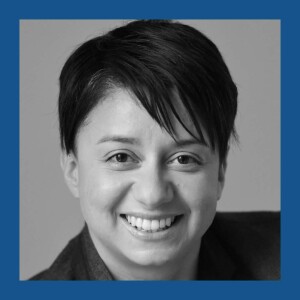
This week on the show, I bring you a very lucid and pleasant conversation about how the graduate school experience could improve with Monica Granados, Policy advisor at Environment and Climate Change Canada. A lot of the conversation revolved around a subject that I'm passionate about - how can we change the PhD experience so it works for all candidates, effectively launching them towards successful academic, but also non-academic careers. During our conversation, Monica shared her reflections on this issue, basing them on her own experience going through her PhD and her postdoc.
What you’ll learn about in this episode:
Monica's path from PhD to postdoc, to her current position in a governmental institute
Her views on paths toward adapting graduate programs to the current reality of the academic job market
The importance of looking for a mentor as you start your graduate studies, especially if you are first generation graduate student
How Monica experienced the stigma that still exists around deciding to leave academia
How Monica sees the explicit and less explicit skills developed during her PhD that she leverages in her current position
What a privileged time the PhD is to learn everything that interests you
How important it is to have a community outside the lab for your personal growth, for your mental health, and for your networking
Dr. Monica Granados is committed to making science more open and accessible. She is open science and data policy advisor at Environment and Climate Change Canada, she is on the leadership team of PREreview working to bring more diversity to peer review, she’s a Frictionless Data Fellow and is on the Board of Directors of the Canadian Open Data Society.
Thank you, Monica Granados!
If you enjoyed this interview with Monica, let her know by clicking the link below and leaving her a message on Twitter:
Click here to thank Monica Granados on Twitter!
Click here to share your key take-away from this interview with David!
Monica's pearls of wisdom:
“The point of a PhD cannot be to become a professor, it can be an option. The PhD is an amazing time where you get to ask really cool questions and meet a lot of other passionate people who are interested in asking questions. And you learn how to do research and how to think through problems, and think through experiments to try to answer those questions. And it's learning how to do those things - that's what you're doing in a PhD. Your outputs are these papers becaust that's what academia tells you that those are the outputs that should be, which, for the record, are not even the best way for us to be communicating what our results are. But it's you learning those elements - that's the output of a PhD, that's what you're getting into a PhD to learn.”
“Learning how to do science is really important and I think one of the major things that comes out of your PhD, but what gave me this incredible career is this thing that I was doing on the side, that wasn't being recognized, and that I kind of had to do it in secret. And I think that's sort of the crux of what we should discuss, and that is how do we build an environment, how do we build academic programs that allow you equal time for both and recognize both. I would like to see incoming graduate students outlining their work plan - you know, they talk about how many publications they want to do or how many collaborations they want to be a part of, but also... it should also be "Well, I also want to learn how to code and I also want to learn about science communication". And having those conversation initially, with your supervisor, so that that becomes part of your program. If I could redo it, that's what I would have done. Because sometimes I felt guilty that I was doing these things, even though in the end that's what gave me my career!”
“Think about all these skills that you're gaining during a PhD and think about how you ca...
Thursday Jun 03, 2021
Thursday Jun 03, 2021
Contribue à la production de Papa PhD sur Patreon !
Cette semaine, j'ai l'énorme plaisir de t'apporter les deux chercheuses derrière Thésard-es, un podcast sur la vie de thèse dans le domaine des sciences sociales. Au fil de notre conversation, Jeanne Perrier et Marianne Le Gagneur ont partagé avec moi non seulement leur expérience en tant que chercheuses, mais aussi les questions qui les passionnent à propos du doctorat tel que le vivent les thésardes et thésards en France aujourd'hui.
Ce que tu apprendras dans cet épisode :
Ce qu'est le podcast Thésard-esCe qu'est une thèse CIFRE et quels sont ses avantagesLes problématiques particulières aux thèses en sciences socialesVos compétences insoupçonnées développées au long de votre doctoratLe besoin de mieux coordonner les sciences sociales et le sciences humainesL'autoévaluation des connaissances pendant la thèse - est-ce qu'elle devrait être obligatoire?La réalité des thèses sans financementQuelle place occupe un.e doctorant.e en sciences sociales dans une entreprise dans le cadre d'une thèse CIFRE ?Tu aimes Papa PhD ? Laisse-moi un commentaire ici - une courte phrase suffit ! Et inclus ton identifiant Twitter – comme ça je pourrai te remercier personnellement !
Thésard-es est un podcast sur les doctorant-es en sciences humaines et sociales, qui les fait parler de leur recherches en cours et de leur expérience de la thèse. Il est réalisé par Marianne Le Gagneur, doctorante en sociologie, et Jeanne Perrier, docteure en sciences politique.
Merci Jeanne et Marianne !
Si cet entretien avec Jeanne Perrier et Marianne Le Gagneur t'a plu, fais-leur en part en cliquant sur le lien ci-dessous et en leur laissant un message sur LinkedIn :Clique ici pour les remercier sur Twitter !Clique ici pour partager avec David le principal message que tu retiens de cet épisode !
Télécharge la "Boîte à outils pour le doctorat" maintenant !
Les perles de sagesse de Jeanne et Marianne :
« Jeanne Perrier : Une thèse en sciences politiques, en sociologie, en géographie, c'est des domaines qui restent très dans le livres, en fait. Et on a l'impression qu'il n'y a pas beaucoup de domaines d'application. Et ce qui, mois aussi, m'a amenée, après la thèse, justement, à me poser beaucoup de questions sur "qu'est-ce que je fais avec ça?", parce que je n'étais pas forcément sûre de vouloir continuer dans le monde académique. Marianne Le Gagneur : Et c'est aussi un autre sujet qui va avec la question des financements, c'est ces thèses qui s'allongent pour aller jusqu'en cinquième, en sixième année, parce qu'en fait on attend de la thèse, maintenant, énormément. Il faut des publications, il faut plein de chose, en plus, de la thèse, ce qui fait qu'en fait ça dure très longtemps et que les gens ont du mal è comprendre pourquoi... Est-ce qu'on est en train de ne pas avancer? Est-ce qu'on est en train de prendre du retard? À la fois oui, mais en même temps, on n'a pas le choix que de faire des thèses très longues, quelque part. »« Jeanne Perrier : Moi, de ce que j'ai pu entendre, en tout cas, dans mon entourage, c'est qu'il y a quand même un gros fossé entre ceux qui décident de continuer la recherche académique et ceux qui ne veulent pas. Et, du coup, pas forcément considérés de la même manière, même au sein de leur laboratoire. C'est-à-dire qu'il y a quand même un espèce d'a priori pour ceux qui ne veulent pas continuer dans le milieu académique et qui disent "Eh bien, en fait, moi, je veux aller dans le privé." Je trouve que la considération n'est plus la même et ça aussi, ça pose problème, parce que ça voudrait dire qu'il y a une carrière qui est moins bien que l'autre ou qui est moins prestigieuse que l'autre. Marianne Le Gagneur : Et en plus de ça il y a aussi beaucoup de gens qui s'orientent vers la thèse délibérément, pour mettre de côté des carrières dans le monde du privé, où la thèse devient,
Thursday May 27, 2021
Thursday May 27, 2021
Get the Papa PhD Tool kit !
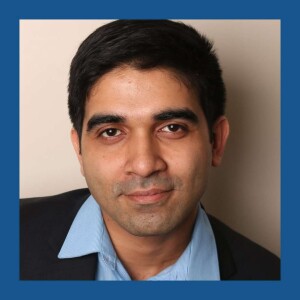
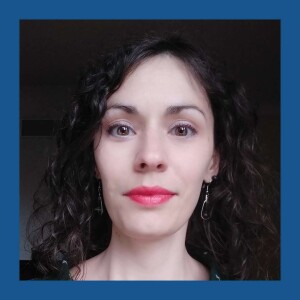
Hi! This week on Papa PhD, I’m bringing you my conversation with Parag Mahanti. "We recorded this in November, during Parag’s Thanksgiving break. Since then, India has been severely hit by the second wave of the COVID pandemic, and many lives have been lost. Parag wanted this episode to be dedicated to especially to Late Dr. Ashim Chakravarty. If you want to support the fight against COVID in India, please contact Parag - @ParagMahanti on Twitter. I'd also like to note that Parag gave this interview on Thanksgiving, while he was with his close ones, so you might hear some background noise throughout. But please bear with us, because the nuggets he shared are absolutely worth it. For example, we talked about Parag's experience interviewing for jobs – early after his PhD, but also in his most recent career moves.
What you’ll learn about in this episode:
Not everyone that enrolls into a PhD is bound to do researchNot all temperaments thrive in the academic research timeframe, in terms of results and their impact on society at largeThe positive impact being part of clubs and taking extracurricular courses can have on your mental healthParag's way of making time for extra-curricular projectsThe advantages and disadvantages of choosing a well established, tenured professor, versus a young professor vying for tenure as a PhD supervisorParag's experience of the consulting pathThe advanteges of doing informational interviews when you don't need a jobRejections are not about your abilities, they are about a mutual fit that didn't happen + you should always ask for feedback after your application was rejectedWhy advice from a community is much more valuable than the advice you get from a single personThe job hunt is a process - you get better at it as you go
Parag Mahanti received his Ph.D. in Chemistry and Chemical Biology in 2013 from Cornell University where his research was focused on nuclear hormone receptors, steroid signaling, and metabolomics. Since then he has moved careers thrice first to consulting then to finance, and currently in pharma.Outside of life sciences and biopharma strategy, Parag’s passions include music, both playing and listening, biotech startups and understanding the evolution of scientific reasoning and leadership skills. Parag takes an active interest in career progression of PhD students and has created a fast growing LinkedIn Group that currently has ~7500+ members. Parag also serves as a mentor for the Entrepreneurship Lab (ELabNYC) originally launched by the New York City Economic Development Corporation to provide mentorship to biotech/health-tech start-ups in the New York area.
Thank you, Parag Mahanti!
If you enjoyed this interview with Parag, let him know by clicking the link below and leaving him a message on Twitter:Click here to thank Parag Mahanti on Twitter!Click here to share your key take-away from this interview with David!
Parag's pearls of wisdom:
“Parag – Once I came here and I enrolled into a PhD programme, I was like, "Oh! This is awesome! This is Super cool, smart thinking stuff and I can thrive in this." And I started doing that for first year and second year, and then by third year, I was like, "No way...". Like, I like the smart thinking part of it, I like the science, but I don't want to do this for the rest of my life. And I think the main reason was, I love the science. In fact, I've stayed very close to the science most of my career, but it was the impact of it, right? Like, for some reason, I always thought the stuff that I was doing, you would see maybe a return or a clinical development of it in, like, 10, 15, 20 years. So there's no immediate translation of this work. David – "Talk about delayed gratification, there, right?" Parag – Exactly!”“Parag – The same guy had told me that any job, if you don't like the interview process, chances are you won't like the job.
Thursday May 20, 2021
Thursday May 20, 2021
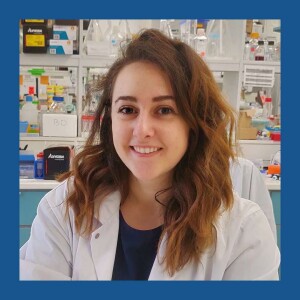
Cette semaine, je vous apporte mon entrevue avec Marie Itoiz. Marie a un trajet en histoire et a partagé avec moi le cheminement qui l'a menée de son doctorat au poste qu'elle occupe aujourd'hui chez Capgemini comme consultante fonctionnelle.
Ce que tu apprendras dans cet épisode :
Les différents tournants du trajet de Marie ItoizLe master comme tube à essais avant le doctoratPourquoi il faut profiter des ateliers et formations offerts par votre programme/département/universitéL'importance d'avoir des gens bienveillants envers nous dans notre tissu socialQue ce n'est pas normal d'encaisser seul un excès de pression et de doute, ni du harcèlement, en tant que doctorant.eL'intérêt de travailler avec des organismes comme l'APEC, une fois qu'on a été cadre ou bac +8, et de participer à des forums pôle emploiConseil entrevue d'emploi: préparation, préparation, préparationTu aimes Papa PhD ? Laisse-moi un commentaire ici - une courte phrase suffit ! Et inclus ton identifiant Twitter – comme ça je pourrai te remercier personnellement !
Actuellement, Marie Itoiz aime dire avec humour qu'elle entame sa troisième carrière professionnelle. Elle a été enseignante dans le secondaire en science de la vie et de la Terre, puis jeune chercheuse en histoire de la géologie avec un passage dans la valorisation du patrimoine scientifique instrumental.A présent, Marie est consultante fonctionnelle chez Capgemini, une entreprise de services du numérique.
Merci Marie Itoiz !
Si cet entretien avec Marie Itoiz t'a plu, fais-lui en part en cliquant sur le lien ci-dessous et en lui laissant un message sur LinkedIn :Clique ici pour remercier Marie sur LinkedIn !Clique ici pour partager avec David le principal message que tu retiens de cet épisode !
Télécharge la "Boîte à outils pour le doctorat" maintenant !
Contribue à la production de Papa PhD sur Patreon !
Les perles de sagesse de Marie :
« J'ai essayé de le faire d'une certaine manière et c'est vrai que c'est très difficile de le faire quand on est en thèse, parce qu'on a beaucoup d'impératifs. Et je pense qu'on en a encore plus quand on est en science, que ce soit en biologie, comme toi, ou en physique, ou quoi que ce soit. C'est encore plus difficile de dégager du temps par rapport aux contingences qu'imposent soit les directeurs de thèse, soit les encadrants, de publication d'articles, d'expériences, etc. Et, au contraire, en fait, ces trois années-là, je l'ai découvert par la suite sur un petit poste que j'ai occupé l'année dernière, sur l'encadrement du doctorat, et il y a tellement de possibilités. De formation, de prise de contact à l'entreprenariat, de possibilités de faire des stages, aussi. Enfin, c'est tellement riche et surtout, en fait, c'est gratuit! Quand on est étudiant, ce n'est pas du tout négligeable. Et avec des personnes qu'on rencontre, on peut commencer à se créer un réseau. On peut aussi, en fait, prendre des contacts pour plus tard. »« C'est là où je me suis dit – bon, de toute façon, la voie de la recherche pure était très compliquée, dans le sens où obtenir un poste en France, c'était difficile. C'est vrai que c'est une idée qui m'a un peu effleuré l'esprit, mais très rapidement, je l'ai remisée de côté, puisqu'elle était vraiment impossible à réaliser, ou alors dans beaucoup, beaucoup d'années et avec beaucoup d'effort, ce que je n'étais pas forcément prête à accepter. Et je me suis dit - bon, on va aller voir du côté médiation scientifique, valorisation, qu'est-ce qui se passe. Et puis, une fois qu'on se dit "on va voir de l'autre côté", eh bien, pourquoi pas ouvrir la porte en grand et se dire "eh bien, on va peut-être aller voir aussi dans des entreprises privées, qu'est-ce qui me plaît."? »
Les ressources de cet épisode :
Marie Itoiz | LinkedIn
Tu aimeras aussi ces épisodes :
Amandine Bugnicourt – Emploi et doctorat en 2021 : PapaPhD.
Thursday May 13, 2021
Thursday May 13, 2021
Get the Papa PhD Tool kit !
This week on the show, I'm talking with Sarah Nersesian, a PhD researcher who pursues many passions and interests in life, while remaining a scientist at heart. During our conversation, we talk about making decisions during your academic journey, about finding ways of nurturing your creative side during your PhD, and about the important role mentors can play in your life, especially as a woman in academia.
What you’ll learn about in this episode:
The importance of choosing an academic path that fits youHow you can gain PhD-adjacent experience through internshipsSarah's charged schedule and how she finds balance in itHow dividing her self-worth between her different centers of interest helps her deal with failureWhat launching a business during your PhD can look likeHow finding a mentor can help you launch your projectHow small startup grants could help you take the first stepsDo you enjoy Papa PhD? Leave me a comment here - one short sentence is enough! And be sure to include your Twitter handle – that way, I can thank you personally! Or if you prefer, fuel my long audio editing and notes page writing nights by buying me a coffee! Just click on the button below and voilà! An espresso, a cappucino, a latte – you decide. I'll be immensely grateful.
Buy me a coffee !
Sarah Nersesian is a passionate researcher who loves to share scientific knowledge through illustrations and other visual communication strategies. She obtained her MSc in Biochemistry and Cell Biology at Queens University and is currently completing her Ph.D. in Microbiology and Immunology at Dalhousie University focusing on exploring the impact of intra-tumoural immune cells on tumour development and treatment responses.Over her academic journey, she has published her research in journals including, Scientific Reports, Oncoimmunology, Frontiers of Immunology, The Journal for Immunotherapy of Cancer and the British Medical Journal. Many of these publications were accompanied by her custom scientific illustrations. With her unique expertise combining scientific communication strategies with illustration and graphic design, Sarah founded Designs that Cell in 2017. Sarahs vision for the company was a space where scien-artists such as herself and others could combine their scientific foundation with their visual communication skills to illustrate the ideas of other members of the scientific community.She is a senior illustrator at Designs that Cell and oversees all its operations.
Thank you, Sarah Nersesian!
If you enjoyed this interview with Sarah, let her know by clicking the link below and leaving her a message on Twitter:Click here to thank Sarah Nersesian on Twitter!Click here to share your key take-away from this interview with David!
Sarah's pearls of wisdom:
“You know, if somebody looked at my CV, they would be super impressed and, you know, would praise X, Y, and Z. But if I honestly put together a failure CV, it would be like a novel. It would be thicker than the Bible. The reality is, I've had so many people close doors in my face. I've had so many people question why I've been at a table, why I've been doing something. And I think having that worth, that self-worth divided and not having it into just your research project, like you were saying, David, is so important, because now I don't look at myself as like, "Okay, I'm a scientist. And if I'm not a scientist, then I'm nothing else." It's – no, I'm a scientist, and I'm an entrepreneur, and I'm an artist, and I'm a role model, and I'm a feminist, and I have these identifiers, you know? And, like, I'm a wife now and a dog mom. And there's all these things that I hold my self-worth into. That way, if I question something, it's not everything.”“It's not that male professors can't understand, but at the same time, they haven't carried children, thay haven't had to balance the expectations of being a ...
Thursday May 06, 2021
Thursday May 06, 2021
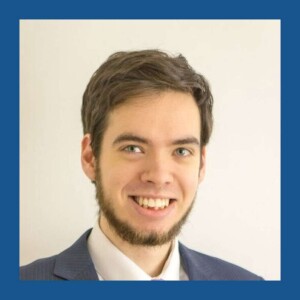
This week on Papa PhD, I'm bringing you Wilf Nelson. Wilf is a PhD researcher at the University of Bigmingham in the UK and he is the host and producer of the Watercooler Neuroscience Podcast. During our conversation, Wilf shared his passion for science, for science communication, and for podcasting. And if you listen to the end, you'll hear what advice he has to share as a PhD researcher turned entrepreneur.
What you’ll learn about in this episode:
The main goal of science communication The difference between talking science within academia and in the context of public engagementThe inner workings of content creation and of podcastingWhy you should get involved in entrepreneur groups in university and in graduate schoolDo you enjoy Papa PhD? Leave me a comment here - one short sentence is enough! And be sure to include your Twitter handle – that way, I can thank you personally!
Buy me a coffee !
Wilf Nelson is a neuroscience PhD who now runs a media company that produces a number of shows on the brain, talking not only about what the research finds but also teaching their listeners to understand HOW the research is done.
Thank you, Wilf Nelson!
If you enjoyed this interview with Wilf, let him know by clicking the link below and leaving him a message on Twitter:Click here to thank Wilf Nelson on Twitter!Click here to share your key take-away from this interview with David!
Get the Papa PhD Tool kit !
Wilf's pearl of wisdom:
“David: In your vision, why is it important for some proportion of scientists to become science communicators in more of a formal, in kind of a high quality way? Wilf: I can explain it very simply, you are paid by public money. That means the public pay your bills and they have the right to know what you do. Or they, in a democratic society, can shut you down. That's it. That is the fundamental basis. If you take their money, if you take tax payer money and are not capable of explaining to the public what you do on a level that they can understand, because I should make an aside – say that somebody chose to be an accountant, right? They chose their formative years to spend learning finance and accountancy. You spent it to learn to be a biologist. They are no lesser because they didn't do your degree. You have to explain it in a standard that they can explain, because you are the one with the privileged education to be able to.”
This episode’s resources:
Wilf Nelson | LinkedInWilf Nelson | TwitterWatercooler Neuroscience Podcast | Website
Join the Papa PhD Postgraduate Career Exploration Group!
You might also like the following episodes:
Jessica Steinberg – Being a PhD Researcher and an entrepreneurChris Kent – Leveling up to entrepreneurshipMargaret Magdesian – From the bench to entrepreneurshipClarissa Wright – Promoting the intersection between science and art
Thursday Apr 29, 2021
Thursday Apr 29, 2021
Télécharge la "Boîte à outils pour le doctorat" maintenant !
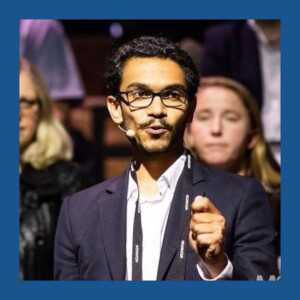
Cette semaine sur le podcast, on parle réseautage et mise en relation des docteur.e.s et du milieu privé avec Florian Andrianiazy, Directeur Général de PhDTalent. Aujourd'hui, en 2021, il y a encore un certain flou, tant dans l'idée que se font les docteur.e.s du milieu entrepreneurial que dans les attentes qu'ont les RH des sociétés face à un candidat qui se présente avec un doctorat.
Ce que tu apprendras dans cet épisode :
En quoi consiste une thèse CIFREL'importance de se familiariser avec le tissu socio-économique pendant sa thèseL'impact de la pandémie de COVID-19 sur les événements de réseautage et de recrutementLe modèle et les projets de PhDTalent en 2021Tu aimes Papa PhD ? Laisse-moi un commentaire ici - une courte phrase suffit ! Et inclus ton identifiant Twitter – comme ça je pourrai te remercier personnellement !
Florian Andrianiazy est docteur en physique de l'Ecole Polytechnique. Il a soutenu sa thèse en mars 2015 qu'il a effectuée en partenariat avec Thales, une grande entreprise française d'aéronautique, aérospatial et défense. En janvier 2017, il co-fonde PhDTalent avec 3 docteurs. L'entreprise a pour but d'accélérer le rapprochement entre le monde académique et le secteur privé.
Merci Florian Andrianiazy !
Si cet entretien avec Florian Andrianiazy t'a plu, fais-lui en part en cliquant sur le lien ci-dessous et en lui laissant un message sur Twitter :Clique ici pour remercier Florian sur Twitter !Clique ici pour partager avec David le principal message que tu retiens de cet épisode !
Les perles de sagesse de Florian :
« En l'occurrence, je ne sais pas si c'est une question de compétences, mais c'est plutôt une question de connaissance du monde socio-économique. Et c'est ce que je remarque aujourd'hui et c'est ce que je dis à tous les doctorants que je croise, c'est : "Intéressez-vous au monde socio-économique, intéressez-vous au mode de fonctionnement d'une entreprise – comment elle est structurée, comment elle fonctionne." Et ça, pour le coup comme j'étais en thèse dans une entreprise, ça, je le voyais au jour-le-jour. Et je n'avais pas besoin de l'apprendre ou de le découvrir par ailleurs, puisque c'était mon quotidien. Et, donc, ce n'est pas tellement une question de compétences. Je pense que c'est plutôt une question connaissance de cet écosystème-là. »« C'est valable dans les deux sens. C'est-à-dire que oui, on fait tomber des prégujés que peuvent avoir des entreprises sur ce qu'est un chercheur, sur comment travaille un chercheur et sur ce que peut livrer un chercheur sur une mission aussi courte, mais l'inverse est vrai, aussi. C'est-à-dire qu'on fait tomber des préjugés sur ce qu'est une entreprise. Parfois on a des jeunes chercheurs qui ont un peu peur de collaborer avec un entreprise et, justement, on fait tomber ces préjugés-là, aussi. »
Les ressources de cet épisode :
Florian Andrianiazy | TwitterFlorian Andrianiazy | LinkedInPhDTalent | Site web | Événements : PhD Meeting AI & Data Science – 19 mai 2021 ; PhD Meeting Consulting – 24 juin 2021 ; PhDTalent Career Fair 16 – octobre 2021
Tu aimeras aussi ces épisodes :
Boîte à outils pour les études doctorales – Mon cheminement : PapaPhD.com/37Elodie Cheyrou – Rapprocher science et société : PapaPhD.com/91Marie-Andrée Fallu – Faire rayonner la science : PapaPhD.com/93Martha Boeglin – Débloquer la rédaction de thèse : PapaPhD.com/96
Thursday Apr 22, 2021
Thursday Apr 22, 2021
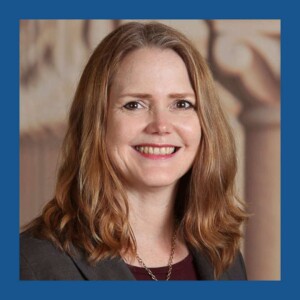
Do you need a PhD? When I launched into the doctoral adventure, I wanted to teach at the same level the professors I worked with did. So for me, the answer was yes. In today's episode, My guest, Sherri Widen, shares her journey and her reflections on the reality of the PhD career today and talks about how she found a path that led her to doing research and applying her expertise in child psychology at the community level, in the non-academic space.
What you’ll learn about in this episode:
The huge difference between a CV and a resume
How projecting your whole self (not only your academic skillset) outside academia can help you find your place
How long in average you can expect to be on the job hunt in betweeen positions
What happens when your supervisor moves to another university during your PhD
The importance of finding a community when starting graduate school in a new city
Think if having an applied aspect to your research can open doors for you, in terms of interdisciplinarity and collaboration, but also of widening your professional horizons
Do you enjoy Papa PhD? Leave me a comment here - one short sentence is enough! And be sure to include your Twitter handle – that way, I can thank you personally!
Support the show on Patreon !
Sherri Widen has an extensive background in investigating the development of childrens concepts of emotions.
In 2013, she transitioned from basic research in developmental psychology to more applied intervention research in education settings with a focus on increasing childrens social-emotional skills to support their academic outcomes. In 2015, Sheri joined a team at the Stanford University Graduate School of Education and contributed to a text messaging-based parenting intervention designed to help parents support their preschoolers school readiness in literacy, math, and social-emotional skills. In 2018, she joined Committee for Children as the Director of Research, to help children thrive through our social-emotional learning interventions.
Thank you, Sherri Widen!
If you enjoyed this interview with Sherri, let her know by clicking the link below and leaving her a message on Twitter:
Click here to thank Sherri Widen on Twitter!
Click here to share your key take-away from this interview with David!
Download "Tools for Your PhD Journey" !
Sherri’s pearls of wisdom:
“My plan was to become a professor and to continue the basic research I was doing, but I think it's really smart to open up some doors so that you have other options if that first plant doesn't work out. So I think I could have made the transition to doing applied research in educational settings around social-emotional learning a lot earlier if I had considered that I needed a different plan or, at least, a backup plan. I think we get really focused in grad school on the one thing that we're doing, and how we're going to keep doing that and, really, grad school is the great time to look at other opportunities, get other experiences and see if there are other things that you could also really, really love.”
“It wasn't until after I had my PhD that I realized that there were just so many PhDs on the market, right now, that it's so hard to get a position as a professor. So when I talk to people who are going into grad school or part way through their progam, and they're like "should I apply for masters or a PhD? What do I need?" I recommend that they go and look at positions that they're interested in. So if you really want to be a professor, a PhD is a definite requirement. But for a lot of the positions I applied to before I got this one, a PhD wasn't required. It was a nice to have. But you could get those kinds of positions with a masters degree, so I think that's something to give serious thought to – how much education do you need to do the kind of job you want to do.”
This episode’s resources:
Sherri Widen | LinkedIn
Sherri Widen | Twitter
The Imagine Neighborhood | Website
Thursday Apr 15, 2021
Thursday Apr 15, 2021
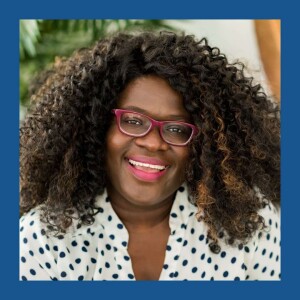
My experience going through graduate school was mostly of graduate students being fully funded and working exclusively on their PhD, at least until the time came to write their thesis. But this is not the reality for everyone and in all domains of research. Today, I'm bringing you a conversation with Gertrude Nonterah about her journey so far, about her side-hustles during graduate school, abouth her life balance and time management life hacks, and about how she juggles her professional, personal, and family life, today.
What you’ll learn about in this episode:
How to start freelancing as a writer and as a social media managerThe key to finding those two magic hours in your day to push your side-projects forward while juggling work and familyThe power of having a blog for showcasing your writing/content creation abilitiesGee's favorite productivity hacks/toolsThe importance of highlighting your hard skills and your soft skills, during your graduate studiesHow humility and just getting your foot in the door can help launch a fulfilling career journeyDo you enjoy Papa PhD? Leave me a comment here - one short sentence is enough! And be sure to include your Twitter handle – that way, I can thank you personally!
Support the show on Patreon !
Dr. Gertrude (Gee) Nonterah is a biomedical scientist, college instructor, science communicator and author.Gee is the Host of The Create and Prosper Podcast where she interviews experts and shares tips on how to make money as a writer and author. Gee also started The Bold Biomed, a YouTube channel that provides tips on the PhD life, career and productivity for students in the biomedical sciences. When she is not doing any of these things, Gee enjoys a good spy movie.
Thank you, Gertrude!
If you enjoyed this interview with Gertrude, let her know by clicking the link below and leaving her a message on Twitter:Click here to thank Gee Nonterah on Twitter!Click here to share your key take-away from this interview with David!
Download "Tools for Your PhD Journey" !
Gertrude’s pearls of wisdom:
“Family and work is usually not the only two facets of life. You have so much more, you know? I would say – find two hours in your day or if all you have is an hour, find an hour of your day, and during that time, focus. I always used to tell people that every business that you can think about – the coffee shop in your local city or your local town has working hours, right? They usually have working hours posted. So set working hours for yourself. It's hard – personally I don't think I'm the most disciplined person, but I learned to work for 1 hour sprints and to focus on my work, so I shut off all social media, I'm not checking YouTube or anything. I just focused on my work, because I knew what I wanted. So, knowing what you want and setting aside time to do it is so critical.”“Like David said, there's a hidden job market. There's an estimated 70% of jobs in the hidden job market. That means that they actually go to people's referrals, rather than getting posted publicly. So you don't want to just rely on publicly posted jobs. You can also access jobs that are never, ever posted by knowing people. You don't have to be everybody's best friend, but nowing the people is really helpful.”“I think the biggest question for a lot of people, even at the undergraduate level, is "I'm getting this biology degree, I'm getting this PhD, but, really, I don't want to work in a lab, or I don't want to teach. I want something that pays well. Because, you know, notoriously, academia doesn't pay well. It's so funny that that's the path that everybody thinks they need to pursue, yet it doesn't pay so well... But, you know, if you have a calling for it, then that's fine.”
This episode’s resources:
Gertrude Nonterah | LinkedInGertrude Nonterah | TwitterGertrude Nonterah | YoutubeGertrude Nonterah | InstagramCalmed By Nature channel | You...