Beyond the Thesis With Papa PhD
Real PhDs. Real Journeys. Beyond Academia.
Listen on:








Episodes
Thursday Apr 08, 2021
Thursday Apr 08, 2021
Télécharge la "Boîte à outils pour le doctorat" maintenant !
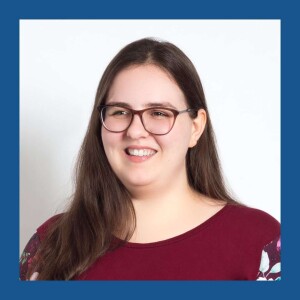
Qu'est-ce qu'Aristote a à voir avec ta recherche d'emploi ? Pourquoi devrais-tu utiliser des stylos de couleur pour écrire ta lettre de motivation ? En quoi la rédaction persuasive peut t'aider dans ton processus de réorientation professionnelle ? Dans ce nouvel épisode de Papa PhD, mon invitée, Alexandra Martel – une spécialiste du copywriting – va répondre à toutes ces questions et partager sa propre histoire de réinvention de carrière après sa license en droit.
Ce que tu apprendras dans cet épisode :
Comment faire le « framing » et la gestion des objections travailler pour toi avant une entrevue d'emploiComment Aristote peut t'aider - bien doser le logos, l'ethos et le pathos lorsqu'on se présente à un employeurPourquoi tu devrais te préparer à une entrevue d'emploi à l'oral et avec un.e ami.e (et tout enregistrer!)Comment tout simplement dire que tu est stressé.e peut désamorcer la tension en entrevueTu aimes Papa PhD ? Laisse-moi un commentaire ici - une seule phrase suffit ! Et inclus ton identifiant Twitter – comme ça je pourrai te remercier personnellement !
Liste de choses qu'Alexandra Martel n'aime pas : le marketing culpabilisant, les arguments de vente qui activent son détecteur de bullshit et parler d'elle à la troisième personne.Depuis 2017, Alexandra a enseigné la rédaction persuasive à des centaines d'entrepreneurs. Sachant qu'elle déteste écrire, c'est quand même pas pire. Ce qui la passionne? Comprendre ce qui se passe dans la tête des gens quand ils changent d'avis, qu'ils prennent une décision ou qu'ils achètent quelque chose.
Merci Alexandra Martel !
Si cet entretien avec Alexandra Martel t'a plu, fais-lui en part en cliquant sur le lien ci-dessous et en lui laissant un message sur Twitter :Clique ici pour remercier Alexandra sur Twitter !Clique ici pour partager avec David le principal message que tu retiens de cet épisode !
Joins-toi au groupe d'exploration de carrières Papa PhD !
Les perles de sagesse d'Alexandra :
« Il y a un sous-champ, si on veut, de la rédaction persuasive qui est le framing. Comment cadrer les choses pour leur donner un sens, pour leur donner une valeur. Je pense qu'une des premières choses à faire dans notre tête, c'est de voir un peu c'est quoi le lien, comment est-ce que mon parcours académique peut être une force et non pas du gaspillage ou une faiblesse, ou une perte de temps. C'est vraiment une fiction de penser que ce qu'on a fait à l'université n'a servi à rien, entre guillemets. Je ne pense pas que j'aurais un intérêt aussi grand pour la persuasion si je n'avais pas mon background en droit, si je n'avais pas eu un cours de plaidoirie. Il y a eu un impact de tout ça sur la personne que je suis et sur mes compétences. J'ai développé des compétences et une rigeur à l'université que je n'aurais peut-être jamais développées en dehors. J'ai acquis des compétences qui sont centrales aujourd'hui, dans ma vie. »« C'est quoi, le pathos et l'ethos? L'idée, c'est que si tu n'as que du rationnel, mais que tu n'as pas d'émotion et qur tu n'as pas établi ta crédibilité, les gens de vont pas croire ce que tu dis et ne vont pas s'y intéresser, de toute manière. Donc c'est vraiment important d'ancrer ce qu'on dit et les arguments qu'on présente dans de l'émotion et, aussi, de prouver notre crédibilité. Et le problème qu'on a quand on sort de l'université, c'est qu'on pense que la crédibilité, c'est nécessairement des diplômes. »
Les ressources de cet épisode :
Alexandra Martel | TwitterAlexandra Martel | LinkedInLes Mots Pour Vendre | Site web
Tu aimeras aussi ces épisodes :
Boîte à outils pour les études doctorales – Mon cheminement : PapaPhD.com/37Bruno Guglielminetti – Préparation à l'entrevue d'emploi : PapaPhD.com/84Mrim Boutla – Trouver sa tribu après le doctorat : PapaPhD.com/82Martha Boeglin – Débloquer la rédaction de thèse ...
Thursday Apr 01, 2021
Thursday Apr 01, 2021
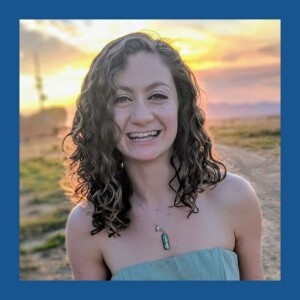
Do you have a business idea based on your PhD research? A consultancy or a deeptech project? Well, you are not alone. A lot of PhD researchers out there have plans to become their own bosses rather than getting a job, when they're done with their degree. In today's episode, you'll hear Jessica Steinberg's recount of her experience translating the knowledge she gained working on her thesis into a sustainable business.
What you’ll learn about in this episode:
Figuring out what aspect of your doctoral work is marketableTaking the risk and the time to invest in your entrepreneurial projectTaking the consultant routeNegotiating with clients as a young entrepreneurHow creating a personal board of directors can help youHow the accountability of a reading/writing/studying group can help you move your PhD forwardWhy you should be on LinkedInDo you enjoy Papa PhD? Leave me a comment here - one short sentence is enough! And be sure to include your Twitter handle – that way, I can thank you personally!
Support the show on Patreon !
Jessica Steinberg explores how change happens at the intersection of normality and unfamiliarity a cyclical process that is the 21st century embodiment of revolutions evolution. She is a PhD student at the University of Oxford researching the process of policymaking through the lens of cannabis legalization and commericalization. Jessica is setting precedence for emerging markets to refuse systematic replication. Her policy work takes place as an official delegate for cannabis related meetings held at the UN and WHO.Her academic work led to commercial opportunities. She founded and is the Managing Director of international cannabis consultancy, The Global C, and co-founder of a womens empowerment organization cultivating a space for women in the legal cannabis industry, entOURage Network. Jessica is Head of Community at Ohana CBD, a plant-based self care skincare company.
Thank you, Jessica Steinberg!
If you enjoyed this interview with Jessica Steinberg, let her know by clicking the link below and leaving her a message on LinkedIn:Click here to thank Jessica Steinberg on LinkedIn!Click here to share your key take-away from this interview with David!
Download "Tools for Your PhD Journey" !
Jessica’s pearls of wisdom:
“One thing I've started with at the center is a 3-hour reading-writing-working-studying session. It's hree sessions of 45 minutes of uninterrupted work, and then we have 15 minutes of break. And this is a common practice for people in general, it's not just for students. But if you can dedicate and block out that amount of time, knowing all of your notofications are off, your phone is in another room, your tab of social media are forgotten about – just totally non-distracted 45 minutes – what we have found from people who are joining these sessions is those three hours are the most productive hours of the day, if not the week, if it's the only session that they join.”“To my point earlier about a personal board of directors and how you can really fill your space with peolpe that you're learning from, that are challenging you – if LinkedIn is a space to do that, by all means, take advantage of the resources that are in front fo you. And I don't think an age or a gender should limit that. It's just a platform and it's how you choose to go about using it.”
This episode’s resources:
Jessica Steinberg | LinkedInJessica Steinberg | InstagramThe Big C | InstagramEntOURage | Instagram | Website | LinkedIn
Join the Papa PhD Postgraduate Career Exploration Group!
You might also like the following episodes:
Chris Kent – Leveling Up Into EntrepreneurshipEmily Roberts – The Power of the Side-Hustle or How to Set Yourself Up for a Healthy Financial LifeMargaret Magdesian – Finding Balance in the Eye of the StormKatina Rogers – Finding Your Place Professionally as a Humanities PhD
Thursday Mar 25, 2021
Thursday Mar 25, 2021
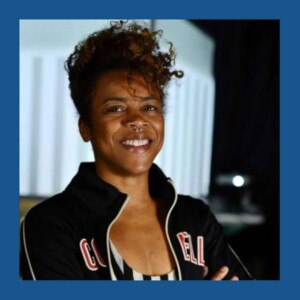
Welcome to episode 100 of the Papa PhD podcast! In a lot of the conversations I've had in past interviews here on the show, we have talked about how academia and graduate school need to change. For this special episode, I'm bringing you a conversation during which I got a glimpse at what that change can look like. With this week's guest – Shaz Zamore – we dove into the current diversity and inclusivity challenges facing academia today and into how addressing them can change the face of science and research.
What you’ll learn about in this episode:
Current roadblocks to diversity in university and in research
How we can widen the horizons of minorities early on
What has to change to make academia a really inclusive environment
Why having a support group where you can drop your guard is key
What a mentor can look like if you're working in uncharted territory
Best practices for widening your network of likeminded people
How changing how science and research is depicted on all media can positively impact young people who are minoritized or intersectional
How to think of your PhD from the point of view of the private sector and of entrepreneuship
The importance of finding joy and of giving yourself the rest you need, in whichever form it takes for you
Do you enjoy Papa PhD? Leave me a comment here - one short sentence is enough! And be sure to include your Twitter handle – that way, I can thank you personally!
Support the show on Patreon !
Shaz Zamore is a neuroengineer and STEAM Outreach Coordinator at CU Boulder. Looking to revolutionize access to STEAM learning, they are creating innovative interactive tools aimed at intersectional minoritized middle school students. Outside of work, Shaz has a penchant for creative coding, snowboarding, baking bread and woodworking.
Thank you, Shaz Zamore!
If you enjoyed this interview with Shaz, let them know by clicking the link below and leaving them a message on Twitter:
Click here to thank Shaz Zamore on Twitter!
Click here to share your key take-away from this interview with David!
Download "Tools for Your PhD Journey" !
Shaz’s pearls of wisdom:
“My advice is echoed by research – have a support group. Have a support group, have a support group, have a support group. Have people you can go and go back to your base code, go back to that natural language. Drop your guard, you know? Be yourself. Be really comfortable. You've got to have those, especially as any sort of minoritized, especially intersectional. Have your support group. For intersectional people, I will acknowledge it's super hard. For me, for example, black spaces aren't always queer friendly spaces. Queer friendly spaces aren't always black friendly spaces, and so it's a really hard thing to navigate. But still, even if you're not fully relaxed, even if you can't find a black queer space, for example, that combination, even those little bits that you get those steps that you get, if it's a single person, even, it goes so far.”
“I started to realize that there was nobody to look forward to, to say – OK, this is how you do it, this is what the decision is – because what I want to do is not really something that's been done before. And so it stops being looking ahead and seeing who is advanced, who is further, who is better, who can tell me things, and start looking to the side and saying – Who is doing something different? How are they accessing their path to success? How are they managing their work-life balance? How are they succeeding? Who are my allies? Who are people who I feel safe around as we move forward together?”
This episode’s resources:
Shaz Zamore | LinkedIn
Shaz Zamore | Twitter
Shaz Zamore | Instagram
Craniate | Website
Diversity In Academia | Instagram
Diversity In Academia Ko-Fi | ko-fi.com/diversityinacademia
Join the Papa PhD Postgraduate Career Exploration Group!
You might also like the following episodes:
Chris Humphrey – Rebranding the PhD
Thursday Mar 18, 2021
Thursday Mar 18, 2021
Télécharge la "Boîte à outils pour le doctorat" maintenant !
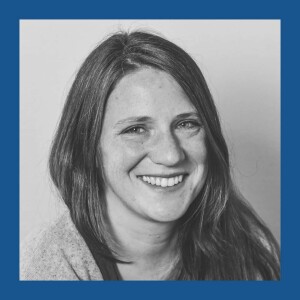
Que deviennent les docteur.e.s une fois sortis du milieu universitaire? Quel est leur rôle dans le tissu socio-écomonique aujourd'hui? Cette semaine, sur Papa PhD, on va parler du tiers secteur de la recherche et de projets d'intégration de docteur.e.s au sein de missions de science citoyenne et d'autres initiatives scientifiques en dehors du cadre académique. Pour ce faire, j'ai invité à mon micro quelqu'un qui Klask! (vérifiez sur son lien LinkedIn) – Ewa Zlotek-Zlotkiewicz.
Ce que tu apprendras dans cet épisode :
L'avantage de voir la thèse comme une partie d'un trajet professionnel dans un esprit donnant-donnant
Comment avoir des projets personnels peut dynamiser votre recherche
Ce qu'est le tiers secteur de la recherche et quel rôle peuvent y jouer les docteurs
L'intérêt de l'interdisciplinarité dans la recherche citoyenne et dans la recherche-action
Le projet Klask!, sa philosophie, ses ateliers
Tu aimes Papa PhD ? Laisse-moi un commentaire ici - une seule phrase suffit ! Et inclus ton identifiant Twitter – comme ça je pourrai te remercier personnellement !
Suite à un parcours que certain·ne·s qualifiaient de slashé (philologie, design, histoire d’art ancien...) Ewa a suivi une licence en Biotechnologies (à Cracovie), un master en Cancérologie et le master Approches Interdisciplinaires du Vivant au Centre de Recherches Interdisciplinaires de Paris. Suite à ce dernier, Ewa a décroché une bourse doctorale à l’École Doctorale du CRI pour réaliser une thèse en biophysique cellulaire à l’Institut Curie et l’Institut Pierre-Gilles de Gennes. Elle a préservé son côté divergeant pendant le doctorat et le garde encore en construisant avec d’autres docteur·e·s à Nantes, un projet qui met les compétences des docteur·e·s au service de l’innovation élargie – Klask ! Docteur·e·s et innovation sociale.
Merci Ewa Zlotek-Zlotkiewicz !
Si cet entretien avec Ewa Zlotek-Zlotkiewicz t'a plu, fais-lui en part en cliquant sur le lien ci-dessous et en lui laissant un message sur Twitter :
Clique ici pour remercier Ewa sur LinkedIn !
Clique ici pour partager avec David le principal message que tu retiens de cet épisode !
Joins-toi au groupe d'exploration de carrières Papa PhD !
Les perles de sagesse d'Ewa :
« La recherche, on la fait dans l'académie – c'est très bien – la recherche, on la fait dans l'industrie – c'est très bien –, mais la majorité des docteurs, en fait, sont ni dans l'un, ni dans l'autre et la recherche, on peut très bien la faire dans le milieu entre l'académie et l'industrie, pour la société, avec la société, avec les citoyens.ennes. Il y a le tiers secteur de la recherche qui se construit en France et ailleurs où il y a vraiment une organisation, une motivation de beaucoup de personnes, derrière, pour valoriser toute la science qui se fait, que ça soit de la science citoyenne, ou de la corecherche entre académiques et citoyens.ennes – énormément de choses... Il y a des associations de patients qui se motivent pour faire des projets de recherche, il y a des amateurs de nature, donc il y a vraiment une masse de choses qu'on peut faire. Vraiment, les compétence de docteur, on peut vraiment les mettre au profit de projets citoyens. Et c'est ce qu'essaie de faire Klask!, en fait. »
« Je pense que c'est important d'avoir des personnes de confiance avec lesquelles on peut discuter, en dehors de notre directeur ou directrice de thèse. Et c'est important, aussi, de voir la thèse comme une partie d'un parcours professionnel – en fait, c'est un boulot, ce n'est pas notre vie, ce n'est pas nous. C'est, en fait, juste un boulot, même si on veut le faire très, très bien. C'est très, très important – ce n'est qu'un boulot, en fait. Et si on s'épuise à le faire, eh bien, c'est ni bien pour notre boulot, ni bien pour nos recherches, ni bien pour nous, ni bien pour notre futur. »
Les ressources de cet épisode :
Ewa Zlotek-Zlotkiewicz | LinkedIn
Klask!

Thursday Mar 11, 2021
Thursday Mar 11, 2021
This week on Papa PhD, I'm talking with Caolan Kovach-Orr about his journey from the wet lab to a career in data science. During our conversation, we talked Caolan's academic journey, about what skills you should focus on as a candidate, today, if you're interested in data science, about the specifics of the interviewing process for data scientist positions, and Caolan shared specific advice based on his experience as a PhD in the corporate space, so be ready to take notes!
What you’ll learn about in this episode:
Why you shouldn't compare yourself to others as an atypical candidateWhat companies are looking for in a candidate, when hiring a PhDWhy you should invest in learning PythonHow a public track record of writing code can help you stand out in the hiring processThe importance of letting go of ego when transitioning to a new domainWhen to start networking with potential employersWhat an 11-stage interview process look likeSalary negotiation best practicesDo you enjoy Papa PhD? Leave me a comment here - one short sentence is enough! And be sure to include your Twitter handle – that way, I can thank you personally!
Support the show on Patreon !
Caolan Kovach-Orr Caolan earned his PhD in theoretical biology from McGill in 2015, his thesis focused on predator-prey interactions. He started, in industry, as a Data Scientist, and currently heads a data science & engineering team for Verisk Analytics. Caolan and his team continue to work on solving novel problems, such as getting regulatory approval for the US's first machine learning based insurance pricing product.
Thank you, Caolan
If you enjoyed this interview with Caolan, let her know by clicking the link below and leaving him a message on Twitter:Click here to thank Caolan Kovach-Orr on LinkedIn!Click here to share your key take-away from this interview with David!
Download "Tools for Your PhD Journey" !
Caolan’s pearls of wisdom:
“Data science problems now are actually not that hard to code. There have been a lot of people who've done a lot of work on open-source packages and, you know, 10 years ago somebody who could create a neural net model probably had to write the code for the neural net. Now there's hundreds, if not thousands of packages out there. Everything's kind of pre-configured, so the actual running of a model isn't that difficult. It may be knowing which model to use, knowing how to design your experiments, how to design your tests, how to design your data that can really make the big difference between something that works really well and something that's okay. And that's where you want to be as a PhD, as somebody who can do something really well. Because, honestly, I can teach most undergrads from a comp sci background how to run a neural net in an afternoon, maybe a week. So you don't want to be competing with them – they can just do it okay at that point. You want to be the person who can bring that next level of value.”“Moving up the corporate ladder is not about who's the best. It's just not. It's about who can help the most people. So you don't get that manager, directorship or VP position because you're the smartest person in the room – you get it because you will be able to help the people who report in to you and the people who you report to the most in that position, and so there's almost no room for ego.”
This episode’s resources:
Caolan Kovach-Orr | LinkedIn
Join the Papa PhD Postgraduate Career Exploration Group!
You might also like the following episodes:
Graydon Snider – Building your path to data scienceSimon Moore – Taking the leap into IndustryMargaret Magdesian – From the bench to entrepreneurshipPaulo Oliveira – Entrepreneurship and outreach as an academic
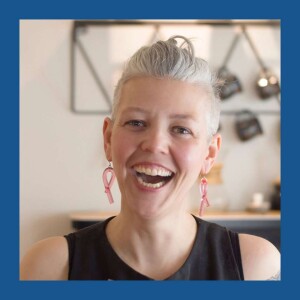
Need to communicate your research?
The research you produce is only as good as the way you communicate it.Scientistt Studio is an exciting science communic...
Thursday Mar 04, 2021
Thursday Mar 04, 2021
This week on Papa PhD, I'm bringing you my recent conversation with Kerri Twigg, career development coach, TEDx speaker, and author of “The Career Stories Method”. During our conversation, we talked about her book and about how her approach applies to PhDs transitioning out of academia and wanting to learn how to retell the ir graduate school stories. Kerri also turned the tables on me and put my career journey under the microscope, during our chat, which felt vulnerable at first, but was an interesting, refreshing exercice. I think you're really going to like this one!
What you’ll learn about in this episode:
Why "brain only" career decisions often fail
Imposter syndrome in graduate school and after a career transition
A post-PhD pivot is NOT starting from scratch - it's reorganizing the arrows in your quiver
The power adopting practices that promote self-love and dial down negative self-talk
Why the academic CV doesn't work outside academia
The importance of changing your words
Why you shouldn't wait to be done to reach out to people in industry
Do you enjoy Papa PhD? Leave me a comment here - one short sentence is enough! And be sure to include your Twitter handle – that way, I can thank you personally!
Support the show on Patreon !
Kerri Twigg is the founder of Career Stories. She has been helping people find and share their stories with confidence for nearly 20 years, seven in the career management sector. Kerri helps people figure out what makes them awesome and how that helps their career, whether they aim for a "job-job" or running their own business. And, if they're not sure what kind of work, she helps with that too. She has taught at theatres, universities, and even a boathouse.
Thank you, Kerri Twigg!
If you enjoyed this interview with Kerri, let her know by clicking the link below and leaving her a message on Twitter:
Click here to thank Kerri Twigg on Twitter!
Click here to share your key take-away from this interview with David!
Download "Tools for Your PhD Journey" !
Kerri’s pearls of wisdom:
“I don't think you can start from scratch – I think it's a romantic idea. It's still there... I think it's about finding what's useful, so, what you can carry... What you can carry forward. And then there might be pieces that... There might be pieces that you let burn, right? And there might be dreams that you kind of go "Okay, that's not it." But that dream might have not even been really the dream any how. It's it just the thing that was closest to it, to what you thought you wanted to do, and it led you on the path. That you didn't get that doesn't matter when something else might make you happier and you can have bigger impact with it.”
“A lot of academics, you'll kind of talk about what you studied or the name of your paper. And when people are hiring you for a job, they want to know how you work and what things you accomplish. And they want specific examples that's just not a name of a paper. Because you could have written a paper, but I don't know if you're a great researcher, I don't know if you're ethical, I don't know if you met the deadlines, I don't know if you helped people. So, on a resume, the how you work is more important than that you got published.”
This episode’s resources:
Kerri Twigg | LinkedIn
Kerri Twigg | Twitter
Kerri Twigg | Instagram
Career Stories | Website
The Career Stories Method | Book
Join the Papa PhD Postgraduate Career Exploration Group!
You might also like the following episodes:
Chris Humphrey – Rebranding the PhD
Inês Campos Costa – Taking the Turn No One Expects
Jinelle Wint – Student Advocacy and Professional Development
Megan Kirk Chang – Bringing Down Stress
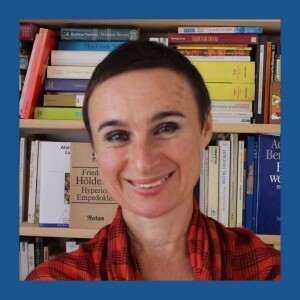
Need to communicate your research?
The research you produce is only as good as the way you communicate it.
Scientistt Studio is an exciting science communication company that brings your research to life through a variety of services.
From as little as £59,
Thursday Feb 25, 2021
Thursday Feb 25, 2021
Télécharge la "Boîte à outils pour le doctorat" maintenant !
Cette semaine, j'ai le grand plaisir de partager avec vous ma conversation avec Martha Boeglin à propos de la bête noire de beaucoup de thésards et thésardes – la rédaction de thèse, notamment les pièges qu'elle peut nous tendre et les tactiques et stratégies pour les éviter ou pour se débloquer.
Ce que tu apprendras dans cet épisode :
Comment se passe un doctorat en sciences humainesÉcrire sa thèse commence par lire - techniques et stratégies de lectureL'écoute active en colloque doctoral comme méthode mise en place d'un sujet de thèse qui n'a pas encore pris formeL'angoisse de la page blanche - causes et solutionsÉcran vs papier est-ce qu'il faut en privilégier un par rapport à l'autre ? Et pourquoi pas s'enregistrer ?L'intérêt de participer à des ateliers d'écriture créativeTu aimes Papa PhD ? Laisse-moi un commentaire ici - une seule phrase suffit ! Et inclus ton identifiant Twitter – comme ça je pourrai te remercier personnellement !
Lorsqu’elle a voulu rédiger sa thèse, Martha Boeglin s’est vue paralysée durant de longs mois par l’angoisse de la page blanche. Incapable d’écrire, elle s’est intéressée au phénomène de l’écriture. Elle a alors découvert que les blocages sont normaux - et qu’il existe des techniques d’écriture créatives pour les dépasser. Plus : certaines techniques d’écriture recèlent une puissance presque magique. Sa passion pour les techniques d’écriture créative était née. Avec une double conséquence : d’abord, une fois les blocages dissipés, Martha a rédigé sa thèse dans une vague d’euphorie. Ensuite, son titre de docteur en poche, elle a créé en 2002 les ateliers d'écriture Scriptoria. Leur but ? Faciliter la rédaction d'une thèse : quand on connait les techniques adaptées, alors rédiger n'est plus une corvée - ça peut même devenir une source de joie. Or, c’est dans la joie qu’on est au sommet de ses performances.
Merci Martha Boeglin !
Si cet entretien avec Martha Boeglin t'a plu, fais-lui en part en cliquant sur le lien ci-dessous et en lui laissant un message sur Twitter :Clique ici pour remercier Martha Boeglin sur Twitter !Clique ici pour partager avec David le principal message que tu retiens de cet épisode !
Joins-toi au groupe d'exploration de carrières Papa PhD !
La perle de sagesse de Martha :
« C'est là que j'ai découvert un énorme tabou à l'université, à savoir que, au moment d'écrire, tout le monde souffre – même les professeurs les plus intelligents, même les auteurs les plus chevronnés. Écrire est difficile, mais c'est un tabou à l'université. Ces difficultés d'écriture, on n'en parle pas ou très peu, ce qui fait que des jeunes, des étudiants, des doctorants qui sont en proie à des blocages peuvent en arriver à douter de leur capacité, de leur intelligence, voire à abandonner. Donc j'ai découvert que mon problème avait un nom: blocage, angoisse de la page blanche. J'ai découvert que l'angoisse de la page blanche est normale, qu'elle fait partie du processus – j'ai envie de dire naturel – de la rédaction, pas de quoi s'inquiéter, pas de quoi se remettre en question. Surtout, pas de quoi laisser tomber. »
Les ressources de cet épisode :
Martha Boeglin | LinkedInMartha Boeglin | TwitterScriptoria | Scriptoria.org | Groupe Facebook | Youtube
Tu aimeras aussi ces épisodes :
Boîte à outils pour les études doctorales – Mon cheminement : PapaPhD.com/37Carine Monat – Journalisme scientifique : PapaPhD.com/40Marc Chevalier – Transfert de connaissances : PapaPhD.com/76Martin Primeau – Communication scientifique : PapaPhD.com/44; PapaphD.com/45
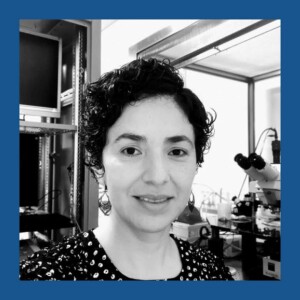
Envie de lancer un podcast?
Mon ami et collègue podcasteur Marco Bernard et son Académie du Podcast ont ce qu'il vous faut si vous avez une idée, mais qu'il vous manque les connaissances pour mettre en place votre podcast.Dans la formation Podcasting 101,
Thursday Feb 18, 2021
Thursday Feb 18, 2021
Many of my guests have talked about tuning into and pursuing your passion, when considering career options. In this episode, I talked with Mariana Vargas-Caballero about how she discovered her passion for science and about the choices and principles that brought her into the academic life.
What you’ll learn about in this episode:
The value of doing a masters before embarking on a PhDHow a good lab culture can empower you as an international studentHow exercises like drawing and annotating your lifeline and drawing mind maps of your values and interests can inform your career decisisonsThe advantages of obtaining fellowshipsGrowing your skillset to become a better candidateEmbracing the reality of the academic careerThe importance of setting life1work boundariesHow to deal with impostor syndrome as an academicThe importance in engaging in groups and activities outside your researchDo you enjoy Papa PhD? Leave me a comment here - one short sentence is enough! And be sure to include your Twitter handle – that way, I can thank you personally!
Support the show on Patreon !
Mariana Vargas-Caballero is a Mexican/British Neuroscientist. She obtained a degree in Biology in Mexico. She then trained for a Ph.D. in Neuroscience at the University of Cambridge. With fellowship funding from Wellcome Trust, she obtained postdoctoral training at the University of California at Berkeley, the University of Toronto, and the University of Oxford.In 2012, Dr. Vargas-Caballero established her independent research group at the University of Southampton where she is a Lecturer in Neuroscience. Her research interests focus on understanding how brain circuits are affected by dementia.
Thank you, Mariana Vargas-Caballero!
If you enjoyed this interview with Mariana, let her know by clicking the link below and leaving her a message on Twitter:Click here to thank Mariana Vargas-Caballero on Twitter!Click here to share your key take-away from this interview with David!
Download "Tools for Your PhD Journey" !
Mariana’s pearls of wisdom:
“The reality is – and it's something that I discuss often with my students – is to land these positions, funnily enough, what you need rather than... Well, you need the skills but you need papers. You need to have demonstrated with publications that you can push those skills to fill in gaps in knowledge. And so the skills that I have are in the area of electrophysiology. And also those extra trainings that I have had have allowed me to implement techniques in molecular biology or behavioural analysis to ask questions related to dementia or memory. And so... Essentially it's the combination of those papers and those skills that I think put me in a really good position when I applied for this job, both of those things.”“I realised that I value knowledge and understanding as a part of my job. And so I knew I really, really wanted that. And at the same time, I wanted to have discovery and this communication with the new generations. So that kind of put it all in perspective and I said "I know that it's going to be very hard, but I believe that an academic job is going to be right for me.”“Don't let being pregnant, or having plans, or anything like that stop you from making these applications, because you never know.”
This episode’s resources:
Mariana Vargas-Caballero | LinkedInMariana Vargas-Caballero | TwitterMariana Vargas-Caballero Lab | Website ; InstagramBook suggestion | Build your Own Rainbow
Join the Papa PhD Postgraduate Career Exploration Group!
You might also like the following episodes:
Jonathan Weitzman – Interdisciplinarity and industry partnershipsPaulo Oliveira – Entrepreneurship and outreach as an academicPatrícia Monteiro – Being a woman in research and investing in outreachPaul Yachnin – A modern vision of higher education and grad school
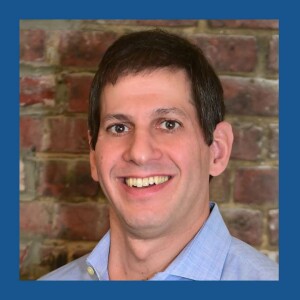
Need to communicate your research?
Thursday Feb 11, 2021
Thursday Feb 11, 2021
In this episode, I have the pleasure of talking science communication with former U.S. Senate and House of Representatives Chief of Staff and president of Bayer Strategic Consulting, Mark Bayer. During our conversation Mark and I talked about best practices when communicating science to non-academic audiences, but we also talked about the interface between science and policy, and the role researchers and scholars can play in this sphere.
What you’ll learn about in this episode:
The importance of considering people's emotions when presenting them with factsWhy you should focus on showing the trailer, not the whole movieTalking sicence to management, investors, and policy makersKey points to making talks or presentations engaging and memorablePoints of access into policy for scientists (even graduate students!)The value of being authentic and not transactional in your networkingDo you enjoy Papa PhD? Leave me a comment here - one short sentence is enough! And be sure to include your Twitter handle – that way, I can thank you personally!
Mark Bayer is an international keynote speaker, coach, and course instructor helping scientists and engineers get funding, gain influence, and build relationships with their most important stakeholders. A former Chief of Staff in the U.S. Senate and House of Representatives, Mark designs and delivers interactive talks and true-to-life training that empower listeners with the same proven, powerful tools he used to effectively communicate and navigate in the U.S. Congress. Marks work has appeared in Science and The New Yorker magazine, and he has been featured in IEEE-USA's "Lessons on Leadership" column. A guest lecturer in the Science Policy Bootcamp course at Cornell University's School of Engineering, Mark also hosts the weekly podcast When Science Speaks, which explores communication, science policy, and career issues. Mark is a magna cum laude graduate of Cornell University and earned his Master in Public Policy at Harvard University's Kennedy School of Government.
Thank you, Mark Bayer!
If you enjoyed this interview with Mark Bayer, let him know by clicking the link below and leaving him a message on Twitter:Click here to thank Mark Bayer on Twitter!Click here to share your key take-away from this interview with David!
Download "Tools for Your PhD Journey" !
Join the Papa PhD Postgraduate Career Exploration Group!
Mark’s pearls of wisdom:
“These kinds of things like distilling all this information that you have as a scientist and then translating it and communicating it to a non-expert in a way that's engaging and memorable – that's hard! That's not an easy task. And so, I understand that it's something that I've spent 20 years doing... I think I would probably blow up a lab if I was asked to do an experiment, so I sort of turn the mirror on myself. But I want people to feel like this is a skill, though. That they can learn it – they practice it, they get instruction in it, and they continue to use it. They'll get better and better and then start enjoying it a lot, which leads to the virtuous cycle of doing it more and getting even better.”“If you have interest in getting involved in policy, do it. Don't put it off. And dont think that you need to do something out of the gate that's so monumental and time-consuming. It can be as easy as following your state representative on Twitter and seeing what she's doing. And when she does something you agree with, retweeting it. You can do that from your couch, if you want to – you can do that anywhere. And that's getting involved at early level.”
This episode’s resources:
Mark Bayer | LinkedInMark Bayer | TwitterBayer Strategic Consulting | BayerStrategic.com ; LinkedInScience Speaks Podcast | WebsiteSign Up for Mark's course: "How to Effectively Communicate Your Science to Any Audience" - Text "science speaks" to 44222.
Thursday Feb 04, 2021
Thursday Feb 04, 2021
Télécharge la "Boîte à outils pour le doctorat" maintenant !
La vie n’est pas faite de belles lignes droites. Pour mon invitée d’aujourd’hui, Marie-Andrée Fallu, son trajet académique a été assez linéaire jusqu’au post-doctorat, mais différents facteurs sont venus l’orienter vers la carrière qu’elle mène aujourd’hui, loin du terrain et de la recherche… mais pas tant que ça!
Ce que tu apprendras dans cet épisode :
L'intérêt de faire des jobs pendant la maîtriseL'importance de parler avec des gens autour de vous – professeurs, assistants – et de réseauter pendant la maîtrise et le doctoratLes compétences qu'on doit aller chercher après le doctorat, en vue de l'emploi à venirLes stages – un gros plus pour ouvrir ses horizonsAgent de liaison – quels arguments on approrte au pose comme PhD ?Tu aimes Papa PhD ? Laisse-moi un commentaire ici - une seule phrase suffit ! Et inclus ton identifiant Twitter – comme ça je pourrai te remercier personnellement !
Marie-Andrée a obtenu un PhD en géographie de l'Université Laval et a fait des études postdoctorales à l'UQTR. Elle a été engagée en 2006 à titre d'agente de liaison scientifique pour le GRIL, le Groupe de recherche interuniversitaire en limnologie. Elle est employée de l'Université de Montréal, mais son bureau se situe à l'UQTR. Depuis quelques années, elle est aussi la coordonnatrice générale du GRIL.
Merci Marie-Andrée Fallu !
Si cet entretien avec Marie-Andrée Fallu t'a plu, fais-lui en part en cliquant sur le lien ci-dessous et en lui laissant un message sur Twitter :Clique ici pour remercier Marie-Andrée Fallu sur Twitter !Clique ici pour partager avec David le principal message que tu retiens de cet épisode !
Joins-toi au groupe d'exploration de carrières Papa PhD !
Les perles de sagesse de Marie-Andrée :
« Je trouve qu'il y a des choses qui n'ont vraiment pas changé et c'est surprenant – par contre, on en parle – c'est tout le côté détresse psychologique et comment ça peut être difficile. Et je ne pense pas qu'il y en avait moins dans mon temps, sauf qu'on en parlait moins. Les gens vivaient leurs affaires et, à un moment donné, ils abandonnaient, et tu ne savais pas trop pour quoi. Ils n'en avaient pas parlé et tu te disais "ils n'aimaient pas ça tant que ça." Mais ce n'était pas dit, tandis qu'aujourd'hui, eh bien, ils en parlent, ils en discutent, ils font des retraites d'écriture, et je suis certaine que ce sont des endroits où ils peuvent discuter de ça. J'aurais adoré avoir ça pour pouvoir, justement, échanger. Parce qu'on a tous côtoyé ou, à un moment donné, nous-mêmes, eu des doutes - "Mon dieu, est-ce que je vais le finir, mon doc, un jour, ou non?" »« Je n'ai pas l'impression d'avoir fait tout mon doctorat pour rien. Tout ce que j'ai acquis en termes de compétences, etc., eh bien, je l'utilise, ensuite, juste différemment – pas pour la recherche, mais pour faire sortir la recherche des universités. »
Les ressources de cet épisode :
Marie-Andrée Fallu | LinkedInMarie-Andrée Fallu | TwitterGRIL | GRIL-Limnologie.ca ; Twitter
Tu aimeras aussi ces épisodes :
Elodie Cheyrou – Promotion de la science : PapaPhD.com/91Marc Chevalier – Transfert de connaissances : PapaPhD.com/76Martin Primeau – Communication scientifique : PapaPhD.com/44; PapaphD.com/45Olivier Hernandez – Vulgarisation Scientifique : PapaPhD.com/56; PapaphD.com/45