Beyond the Thesis With Papa PhD
Real PhDs. Real Journeys. Beyond Academia.
Listen on:








Episodes
Thursday Jan 28, 2021
Thursday Jan 28, 2021
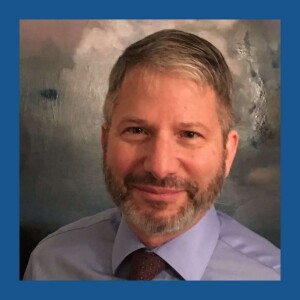
Higher education is under pressure, these days. It has been for a while, now, but the COVID-19 pandemic may well be the proverbial straw that breaks the camel’s back, and this test is bringing to light some of the fragilities that have been under the radar until now. With me, this week, I have someone who has a deep love for higher education and for students and graduate researchers, and who has explored the question of professional outcomes of PhDs in different domains – Paul Yachnin.
What you’ll learn about in this episode:
Why suspending PhD intake is dangerous for the future of humanities departmentsHow deep-rooted the tenure-track culture is in academia and in facultyThe importance of showcasing career outcomes of PhDs in normalizing non-tenure track/non-academic career pathsWhy graduate researchers should reach out and engage in conversations with peers from other departments and faculties and increase their intellectual mobilityDo you enjoy Papa PhD? Leave me a comment here - one short sentence is enough! And be sure to include your Twitter handle – that way, I can thank you personally!
Paul Yachnin is Tomlinson Professor of Shakespeare Studies at McGill University. From 2013-2019, he was Director of the Early Modern Conversions Project. Before that, he directed the Making Publics Project (2005-2010). His ideas about the social life of art were featured on the CBC Radio IDEAS series, The Origins of the Modern Public. In 2009-2010, he served as President of the Shakespeare Association of America. Among his publications are the books, Stage-Wrights and The Culture of Playgoing in Early Modern England, editions of Richard II and The Tempest, and edited books such as Making Publics in Early Modern Europe and Forms of Association. His book, Making Publics in Shakespeares Playhouse, is forthcoming. For the past eight years, he has been working on higher education policy. He leads the TRaCE McGill Project, tracking the career pathways of 5,000+ PhD graduates from across the university and telling the stories of 150+ of them. He publishes non-academic essays about Shakespeare and modern life, including titles such as Alzheimers Disease: What would Shakespeare Do? and Tragedy as a Way of Life. Paul has also recently participated as an expert in the preparation of Degrees of Success, a report by the Council of Canadian Academies on the current state of the labour market transition of PhD graduates in Canada.
Thank you, Paul Yachnin!
If you enjoyed this interview with Paul Yachnin, let him know by clicking the link below and leaving him a message on Twitter:Click here to thank Paul Yachnin on Twitter!Click here to share your key take-away from this interview with David!
Download "Tools for Your PhD Journey" !
Paul’s pearls of wisdom:
“So, if I say to a young PhD researcher – "So, have you thought about the different careers that might be open to you when you graduate?", it's as if I'm saying "I don't think you're good enough for an academic job". And I'm afraid that the person will also take it that way. So, how do we change thinking about the PhD, as well as the programs? And there is one very good way to do that, and that is to get as many stories, as many voices of people who have graduated and who say: "Yeah! I've got a PhD in English – I'm Executive Director of CBC Ideas". That is an actual case that we've covered a great deal with TRaCE. That person conveys to people doing PhDs now that there are other pathways. Not only are they entirely legitimate and respectable – they're to be sought after.”“I think that it's very important to start conversations with faculty at departments that you're interested in if you're thinking of doing a PhD. And those conversations include just what you said: "How will this PhD help me fulfill my aspirations? How will it help me fulfill this desire I have to know more and to be productively curious in this area of study?
Thursday Jan 21, 2021
Thursday Jan 21, 2021
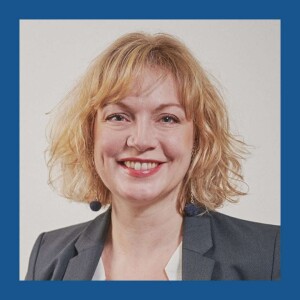
L’année 2020, marquée par la pandémie de COVID-19, nous a apporté de grands défis et nous a amené à changer nos habitudes, notre façon de vivre en société. L’effort de lutte contre la dissémination du coronavirus a aussi entraîné des débats et des questionnements qui relevaient du domaine scientifique – la virologie et la compréhension du virus, l’épidémiologie et les décisions portant sur le contrôle de la contagion, l’immunologie et la technologie derrière les vaccins d’ARN.L’interface science société a été et est encore au moment où j’enregistre cet épisode, à certains égards, un champ de bataille plus actif que jamais et plus important que jamais et beaucoup de scientifiques ont été appelés à émettre leurs opinions et à partager leurs connaissances sur la tribune publique, autant pour informer que pour dénoncer la désinformation.Dans l’épisode d’aujourd’hui, je parle avec Elodie Cheyrou de son trajet de la recherche fondamentale à son rôle actuel dans la promotion de la culture scientifique en France et nous nous posons des questions à propos de la place qu’auront les scientifiques dans le rapprochement science/société en ce début de XXI siècle.
Ce que tu apprendras dans cet épisode :
La communication scientifique peut te permettre de rester très proche du terrain et des chercheurs tout en restant à l'extérieur de la rechercheLes agences de communication comme école e comme rapprochement au métier de communicateur scientifiqueLa communication en milieu institutionnelL'interface science et société comme enjeu clé des années à venirTu aimes Papa PhD ? Laisse-moi un commentaire ici - une seule phrase suffit ! Et inclus ton identifiant Twitter – comme ça je pourrai te remercier personnellement !
Passionnée par la recherche, Elodie Cheyrou œuvre depuis son doctorat en neurosciences à rapprocher les mondes de la science et de la société. À travers son parcours de plus de 13 ans en agence privée comme en institutions publiques, elle a développé une expertise en relations publiques, communication scientifique, développement de partenariats et animation de réseaux. Aujourd'hui, Elodie participe à la gouvernance de la politique publique de culture scientifique, technique et industrielle à travers la coordination nationale et internationale de la Fête de la science, événement national de référence rassemblant, chaque année, plus de 1,2 millions de visiteurs et 300 000 scolaires.
Merci Elodie Cheyrou !
Si cet entretien avec Elodie Cheyrou t'a plu, fais-lui en part en cliquant sur le lien ci-dessous et en lui laissant un message sur Twitter :Clique ici pour remercier Elodie Cheyrou sur Twitter !Clique ici pour partager avec David le principal message que tu retiens de cet épisode !
Télécharge la "Boîte à outils pour le doctorat" maintenant !
Joins-toi au groupe d'exploration de carrières Papa PhD !
Les perles de sagesse d'Elodie :
« C'était, donc, quatre années pour passer ce doctorat et cette quatrième année a été, quand même, sujet de beaucoup de questionnements. D'une part, l'expérimentation animale commençait, aussi, à me poser beaucoup de questions, donc je me suis dit « Tiens, peut-être que je pourrais aussi faire de la computation, de la modélisation, pour, finalement, ne pas avoir à maniper encore sur des animaux. » Ce n'est pas évident pour tout le monde de faire de l'expérimentation animale, même si on sait pourquoi on le fait et qu'on est convaincu par l'utilité. Et puis, il y avait un autre point qui me pesait, aussi – c'était le côté... Alors, je sais que ça fait hurler souvent les chercheurs quand je dis ça – le côté assez fermé, humainement, de la recherche. J'avais un besoin de travailler vraiment avec des humains, de pouvoir échanger, discuter, partager des idées, brainstormer... »« C'est sûr que dans le contexte actuel on a bien vu que l'information était cruciale et que la connaissance - avoir un bagage scientifique - même si ce n...
Thursday Jan 14, 2021
Thursday Jan 14, 2021
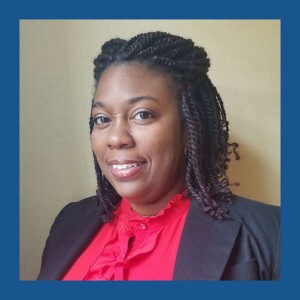
This week on Papa PhD, we'll be focusing on graduate students and their professional development needs and common blind spots. My guest, Jinelle Wint, did her PhD in the biological sciences and throughout her academic journey, she learned the value of of working on her professional skills, and has coached many students in exploring their career choices.
Take the Papa PhD Listener Survey Now !
Jinelle Wint, PhD, is the Assistant Dean for Academic Affairs for the Graduate School of the Stowers Institute for Medical Research. Jinelle has extensive experience in program management, graduate career professional development, mentoring, and outreach. As a Graduate Career Coach at Stony Brook University, she led one-on-one career coaching sessions and coordinated career exploration seminars. She has served on the executive board of many organizations, held a position in the Center for Inclusive Education, and has advocated for graduate students on local, state, and national levels. Jinelle received her Ph.D. in Molecular Cellular Biology from Stony Brook University in the laboratory of Dr. Howard Sirotkin. She has a bachelor's degree in Biology and General Studio Art from the University of Miami in Coral Gables, Florida.
Download "Tools for Your PhD Journey" !
What you’ll learn about in this episode:
How taking part in student-led programs and events can positively impact your graduate school experience
Internships in university as a path to non-research academic jobs
The importance of time management and of avoiding burnout
The PhD timeline and when to start thinking of career exploration and professional development
Self-assessment as a starting point for planning ahead
Why you should use the ressources offered by your university even if they're not tailored for PhDs
Challenges for international students and advice on how to make the best out of their time in graduate school
This episode’s pearls of wisdom:
“I'm not exactly saying that you can't only think about the professoriate, but, I mean, it is good to have other careers in mind. But even, for example, that you know 100% you're just not gonna give up on being a professor, even dedicating time to getting to that goal outside of lab it's also a good thing. So even if you need to get a postdoc, for example, for your next step, looking into who offers postdoc, who's doing what research – dedicating time to do that outside of your research is always going to benefit you. So even if you're going into academia or outside of academia, what I'm saying is to dedicate the time to developing that and to thinking about your professional development is necessary. And it gives you peace of mind later on that you've done some of the leg work earlier on.”
“It is a struggle. And I know that the PhD takes a lot of time, because I've seen it, and I've lived it, and I had tons of friends who spent 60 hours a week in lab. But if you can take a few hours to do something outside of lab, it actually clears your brain to be like "you know what? I was thinking about this project"... And as you're in there, you don't go into where you get frustrated, you get this cycle of "this is not working". When you take a step away and then come back, things become clear. It's always good to take some time doing some activity that you like to do, or some hobby, and then come back into lab.”
Jinelle's links: LinkedIn – LinkedIn.com/in/jinelle-wint-phd-1b26bb85; Twitter – @DrWint_signalin.
Leave a review on Podchaser !
You might also like the following episodes:
Chris Humphrey – Career Counseling: PapaPhD.com/73
Emily Roberts – Finance for PhDs: PapaPhD.com/8
Falisha Karpati – Skills Development: PapaPhD.com/30
Rebecca Maymon – PhD Recruitment: PapaPhD.com/75
Thursday Jan 07, 2021
Thursday Jan 07, 2021
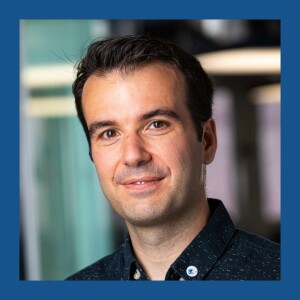
Hi and happy new year! In this first episode of 2021, I bring you a story you may in part know. A story of changing countries and cultures and of finding new horizons for yourself in the process - in my guest's case, leading to his transition from basic research into business development.
Take the Papa PhD Listener Survey Now !
Fabrice worked as a research scientist in medtech for more than 12 years in top-tier institutes worldwide. He was deeply involved in the entrepreneurial scene leading to multiple startup successes including one IPO. He setup from scratch and led MonacoTech, the first and only innovation program founded by the Monaco Government and French billionaire Xavier Niel. In less than a year, he created a portfolio of 12 hand – selected companies valued over 100M€. He then founded with Brian Frederiksen Monaco Foundry with the ambition to revolutionize the way we turn ideas into global commercial successes. Within a few months they assembled a remarkable team of Serial Entrepreneurs, former Senior Government Advisors and Fortune 500 Executives combining strong corporate expertise with entrepreneurial mindsets.
Download "Tools for Your PhD Journey" !
What you’ll learn about in this episode:
What you can gain by going abroad for the entirety or part of your graduate studies
Different countries have different research cultures
The importance of knowing your "Why" in graduate school and in life, of finding what drives you
Technical aspects of deeptech startup incubation
Why you should start building your network today
This episode’s pearls of wisdom:
“I think it's more about creating an environment where people trust each other, can be truthful with each other. And there is no shortcut to that - there's no tricks. And I feel that's something that's very true with anything - I'm deeply convinced of that. Especially today where we live in an instant gratification society where where you have all these snake oil sellers giving you hacks and tricks and shortcuts. This is bullshit. All the real things in life take time and effort. Hard work. That's it.”
“What I've learned as a PhD and as a scientist was being patient and diligent. Things take time to develop. Being patient enough in the short run to really make sure that you execute on that roadmap as fast as possible.”
X's links: LinkedIn – Linkedin.com/in/Fabrice-Marquet; Twitter – @FabriceMarquet.; Website – MonacoFoundry.com.
Leave a review on Podchaser !
You might also like the following episodes:
Chris Humphrey – Career Counseling: PapaPhD.com/73
Chris Kent – Biomed Startup CEO: PapaPhD.com/11
Emily Roberts – Finance for PhDs: PapaPhD.com/8
Margaret Magdesian – Biotech Startup CEO: PapaPhD.com/21
Need to communicate your research?
The research you produce is only as good as the way you communicate it.
Scientistt Studio is an exciting science communication company that brings your research to life through a variety of services.
From as little as £59, a summary of your work can be narrated, illustrated and animated, leaving you with an engaging video to share with the world.
If that wasn’t enough, as a podcast listener you can get 10% off any Scientistt Studio service using the code “PAPAPHD” when you order.
Click on the button below, explore the range of Scientistt services and use the promo code PAPAPHD. By doing so, not only will you be on your way to better science communication, but you will also be helping me produce the show:
Get 10% on any Scientistt Studio service !
Thanks for being a fan, happy listening and happy sharing!
Thursday Dec 31, 2020
Thursday Dec 31, 2020
This week, I'm bringing you my conversation with Eric James Stephens, Founder of ChangeHigherEd, a platform where, in the summer of 2020, being unemployed, he set out to help PhDs understand their value through live-streamed events and workshops that ended up bringing in many thought leaders into the discussion and having over 250 registered attendees. With him, I discussed the pressure COVID has brought on the higher education space and the change this pressure means for PhDs considering their career options today.
Take the Papa PhD Listener Survey Now !
Eric James Stephens is the founder of #HireHigherEd, #ChangeHigherEd, and Thousand Plateaus Consulting, LLC. His organizations goals are to highlight the value of higher ed workers as they migrate to industry, government, and non-profits jobs outside of academia. During this foundational shift in the landscapes of higher education exposed by the COVID pandemic, Eric sees opportunity for change. CAREER UPDATE VIDEO: Since recording the interview, Eric has been hired full-time as a data analyst and we talked about his current position and about how it materialized live on Facebook! You can watch the replay here: https://www.facebook.com/434913047074976/videos/230703178496539
Download "Tools for Your PhD Journey" !
What you’ll learn about in this episode:
How empowering creating a community or belonging to a community on a networking platform can beHow to approach someone you'd like to get mentorship fromBest practices on setting objectives strategically when planning your field work and your dissertationWhy, using storytelling, you should to talk with employers about what you did during your degree, that will bring value to their organization, not about your research subjectThe power of striking conversations on LinkedIn for your job huntThis episode’s pearls of wisdom:“We have to understand that the type of academic that is coming to industry now versus pre-COVID, in general, is a very, very different person. Before COVID, people had a myriad of different reasons for leaving academia. Some wanted to leave, some didn't want to leave, but there was a lot of resentment that's there. Like residual frustration, like akin to leaving a church. Now you have people who are being compelled to leave, who don't want to leave education, but they can't anymore because there are no jobs there. And so I think that one of the things that needs to happen on the side of academia is humility. You have to be able to understand that people want your value but that's not reason enough. You have to help them see it. You have to translate it. It also requires a dose of humility on the side of industry saying, like, you know, 'I had these prejudices before – let me reel them back in a little bit and look at this candidate.”“It was just a great experience that everything that I did, I made sure that it served more than one purpose. And so it was either I was getting a grade for a class and it was a chapter of my dissertation or I was getting a grade for a class and it was a conference presentation which was then going to go into a publication. Everything I did had a purpose. Don't wait until you're finished with the course work to come up with an idea.”Eric's links: LinkedIn – LinkedIn.com/in/EricJStephens; Twitter – @EricJames_phd; Youtube – YouTube.com/channel/UCaaji8mz4A4I5tOsyI9-Q1g; Website –ChangeHigherEd.org.
Leave a review on Podchaser !
You might also like the following episodes:
Chris Humphrey – Career Counseling: PapaPhD.com/73Falisha Karpati – Skills Development: PapaPhD.com/30Rebecca Maymon – PhD Recruitment: PapaPhD.com/75Vera B. Chan – PhD Youtuber: PapaPhD.com/77
Need to communicate your research?
The research you produce is only as good as the way you communicate it.Scientistt Studio is an exciting science communication company that brings your research to life through a variety of se...
Thursday Dec 24, 2020
Thursday Dec 24, 2020
Qu'est-ce que tu ne fais pas, en ce moment, parce que tu as peur ? Peur de l'inconnu. Peur du changement. Peur de ce que les autres vont penser. Dans cet épisode, mon invitée, Céline Ablasou, partage avec toi le trajet inusité qui l'a menée de la biologie moléculaire à la gestion de projet dans le domaine de la robotique.
Répond au sondage à l'auditoire de Papa PhD !
Après sa maîtrise, Céline Ablasou a passé quelques années comme assistante de recherche en biologie moléculaire. Elle a ensuite complètement changé de domaine. Elle est passée à l'ébénisterie puis à la production manufacturière chez Bombardier pour finalement aboutir à la gestion de projets. Céline est maintenant gestionnaire de programme chez Symbotic: une compagnie américaine qui fabrique des robots pour de grands entrepôts logistiques (tels que les entrepôts de Walmart par exemple). Dans son poste actuel, elle coordonne les différents projets impliquant l'équipe de production de Montréal.
Télécharge la "Boîte à outils pour le doctorat" maintenant !
Ce que tu apprendras dans cet épisode :
Si tu t'ennuies dans ton poste courant ou que tu sens que le trajet de carrière devant toi ne t'intéresse pas, prend des mesures pour entamer le changement de poste ou carrément de carrièreSi tu as le temps et la possibilité de le faire, suis des formations qui puissent t'ouvrir de nouveaux horizonsLes compétences transversales acquises à la maîtrise et leur importance en industrieLe MBA comme tremplin vers des postes de plus grande responsabilitéLes perles de sagesse de Céline :« L'emploi que j'occupe maintenant, je suis contente de me lever le matin pour aller le faire. Ça a pris plusieurs années avant que je trouve exactement ma voie. C'est pour ça que je mentionnais qu'il ne faut pas avoir peur de changer de carrière, ou de changer de domaine parce que, comme on dit - la bio moléculaire jusque là, où on fabrique des gros robots logistiques, donc c'est vraiment très éloigné, mais le point commun dans tous les différents postes que j'ai occupés, comme je l'ai mentionné, c'est vraiment mes aptitudes transversales que j'ai pu acquérir, et que je suis capable de - peu importe le domaine - d'appliquer. Donc ma capacité à planifier. Peu importe que je sois retournée en laboratoire ou, maintenant, que je sois en gestion de projet. C'est quelque chose qui me sert tous les jours. C'est vraiment de comprendre, en fait, dans le premier métier que j'ai fait, c'est quoi que j'aimais vraiment ? C'était de manipuler et puis c'était de planifier mes expériences, donc finalement, c'est la même chose que je fais maintenant mais au lieu de pipetter, eh bien, je joue avec des projets. »« Quand on commence à travailler, il ne faut pas avoir peur de demander. J'étais quelqu'un de plus introverti, quelqu'un de très scientifique, organisée et je pensais que je faisais tellement bien mon travail, que ce soit en laboratoire ou après, en production manufacturière, que les gens verraient mon bon travail et me donneraient des récompenses. Ce n'est pas comme ça que ça marche dans la vie. Si on ne demande rien, on n'a rien – ça, je l'ai appris au MBA. Il ne faut pas avoir peur de justifier notre bon travail, de dire "je pense que j'ai fait une bonne job cette année – regardez, je vous ai livré ça, ça, ça." Pour demander le salaire qui nous est du ou des vacances supplémentaires. »Les liens de Céline : LinkedIn – LinkedIn.com/in/Celine-Ablasou/.
Laisse une évaluation sur Podchaser !
Tu aimeras aussi ces épisodes :
Carine Monat – Journalisme scientifique : PapaPhD.com/40Simon Landry – Coutrier de connaissances : PapaPhD.com/14Virginie Levasseur – Développement international : PapaPhD.com/17
Envie de lancer un podcast?
Mon ami et collègue podcasteur Marco Bernard et son Académie du Podcast ont ce qu'il vous faut si vous avez une idée, mais qu'il vous manque les connaissances pour mettre en place votre...
Monday Dec 21, 2020
Monday Dec 21, 2020
The holiday season is here and a lot of us are trying to make sense of a very challenging, for some of us a traumatizing year 2020, in preparation for the new year. This week, and to hopefully bring you some appeasement and some warmth at this time when we'd all rather be with our friends and family celebrating, rather than being locked down, I am sharing with you a bonus episode where we're going a little deeper into how we are feeling and about practices and habits that can help us enter 2021 with a better outlook on what's to come.
Take the Papa PhD Listener Survey Now !
Megan Kirk Chang is a PhD Candidate and clinician scientist specializing in health behaviour change, trauma psychophysiology, and cognitive neuroscience. As part of her doctoral research, Megan developed the first registered clinical trial in Canada investigating the effectiveness of an online mindfulness-based cognitive behavioural intervention for adults diagnosed with PTSD. Megan has worked as a Mental Health Coach with the Centre for Addiction and Mental Health, and University Health Network in Toronto. She is a certified meditation and yoga teacher on the Insight Timer App. She runs a public Twitter account with another colleague called MindfulAcademics and also a personal account on Instagram called My Trauma choach.During our conversation, we talked about the burden the COVID pandemic has been on all of us psychologically, and Megan shared her reflections on how best to deal with the trauma and with the stress we may be carrying with us after a year under the gun.Megan’s pearls of wisdom:“We're in the middle of a pandemic. You're not expected to be more productive or as productive as you used to be, because inherently, our mind is half tuned in to what we need to do and half caught in this fear cycle of "How does this end? What does this look like? What if I get COVID? What if a family member gets COVID?" All of these questions are very real for people. We're all doing the best we can. I don't believe we get up in the morning and say "I'm going to try my worst today". I think we all say we're going to try our best. And some days, our best means making the bed. And that's it, that's all you get through.”X's links: LinkedIn – LinkedIn.com/in/MeganKirkChang/; Twitter – @MindfulAcademix; Instagram – @mytraumacoach.
Download "Tools for Your PhD Journey" !
Leave a review on Podchaser !
You might also like the following episodes:
Cindy Hovington – Science-based Education: PapaPhD.com/22Ines Thomas Almeida – Mental Health Advocate: PapaPhD.com/27Katina Rogers – Equity and Innovation in Higher Education: PapaPhD.com/81Zoë Ayres – Mental Health Advocate: PapaPhD.com/54; PapaPhD.com/55
Need to communicate your research?
The research you produce is only as good as the way you communicate it.Scientistt Studio is an exciting science communication company that brings your research to life through a variety of services.From as little as £59, a summary of your work can be narrated, illustrated and animated, leaving you with an engaging video to share with the world.If that wasn’t enough, as a podcast listener you can get 10% off any Scientistt Studio service using the code “PAPAPHD” when you order.Click on the button below, explore the range of Scientistt services and use the promo code PAPAPHD. By doing so, not only will you be on your way to better science communication, but you will also be helping me produce the show:
Get 10% on any Scientistt Studio service !
Thanks for being a fan, happy listening and happy sharing!
Thursday Dec 17, 2020
Thursday Dec 17, 2020
If you ask me or anyone helping people with career transitions what the most powerful tool is in testing the waters and in growing your network when preparing for job hunting, you will most certainly hear these two words: informational interviews. Today's guest has invested strongly in this exercise, so much so that he's published a book based on his learnings and on the conversations he's had about career exploration.
Take the Papa PhD Listener Survey Now !
Matteo Tardelli describes himself as PhD looking into a leap into industry. He is currently a research scientist in biochemistry and medicine at Weill Cornell Medicine, and is the author of “The Salmon Leap for PhDs” a book where he explores this question of transitioning from academia to the private sector.
You can purchase "The Salmon Leap for PhDs: Swimming upstream: A transition from academia to industry" at:
https://www.amazon.com/Salmon-Leap-PhDs-Swimming-transition/dp/B08H6QDX3M
Download "Tools for Your PhD Journey" !
What you’ll learn about in this episode:
The challenges and opportunities associated with going abroad for your PhD or your postdoc
The knowledge gap graduates are faced with when first entering the job market
Why informational interviews are not optional in your career exploration process
Informational interviews as a tool to find out where you fit and where you don't
What salary benchmarking tools are available to you online
Why being afraid of bothering others is blocking you from taking your next step, professionally
The role of self-assessment tools in your job hunt and where to find some really useful ones
Why you should tap into the hidden job market and how to go about doing it
What you should double down on during the COVID pandemic in preparation for the return to normality
This episode’s pearls of wisdom:
“Once you push yourself out there and you just try to ask people for their time, thy will be more than happy to help and that was also, for me, something surprising, because I was like "I don't want to bother these people,", I didn't feel confident in asking their time to talk to me. But actually, they've been through that as well, they were in your shoes before, so they're really more than happy to help you out, so that was kind of surprising for me. ”
“Every person needs to prepare a little bit in advance, because you don't want to show up and waste these people's time. It's important to prepare a little bit and to this extent, I will say, just try to write down some questions you have. Surely, an important one will be "what does your everyday job look like?" Also, depending on who you're talking to, you can ask about the company. I think the point of the salary probably comes a little bit towards the end.”
“I think as academics in general we really tend to close ourselves down in these ivory towers or labs and, to some extent, this translates into also hanging out with your colleagues. And I think this is wrong, because you need to meet diverse people outside work - that's really important.”
“In the past, actually, I really went back to the HR people that sometimes rejected me for some positions that I thought I was really fitting very well, and I really asked what was missing in my resume. And some of them replied to me and said, probably "your level of seniority is not enough", ot this kind of thing. So you also understand there how to modify things a little bit.”
Matteo's links: LinkedIn – LinkedIn.com/in/Matteo-Tardelli; Twitter – @Salmon_PhD.
Leave a review on Podchaser !
You might also like the following episodes:
Chris Humphrey – Career Counseling: PapaPhD.com/73
Graydon Snider – Data Science: PapaPhD.com/62
Nathalie Ross – Regulatory Writing: PapaPhD.com/50
Zoë Ayres – Water Industry: PapaPhD.com/54
Need to communicate your research?
The research you produce is only as good as the way you communicate it.
Scientistt Studio is an exciting science communication company that brings your re...
Thursday Dec 10, 2020
Thursday Dec 10, 2020
Est-ce que tu te prépares à une entrevue d’emploi en ce moment ? Est-ce que tu en a passées quelques-unes, mais tu ne te sens pas en contrôle du processus ? Une façon de se préparer et de se sentir plus à l’aise, plus en contrôle dans un contexte d’entrevue d’emploi est de travailler les messages que l’on veut passer et de se pratiquer. Cette semaine, je t’apporte ce que mon invité, Bruno Guglielminetti, avait à partager à ce sujet à la lumière de son expérience comme communicateur et dans les postes de direction qu'il a occupé dans des sociétés d’envergure.
Répond au sondage à l'auditoire de Papa PhD !
Bruno Guglielminetti est un communicateur passionné par le numérique. Il a travaillé au sein de l’équipe de direction de Gilbert Rozon à titre de Directeur général de la Division numérique du Groupe Juste Pour Rire / Just For Laughs, il a été à l’emploi de Radio-Canada pendant 23 ans où il animait et réalisait des émissions de grande écoute, et, entre autres, il a aussi signé une chronique hebdomadaire dans le quotidien Le Devoir.Aujourd’hui, plus de 80 000 abonnés le suivent sur Twitter (@Guglielminetti) et dans son podcast hebdomadaire Mon Carnet, où il les tient à jour à propos de l’actualité numérique.
Télécharge la "Boîte à outils pour le doctorat" maintenant !
Ce que tu apprendras dans cet épisode :
Les conseils d'un journaliste aux scientifiques qui veulent communiquer la science à différents publicsQuelles techniques utiliser quand tu te prépares pour une entrevue d'emploiQuelles erreurs ne pas faire lors d'une entrevue par visioconférenceLe poids que peut avoir ta présence sur les réseaux sociaux dans le processus d'embauche aujourd'huiL'importance d'une présence soignée sur un réseau professionnel comme LinkedIn pour bâtir ton réseau et maximiser tes contacts et tes opportunitésLes perles de sagesse de Bruno :« La personne qui va venir en entrevue, ce n'est pas compliqué – dans sa tête, ça doit être clair pour elle ce qu'elle amène à l'entreprise, ce qu'elle amène à l'organisation. Et à un moment donné, au fil de la rencontre, il va falloir clairement qu'elle puisse énoncer ce qu'elle apporte comme connaissances. Donc oui, elle va devoir présenter ce qu'elle a fait, oui, elle va devoir parler de ce qu'elle connaît de l'industrie ou du domaine, des joueurs qui sont là, pour montrer qu'elle connaît l'écosystème. Mais surtout de faire passer le message de ce que cette personne-là amène. Et les candidats que j'ai rencontré au fil des années, dans les différents postes que j'ai occupés, c'était ça qui manquait. Ceux qui attrapaient mon attention, c'étaient ceux qui arrivaient avec cet élément-là. »« Les meilleures improvisations sont celles qui sont préparées. »« Les questions ne sont jamais gratuites en entrevue. On apprend autant sur la façon de répondre que sur la réponse elle-même. Donc, c'est important de pratiquer. Et enregistrez-vous, s'il vous plaît – prenez le temps de mettre un petit téléphone. Comme ça, votre ami va vous donner une rétroaction, mais vous, vous allez pouvoir voir ça a été quoi, votre réaction. Et la caméra, mettez-la sur vous, pas sur les deux ou sur votre ami et assurez-vous de vous regarder. Ça va peut-être être difficile la première fois, mais tranquillement, vous allez vous apprivoiser et ça va vous permettre de voir, même... Parce que dans le langage verbal c'est une chose, mais dans le langage physique, il faut se regarder, parce que ça arrive avec le stress d'une entrevue qu'on dise quelque chose, mais que notre corps dise l'inverse ou fait une négation, ou fait un retrait alors qu'on veut montrer qu'on est intéressé. Eh bien, il faut voir comment on réagit. »Les liens de Bruno: LinkedIn – Linkedin.com/in/BrunoGuglielminetti; Twitter – @Guglielminetti; Site web – Moncarnet.blog.
Laisse une évaluation sur Podchaser !
Tu aimeras aussi ces épisodes :
Carine Monat – Journalisme scientifique : PapaPhD...
Wednesday Dec 02, 2020
Wednesday Dec 02, 2020
This week, I am sharing with you an interview that covered a lot of terrain, from going through grad school with a disability, to the importance of networking during grad school and after, to the challenges of building a consultancy business based on your research. A great conversation with Stephanie Ryan, author of "Let's Learn About Chemistry" an educational book for young children.
Take the Papa PhD Listener Survey Now !
Stephanie holds a PhD in Learning Sciences from the University of Illinois at Chicago, with a focus on chemistry education. She has a strong background in chemistry and biology and enjoys applying her background to develop superior educational products. She is also interested in how mathematics and science intertwine. Stephanie has experience in curriculum development, assessment, and training staff on how to use technology and software. She has taught science in formal and informal settings from K-16 in the USA and has developed curricula for After School Matters programs in Chicago, Illinois.You can purchase "Let's Learn About Chemistry" at:Amazon.ca/gp/product/B089ZNTT9P/
Download "Tools for Your PhD Journey" !
What you’ll learn about in this episode:
How getting involved in research projects during your master's can inform your subject matter choice later onChallenges of going through graduate school with a disability and how to find support and move your project forwardHow Stephanie embraced her limitations by being open about it and getting involved in advocacy initiativesHow attending conferences can open doors through networking and conversations with other researchers and also non-researchersThe importance of platforms like LinkedIn during the COVID pandemicThe process of launching and figuring out the ins and outs of a consulting business out of your MSc or your PhDThis episode’s pearls of wisdom:“It's funny. I wouldn't even say I like to network. I just... I understand its value. I'm an introvert and conferences drain me, and I love going to conferences with my friends who are also introverts where we sit in silence and recharge together, but it's something that I've just practiced. It was something that... It's one of those things I learned from my husband, from his field. I remember there was a speaker who came on campus and they were having a dinner, and they invited grad students to come to it. And I said no, and he couldn't believe it. He was like "Are you serious? You're missing this opportunity to speak with this person who like... what?" And he started explaining about networking to me, because I hadn't really thought too much about it. I was taking it for granted the amount of networking I had already done, and now I make a point of it to make sure I'm networking and that I help grad students understand the importance of it.”“My postdoc advisor and I sat down and we kind of talked about how I really like the product aspect of things, of having something at the end to make better and to get out there, so that I can see change, instead of finding the theoretical components of something. Because of all my networking and connections, I ended up going into assessment and writing standardized assessments for states, and becoming a content lead there, and learning more about project management, and managing stakeholders, and things like that. And I really liked it!”Stephanie's links: LinkedIn – LinkedIn.com/in/sacr/; Twitter – @letslearnsci.
Leave a review on Podchaser !
You might also like the following episodes:
Chris Humphrey – Career Counseling: PapaPhD.com/73Cindy Hovington – Science-based Education: PapaPhD.com/22Emily Roberts – Finance for PhDs: PapaPhD.com/8Margaret Magdesian – Biotech Startup CEO: PapaPhD.com/21
Need to communicate your research?
The research you produce is only as good as the way you communicate it.Scientistt Studio is an exciting science communication company that...