Beyond the Thesis With Papa PhD
Real PhDs. Real Journeys. Beyond Academia.
Listen on:








Episodes
Thursday Nov 26, 2020
Thursday Nov 26, 2020
Nous ne sommes pas tous faits pareils. Ce qui nous motive, ce qui nous passionne, nos valeurs, nos priorités dans la vie, tous ces traits font de nous qui nous sommes, avec notre style particulier, avec nos besoins particuliers, avec nos tocs particuliers. Cette semaine, je vous apporte ma conversation avec Mrim Boutla qui trace un lien entre la neuroplasticité, les différentes approches à l’expérience du doctorat, et les stratégies gagnantes d’exploration de carrière et de recherche d’emploi après le doctorat.
Télécharge la "Boîte à outils pour le doctorat" maintenant !
Mrim Boutla est une docteure en neuroplasticité devenu coach de carrière. À l'Université de Brown et à la Kelley School of Business (Université de l'Indiana), Mrim a encadré avec succès des centaines de diplômés en arts, des MPA, des MBA et des docteurs pour qu’ils obtiennent des emplois leur permettant de maximiser leur impact et leurs revenus. En tant qu'entrepreneure social, Mrim a reçu le prix AshokaU/Cordes 2013 pour avoir lancé More Than Money Careers en partenariat avec le Dr Mark Albion (professeur fondateur de Net Impact). Le logiciel MTMCareers a permis à plus de 5 000 diplômés de se familiariser, de réseauter et d'être embauchés pour des stages et des emplois qui allient compensations financières et impact social et gestion de l'environnement. Mrim fait office de mentor pour les startups par le biais de I-Corps, HeraHub, NETVA et AccelerateDC. Mi-Suisse et mi-Marocaine, Mrim a été la première de sa famille à suivre des études au-delà de la 9e année. Elle a commencé son parcours aux États-Unis en tant qu'étudiante F-1 et est devenue citoyenne américaine en 2015. Mrim a obtenu une licence/maîtrise en psychologie à l'Université Catholique de Louvain, en Belgique, une maîtrise et un doctorat en sciences cérébrales et cognitives à l'Université de Rochester, et a effectué son stage postdoctoral en neuroplasticité à l'université de Brown. Au-delà du travail, Mrim aime les voyages à l’international et regarder les matchs de la NBA avec sa fille.
Joins-toi au groupe d'exploration de carrières Papa PhD !
Ce que tu apprendras dans cet épisode :
L'intérêt de bâtir ta mosaïque de passions durant ton doctorat ou au moment où tu commences à explorer tes choix de carrières possiblesChoisir un domaine d'activité professionnelle, c'est shoisir une tribu qui reflète tes valeurs et tes passionsLe chemin vers ton emploi de rêve n'est pas une ligne droite, mais un ensemble de moments souvent inattendus tissés ensemble par tes choix à chacun d'entre euxLes quatre piliers du transfert de compétences développées au doctoratLes perles de sagesse de Mrim:« Je trouve que vraiment qu'on est des êtres très, très sociaux et, donc, trouver ta tribu de personnes comme Papa PhD ou autre, ça te donne un tramplin vers l'espoir, ça te donne un tramplin vers le chapitre prochain. Et c'est ça, en fait qui me donne ma motivation à moi quand je vois dans les yeux ou dans la posture des gens que d'un coup, d'un seul, ils trouvent "Ah, oui! C'est ça dont j'ai besoin pour bouger le Schmilblick un petit peu plus." Et c'est très individuel, mais dans les articles LinkedIn que je partage, je donne beaucoup de ces ressources pour qu'ils puissent un petit peu regarder qu'est-ce qu'il y a d'autre et qu'est qu'il y a ailleurs. »« J'ai découvert autour de moi qu'il y a des gens qui sont fascinés d'accumuler données pour découvrir et comprendre. Et ça, c'est vraiment les académiques. Mais moi, j'étais fascinée de découvrir pour comprendre, mais ma compréhension devait donner place à de l'action, à du changement, à traduire cette découverte dans quelque chose de tangible qui va aider les gens à se comprendre, à comprendre les autres, et puis à bâtir ces ponts de compréhension mutuelle et de résolution de conflits. Et je sais que si je reste dans le domaine académique je peux faire du beau boulot,
Thursday Nov 19, 2020
Thursday Nov 19, 2020
Every day, I see conversations happening about how a PhD in humanities or the social sciences is a dead end and a waste of time. Maybe you are having this reflection now. The truth is that I've had many conversations proving exacly the opposite. This week's interview was one of them.
Download "Tools for Your PhD Journey" Now !
Katina Rogers is co-director of the Futures Initiative at the Graduate Center, CUNY, where she guides and mentors graduate fellows, develops programming, and exercises administrative oversight over all aspects of the program. She is also Director of Programs and Administration for HASTAC, the online scholarly network, and co-director of the CUNY Humanities Alliance, a partnership between the Graduate Center and four CUNY community colleges, supported by the Andrew W. Mellon Foundation. Katina researches and writes about higher education reform, including scholarly communication practices, professionalization and career development, public scholarship, and advocacy for fair labor policies. She is the author of "Putting the Humanities PhD to Work: Thriving in and beyond the Classroom" (Duke University Press, July 2020). Katina holds a PhD in Comparative Literature from the University of Colorado at Boulder.You can purchase Katina's book at:Dukeupress.edu/putting-the-humanities-phd-to-work
Join the Papa PhD Postgraduate Career Exploration Group!
What you’ll learn about in this episode:
Your PhD has value in the eyes of employers - you are not overqualified nor unemployableCurrent struggles with precarity in the student body, in particular for young parents in graduate schoolEmployment uncertainty for young graduates in the COVID pandemic context and the importance of accountability and support structures involving your community or your family, at this timeWhy humanities PhDs are very important, today, with all the social and human struggles the world is dealing withPost-partum depression and the importance of mental health support for young parentsLockdown is a moment to regroup and learn new skillsThis episode’s pearls of wisdom:“What I found both in my personal experience and in working with other people is that I had this sense of simultaneously being overqualified or able to do anything and also raducally underqualified for anything. And I felt both like I would do a great job at this particular position, but also whay would anybody ever hire me and give me a salary. I think a lot of people sometimes feel this push and pull between what they feel they can do and what they feel might be legible and appealing in other contexts, but what I've settled into is this sense of a really translational approach to thinking about my work, and this is something I encourage othre grad students to think about, as well.”“The burden of understanding how your PhD matters in a particular context, it's not on the listener. It's not on the person who's hiring. It's on you, as the individual, to say "Listen. This is why this is a really unique thing and this is why it's going to make a difference in this particular context." I've been amazed to see – I found this to be true in my research and it was a finding that I found very surprising, which was many people who were working outside of faculty positions didn't think of their research skills as something that particularly set them apart, but every single employer that I interviewed said that if they hired a PhD, it was largely because of those research skills. And so, I think for me this was a kind of a communication breakdown, where, because in graduate school, the baseline of research skill is so high, it's easy to forget that that's something that really sets you apart.”Katina's links: LinkedIn – LinkedIn.com/in/KatinaRogers/; Twitter – @katinalynn; YouToube talk: YouTube.com/watch?v=v_S-rXXhe1E.
Leave a review on Podchaser !
You might also like the following episodes:
Thursday Nov 12, 2020
Thursday Nov 12, 2020
Est-ce que tu travailles sur ta thèse dans le domaine des sciences humaines ? Est-ce que des fois tu te questionnes sur ce qui viendra après ? Est-ce que tu as déjà pensé lâcher le doctorat? Mon invitée de cette semaine est passé par ces questionnements avant de trouver le bon format pour son doctorat et de le compléter. Aujourd’hui, elle travaille dans le milieu universitaire où elle comble son désir d’avoir un impact positif sur sa communauté en aidant les doctorants à répondre à ces mêmes questions.
Télécharge la "Boîte à outils pour le doctorat" maintenant !
Sophie Leclère est docteure en Histoire médiévale (Belgique), coordinatrice administrative et responsable de la valorisation du doctorat à l'Université Catholique de Louvain, rédactrice du blog What-Sup qui s'intéresse aux questions liées au doctorat et à l'enseignement supérieur et la recherche en Belgique francophone.
Joins-toi au groupe d'exploration de carrières Papa PhD !
Ce que tu apprendras dans cet épisode :
L'importance des gens qui t'entourent dans ton centre de recherche pour discuter de ton parcours, des épreuves auquelles tu fais face, mais aussi pour t'aider dans ta réflexion, dans ta rédaction, etc.Si tu as d'autres intérêts, en dehors de ton sujet de recherche, poursuis-les sans culpabiliser Si à un moment donné la recherche n'est plus motivate ni gratifiante pour toi, donne-toi la permission d'aller une activité ou un sujet qui l'est, quitte à arrêter le doctorat, s'il t'apporte plus de souffrance que de gratificationQuand on recherche un premier emploi, le réflexe de chercher le Graal est un piège – le job idéal arrive souvent plus tard, après quelques années d'expérienceLes compétences transversales qu'on développe dans un doctorat en sciences humaines - analyse d'information, communication, gestion de projetUn super-pouvoir à ne pas ignorer – savoir demander de l'aideLes perles de sagesse de Sophie :« Je pense que comme énormément de doctorants, moi, il y a un moment où je me suis dit « J'arrête. C'est plus la peine que je continue c'est pas une vie, c'est pas ça que j'imaginais, c'est pas une vie qui me plaît, le sujet, je ne l'ai pas à 100 % choisi, non plus... » Donc il y a un moment où je me suis dit « stop » – pourquoi est-ce que je devrais continuer à faire quelque chose qui ne me plaît pas et qui me pèse, qui me déprime ? Enfin, les problèmes de santé mentale chez les doctorants sont connus et reconnus, mais pas réglés pour autant. Donc je suis passée par là, aussi, et si je n'avais pas eu cette transition vers une activité utile – parce qu'en fait c'est ça, surtout, c'est de se dire qu'on fait quelque chose qui va servir – et là, encadrer des étudiants, encadrer des cours, c'était quelque chose d'utile et de gratifiant, de motivant. Si je n'avais pas eu ça, je n'aurais pas pu continuer parce que la question de l'utilité, c'est un problème qui traverse beaucoup l'esprit des doctorants en sciences humaines. »« [Un facteur important,] c'est le fait de s'intéresser à l'après dès que possible, sans pour autant figer quoi que ce soit. Ne pas commencer son doctorat en se disant "je veux terminer prof à l'uni, terminer chercheur," voilà. Ça peut être une possibilité, mais pas quelque chose de spécialement figé. Se laisser l'occasion de réfléchir, se laisser l'occasion d'avoir des plans B, C, D, jusqu'à Z, éventuellement. Et ça, le parcours doctoral le permet, en fait. En étant un marathon, en tout cas, quelque chose qul se passe, quand-même, sur la longueur, on a l'occasion à plusieurs moments de se poser et, en fait, il faut prendre le temps. »Les liens de Sophie : LinkedIn – LinkedIn.com/in/Sophie-Leclère-17362847; Twitter – @Sophie_Lec; Page du blog What-Sup – What-Sup.net.
Laisse une évaluation sur Podchaser !
Tu aimeras aussi ces épisodes :
Amandine Bugnicourt – Recrutement de PhDs : PapaPhD.com/74Elodie Chabrol – Communication scientifique : PapaPhD....
Wednesday Nov 04, 2020
Wednesday Nov 04, 2020
What informs your career choices? Do you trust your gut? Or do you trust others to help you with tough decisions? And once you take the plunge in the job market, what factors end up determining where you end up? These are the types of questions this week’s guest, Natalia Bielczyk, is interested in and likes to reflect upon. In our conversation, we talked about her academic journey and discussed this whole question of navigating the job market as a PhD.
Download "Tools for Your PhD Journey" Now !
Natalia Bielczyk is an entrepreneur, researcher, author, and philanthropist. She graduated from the College of Inter-Faculty Individual Studies in Mathematics and Natural Sciences at the University of Warsaw, Poland, with a triple MS title in Physics, Mathematics, and Psychology. Thereafter, she obtained a PhD in Computational Neuroscience at the Donders Institute for Brain, Cognition, and Behavior in Nijmegen, the Netherlands. In 2018, she launched a public foundation, Stichting Solaris Onderzoek en Ontwikkeling, aiming to help early career researchers find new careers in industry. She also owns Ontology of Value, a company developing new tools and practices to help professionals in navigating on the job market, and in finding/creating their dream jobs. She recently authored a book entitled “What Is out There For Me? The Landscape of Post-PhD Career Tracks” and hosts “Career Talks”, an interview show with scientists, on the Ontology of Value YouTube channel.
* BOOK GIVEAWAY *
During our conversation, Natalia announced an open competition in which you can win her book “What Is out There For Me? The Landscape of Post-PhD Career Tracks”!
We shared the link to the quiz in the interview, as well as the instructions on how to enter the competition, so listen to the end and pay attention! The deadline for submitting the answers is Wednesday, 11th November, 23:59 CEST. Five participants with the best score will be awarded with a copy of the book!Giveaway link:Giveaway endedYou can get Natalia Bielczyk's book at:OntologyOfValue.com/index.php/books-for-navigating-on-the-job-market/
Join the Papa PhD Postgraduate Career Exploration Group!
What you’ll learn about in this episode:
Finding your PhD research subject where it is, even if it's abroadTaking a gap year to recharge, to put your project in perspective, and to try your hand at different things, at playing different roles than a researcherThe importance of doing "sanity checks" during your PhD and of listening to your intuition if it's telling you something is not working for youYour social capital is money in the bank - don't fall in the trap of isolating yourself during graduate schoolWhat is a stressor for someone else can be a motivator for you - introspection and looking into things for yourself is key to being able to take the right decisionsThis episode’s pearls of wisdom:“I decided to give myself a gap year. I felt I should just calm down, try other things and just give myself time from all this madness during my PhD, when I was sleep deprived, doing too many things. I didn't really think about leaving academia at that point. I really saw this as a gap year – I thought about this as an investment in my future as a researcher. Sometimes you have to slow down, take a second breath and then dive into the problem, again.”“Once you have that pressure over you that it has two work and people telling you "This is normal, this is a PhD project, PhD projects are supposed to be challenging", and then you just listen to that and you're like "of course, it was supposed to be challenging", but at some point you have to do these sanity checks. If something doesn't work for independent reasons, you have to change it. If you cannot change the project, then is it worth a few years of your life? Maybe sometimes it's better to just rune and just start some new adventure somewhere else.
Thursday Oct 29, 2020
Thursday Oct 29, 2020
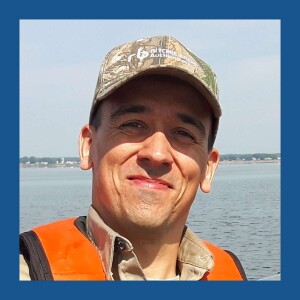
Vers la fin de mon doctorat, je savais que je ne ferais pas de postdoc. Mais à part des tests qui me disaient quels domaines seraient intéressants à explorer avec mon profil, comme l’enseignement au collégial ou le coaching, je n’avais aucune idée de ce que j’allais faire après la rédaction de ma thèse. Finalement, j’ai découvert, à travers mon réseau, la rédaction médicale, domaine dans lequel j’ai eu mon premier emploi. Mais dans toutes ces recherches et toutes ces conversations, je ne me souviens pas d’avoir considéré en emploi dans la fonction publique – pourtant, c’est un espace où beaucoup d’opportunités se présentent aux docteurs. Et c’est à propos de cela que j’ai parlé avec mon invité de cette semaine – Olivier Morissette – Biologiste au Ministère des Forêts, de la Faune et des Parcs du Québec.
Télécharge la "Boîte à outils pour le doctorat" maintenant !
Olivier Morissette est biologiste et chef de la division des espèces aquatiques envahissantes du Ministère des Forêts, de la Faune et des Parcs du Québec (MFFP). Il a obtenu un doctorat en biologie de l'Université Laval (Québec) et est spécialisé dans l’étude de l’écologie des poissons par l'utilisation combinée de différentes techniques analytiques (ex. chimie des otolithes, analyse des isotopes stables et génomiques) appliquée à la gestion de la faune aquatique. Ses principaux mandats sont la coordination de la détection et de la surveillance des espèces aquatiques envahissantes, l’étude de leurs impacts et la sensibilisation et l’éducation. Passionné d’ichtyologie et d’art, il combine ces champs d’intérêt par l’illustration et la photographie sous-marine.
Joins-toi au groupe d'exploration de carrières Papa PhD !
Ce que tu apprendras dans cet épisode :
L'intérêt de s'impliquer dans des projets de recherche avant la maîtrise et le doctorat pour "goûter" à la réalité et débuter son réseautageLes postes dans les organismes gouvernementaux comme débouché après le doctoratN'aie pas peur de déranger – rejoins des gens dans les domaines qui d'intéressent et pose-leur tes questionsRédiger sa thèse quand on n'est plus au doctorat et qu'on travaille ou qu'on a déjà une familleLe processus d'embauche pour un poste au gouvernementalLes perles de sagesse d'Olivier :« Il y a un article qui est sorti dans Nature en 2018 qui disait qu'au Canada et en Grande-Bretagne le PhD en sciences menait à des carrières intéressantes et gratifiantes pour la majorité des gradués. Donc il faut quand-même, sans se dire que tout est joué d'avance, se consoler en se disant qu'il y a un marché qui est prêt à acueillir ces gens-là. »« Des fois, il faut rappeler qu'il ya beaucoup de forces qui ont été développées lors de ces études-là et que parfois elles sont passées sous silence quand les gens préparent leurs candidatures ou leurs entrevues. C'est très valable, c'est super, d'avoir eu des bourses d'études, d'avoir fréquenté universités très réputées ou des laboratoires très réputés - ça donne probablement beaucoup de confiance au candidat, mais aussi à l'employeur de voir que c'est une personne qui a bien performé, mais des fois, ce n'est pas l'élément qui fait la différence. L'élément qui fait la différence, c'est peut-être la maîtrise d'un logiciel ou d'une technique. »« Dans la fonction publique les entrevues sont assez carrées, les questions sont prédéterminées, souvent. C'est un panel de souvent trois personnes qui va rencontrer le candidat, puis on pose les questions qui sont prédéterminées. Dans notre cas, les descriptions d'emploi sont assez explicites sur qu'est-ce qui va être fait, qu'est-ce qui va être demandé, donc le premier conseil que j'ai à donner, c'est: faites vos devoirs sur ces domaines-là. Moi, je suis passé en etrevue sur les espèces aquatiques envahissantes, particulièrement les carpes asiatiques, donc j'avais avalé un peu de littérature pour bien comprendre de quoi on parlait, parce qu'effectivement,
Thursday Oct 22, 2020
Thursday Oct 22, 2020
This week on the show, we’re going to talk about uncertainty, in particular employment uncertainty in academia and outside of it in the current pandemic context. Now in-between jobs, after her their postdoc, my guest will share her journey up to today and will talk about how confinement led her to take on new projects, teach herself new skills and double down on her investment in networking.
Download "Tools for Your PhD Journey" Now !
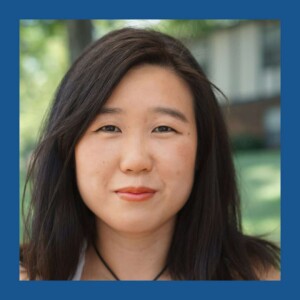
Vera Chan graduated her PhD in HK from 2014 and had 6 years of Postdoc experience working in the US and France.
This year Vera decided to transition into a non-academic role, and she is still undergoing the process of job-seeking as a foreigner living in France. I am happy that she is open to sharing with us about this vulnerable moment, the less glamorous side of life-after-PhD that not many people are willing to talk about. Vera is also the host of the PhD Coffee Time Youtube channel, where she shares her insights and advice covering all aspects of life as a graduate researcher.
Join the Papa PhD Postgraduate Career Exploration Group!
What you’ll learn about in this episode:
Dealing with cultural shock when moving countries for your PhD or your postdoc
Mistakes to avoid when thinking about your career, as a researcher
The importance of avoiding tunnel vision when considering career options
Organizing vortual coffee breaks as a way to socialize and network during confinement
The use of informational interviews for academic and non-academic jobs
How to work on your journey's narrative for the nonacademic space
How to leverage networking platforms like LinkedIn
This episode’s pearls of wisdom:
“I started with about 300 people on my network, who I know in person from my academic record, and after I'd redone my LinkedIn profile, I think it's a mindset shift, because in academia we don't need a LinkedIn profile to find a job, we use ResearchGate and we do other things, like Twitter, right? But I think LinkedIn is a statement saying that you are also ready and available if someone wants a freelance job or, you know, something. You can still be a PhD student, but you can also have a LinkedIn profile that advertises what you could do, like bioanalysis or statistics, you know. Those are the skills that you could offer – you don't have to have a full-time job. And I think that it's a profile that tells people that you are business ready.”
“I think any transitionning of career is very much like a broken relationship. I think people might have the negative thinking all the time about "this is the most terrible person, this is the worst experience in my life". I want to say that this is not it – I think that this is my experience that was from a useful time that I really enjoyed everything I've learned from my academic research. And I know that there ar are a lot of take-aways, like I can talk with people from different cultural backgrounds, I've learned that I can do technical writing – I'm not a native English speaker, but I'm quite good at attention to detail.”
Vera's links: LinkedIn – Linkedin.com/in/verabschan/; Youtube – YouTube.com/channel/UC2YqZKndK7HxCnbe06ZCEuw; Twitter – @VeraBSChan; Instagram – @PhDCoffeeTime.
Leave a review on Podchaser !
You might also like the following episodes:
Susanna L. Harris – Mental health advocate: PapaPhD.com/42; PapaPhD.com/43
Rebecca Maymon – PhD Recruitment: PapaPhD.com/75
Falisha Karpati – Skills Development: PapaPhD.com/30
Chris Humphrey – Career Counseling: PapaPhD.com/73
Launching your podcast?
If you're preparing to launch your podcast, you may be asking yourself what hosting platform to use.
I launched Papa PhD on Bluebrry because I wanted a professional service that would interface with my WordPress website, that would robustly broadcast Papa PhD to all platforms, and that would allow me to grow my podcast in years to come.
And these are the reasons why I'm recommending the Blubrry podcast hosting and syndication platf...
Thursday Oct 15, 2020
Thursday Oct 15, 2020
Est-ce qu'il n'y a qu'une route à suivre pour mener des recheches doctorales? En court – non. Chacun de nous est différent, a une histoire de vie différente, des valeurs différentes et des objectifs de vie qui nous sont très personnels. Cette semaine, mon invité qui oeuvre dans le transfert des connaissances mais aussi dans le conseil aux doctorants partage avec toi son trajet académique, les décisions et les moments tournants, et partage aussi la vision très actuelle qu'il a de la place des docteurs dans l'horizon professionnel d'aujourd'hui.
Télécharge la "Boîte à outils pour le doctorat" maintenant !
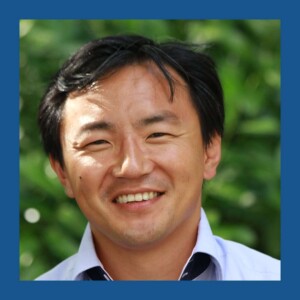
Marc Chevalier, PhD, est Chief Executive Officer et Chief Scientific Officer de NeckEpur et coordinateur du programme Master 2 Bioentrepreneurs. Docteur en neurosciences, il a poursuivi sa carrière en alternant postes scientifiques et entrepreneuriat, tout en étant fortement impliqué dans des projets associatifs visant à faciliter la mise en réseau et l'évolution professionnelle des doctorants/docteurs dans le secteur privé ou en dehors du milieu universitaire.
Ce que tu apprendras dans cet épisode :
L'importance du choix d'université et de laboratoire pour le succès de ton doctorat - le fit avec tes objectifs de vie, tes priorités et tes valeursPourquoi il est important de bien choisir son superviseur, son PI et pas seulement l'institution ou le sujet de rechercheLes avantages d'une thèse en trois ansLe stress et la santé mentale au doctorat en FranceLes avantages de choisir un projet qui a déjà de bons résultats préliminairesL'intérêt de prendre part aux activités associatives à l'universitéLes liens de Marc : Linkedin – Linkedin.com/in/marcchevalier; Twitter – @marcchevalier.
Laisse-moi un review sur Podchaser !
Tu aimeras aussi ces épisodes :
Boîte à outils pour les études doctorales – Mon cheminement : PapaPhD.com/37Amandine Bugnicourt – Recrutement de PhDs : PapaPhD.com/74Olivier Hernandez – Vulgarisation Scientifique : PapaPhD.com/56; PapaphD.com/45Virginie Levasseur – Développement international : PapaPhD.com/17
Thursday Oct 08, 2020
Thursday Oct 08, 2020
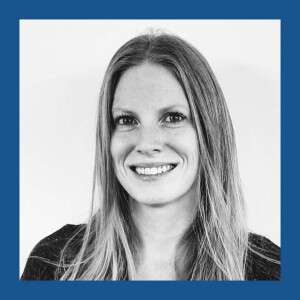
This week, I'm bringing you a conversation with someone who has recently made the transition from her PhD to the non-academic job market, and has done so into the PhD career development and recruitment domain.During our conversation, Rebecca Maymon, you will not only hear about her experience exploring career avenues during her PhD and navigating that transition, but you will also get her valuable insights based on her research and on her recruiting experience working in an organizations that focuses exclusively on PhDs.
Download "Tools for Your PhD Journey" Now !
Rebecca joined Adoc Talent Management in 2019 as a Research Officer and Recruitment Consultant, where she contributes to in-house research projects focused on the skills of PhDs and how they can foster innovation within and outside the academy. She also provides skills and career development workshops for PhDs, and acts as a recruitment consultant to help innovative companies find highly qualified talent that matches their needs.Rebecca holds a PhD in Educational Psychology from McGill University, Montreal. Over the past 10 years, she has developed and contributed to projects in graduate skills and employment, stress and social support during transition periods, motivation, engagement, and human behavior.
Join the Papa PhD Postgraduate Career Exploration Group!
What you’ll learn about in this episode:
How a peer support group can help you during graduate school and after in designing your career pathThe importance of identifying and taking advantage of resources offered by your university (and sharing them with your peers!)If your career center doesn't offer a service you need - ask for it and they might end up creating it!How to start broadening your network today - is is most likely where you'll find your next jobInformational interviews - they are your best friend, so don't be afraid of reaching out to peopleThe importance of building bridges between university research centers and employersThis episode’s pearls of wisdom:“Coming back to the informational interviews, just expanding yourself outside of your network, just talking to people who are not in your department, in your discipline, it gives you those opportunities to kind of nail that down, so that when you get to an interview, you've messed it up a few times and you're good, now.”“As far as workshops, pretty much I saw that I was able to go to, I went to. There were things about kind of the way they do IDPs or individual development plans, now, just helping you reflect and map out your motivations and aspirations and values, and things like that.”“Most PhDs are finding their jobs through their network.”Rebecca's links: LinkedIn – Linkedin.com/in/rebecca-maymon-phd-a70523153; Website – Adoc-TM.com; PhDetectives report: http://bit.ly/2NHqeGA .
Leave a review on Podchaser !
You might also like the following episodes:
Zoë Ayres – Water chemistry: PapaPhD.com/54; PapaPhD.com/55Nathalie Ross: PapaPhD.com/50; PapaPhD.com/51Falisha Karpati – Skills Development: PapaPhD.com/30Chris Humphrey – Career Counseling: PapaPhD.com/73
Launching your podcast?
If you're preparing to launch your podcast, you may be asking yourself what hosting platform to use.
I launched Papa PhD on Bluebrry because I wanted a professional service that would interface with my WordPress website, that would robustly broadcast Papa PhD to all platforms, and that would allow me to grow my podcast in years to come.
And these are the reasons why I'm recommending the Blubrry podcast hosting and syndication platform.
Click on the button below or use the promo code PapaPhDBlue on the Blubrry website to unlock a one month free trial:
Try one free month with Blubrry !
If you are starting a serious podcast project, do consider one of the first podcasting hosts out there, offering state of the art services,
Thursday Oct 01, 2020
Thursday Oct 01, 2020
De retour en français pour cette saison 2 de Papa PhD et cette semaine je vous apporte une invitée qui travaille depuis 2008 à faire le pont entre docteurs et employeurs. Tu remarqueras que le format a un peu changé : les entrevues dureront environ 40 minutes et seront toujours publiées le jeudi, tu m’entendras intervenir plus et commenter des moments-clés de la conversation et – petit cadeau – j’inclurai toujours à la fin de l’épisode des vignettes audio de podcasts amis, en français, et qui t’intéresseront sûrement.
Téléchargez la "Boîte à outils pour le doctorat" maintenant !
Amandine Bugnicourt est ingénieur de l'INSA Lyon en biochimie et biotechnologie et est titulaire d'un doctorat en microbiologie, biologie moléculaire et cellulaire de l'Université Paris 7 - Denis Diderot. Elle a travaillé dans la recherche en France, en Europe, aux États-Unis. Convaincue de la valeur ajoutée que les doctorats peuvent apporter à des entreprises dans des postes de haut niveau, mais aussi consciente des difficultés que rencontrent certains d'entre eux pour rechercher et évaluer ces profils, elle a cofondé Adoc Talent Management au début de l'année 2008. Directrice associée de l'entreprise, elle est en charge de la stratégie de développement et gère les trois activités où elle travaille également Recrutement, Formation, Innovation & Études.
Joignez-vous au groupe d'exploration de carrières Papa PhD !
Ce que vous apprendrez dans cet épisode :
L'importance de rechercher soi-même son champ des possibles dans ce qui a trait aux possibilités de carrière, quitte è créer son poste quand vos compétences correspondent à un besoin nouveau et particulierLe rôle central du réseautage dans ta préparation et dans la définition de ton champ des possiblesLa R&D et les sociétés exportatrices comme chefs de file de l'emploi de docteursLe numérique et les domaines émergents et comment y accéderL'importance d'anticiper ta poursuite de carrière le plus tôt possiblePourquoi il faut chercher un emploi qui va nous plaire, où on va pouvoir s'épanouirLa valeur de l'hulimité dans toutes ces démarchesLes perles de sagesse d'Amandine :« Il faut que le docteur – y compris issu des lettres ou des humanités – anticipe sa poursuite de carrière le plus tôt possible et pour moi ça passe par le fait de ne surtout pas se dire "comment je vais me trouver un job ?" Parcequ'un job il en trouvera un, mais vraiment de se dire "comment je vais trouver de l'emploi où je viais m'épanouir demain et où je vais apporter le plus de plus'value. »« Cest une manière différente de réfléchir à son profil. Ça nécessite vraiment d'avoir une approche réflexive, de faire une introspection sur ses savoirs, ses savoirs-faire, ses savoirs-être, de décortiquer son travail doctoral sous l'angle des compétences qu'on a à apporter et de pouvoir les expliquer, demain à un non-expert, puisque les recruteurs, en général, ne sont pas experts du doctorat, ni du domaine disciplinaire. »Les liens d'Amandine : Linkedin – https://www.linkedin.com/in/amandinebugnicourt; Twitter – @AdocTM; Web – Adoc-TM.com; Étude PhDétectives – Adoc-TM.ca/etudes.
Laissez une évaluation sur Podchaser !
Vous aimerez aussi ces épisodes :
Boîte à outils pour les études doctorales – Mon cheminement : PapaPhD.com/37Carine Monat – Journalisme scientifique : PapaPhD.com/40Olivier Hernandez – Vulgarisation Scientifique : PapaPhD.com/56; PapaphD.com/45Virginie Levasseur – Développement international : PapaPhD.com/17
Envie de lancer un podcast?
Mon ami et collègue podcasteur Marco Bernard et son Académie du Podcast ont ce qu'il vous faut si vous avez une idée, mais qu'il vous manque les connaissances pour mettre en place votre podcast.Dans la formation Podcasting 101, Marco a préparé plus de 20 vidéos et des tutoriels où il explique quel équipement se procurer, comment faire le montage et comment le mettre en ondes sur les p...
Thursday Sep 24, 2020
Thursday Sep 24, 2020
Download "Tools for Your PhD Journey" Now !
Welcome to Season 2 of Papa PhD!To kick-start this second season of interviews, I’m bringing you someone who has been helping researchers figuring out their careers for a while, now, and who will be recounting how he navigated his transition and how he got to the position he’s in today.But before we go into the interview, I want to quickly share with you what new features you’ll be noticing starting today, on Papa PhD. The first big change is that the interviews are now going to be shorter, around 40 minutes, and they’ll be published as a single episode, on Thursday. Second – you’ll see that I’ll be spending more time discussing what my guests do today and what advice they have for you. And you’ll see the more we go into the interview, the more value you’ll find. And finally, every episode I will have a short section at the end where I’ll be sharing trailers of podcasts I think you’ll enjoy, and that are friends of the show.I hope you enjoy the new format!
So today, on Papa PhD, I have with me Dr Chris Humphrey.Chris Humphrey is a project manager and careers consultant, and the founder of the popular careers website Jobs on Toast. Chris holds a BA in English Studies and an MA in Culture and Social Change, both from the University of Southampton. He completed his PhD in Medieval Studies at the University of York in 1997, and held a post-doctoral fellowship there until 2000.Since leaving academia, Chris has worked as a project and programme manager in the private sector, specialising in technology, transport, financial services and sustainability. Today he works as a team leader and project manager for a leading European sustainable bank. Chris is a Member of the Association for Project Management and a registered PRINCE2 Practitioner.Chris is passionate about helping people with their careers and personal development. He has given numerous careers talks at universities in the UK, Ireland, Australia and the US, and has taken part in live Q&A events on The Guardian’s website, and for jobs.ac.uk. Chris has contributed a video training course to the popular careers website CareerCake, explaining the benefits of further study for personal and career progression (covering Diplomas, Master’s courses and PhDs).In 2012 Chris founded the website Jobs on Toast as a way to help Masters students and doctoral graduates access the abundant career opportunities available outside of higher education.
Join the Papa PhD Postgraduate Career Exploration Group!
What you’ll learn about in this episode:
The importance of being open to new experiences when considering career optionsWhy it's ok to take on a lower entry-level job when transitioning and why you will then quickly ascend afterHow a PhD translates in the project management spaceHow career advancement works in the private sectorThe importance of thinking out of the box and not putting all your energies into the "logical" choices, when looking at job postings or when offered opportunities that fall outside of your universe of possiblesThis episode’s pearls of wisdom:“Typically in the UK only 50% of PhDs are still in academia three-and-a-half years after they graduate, you know. Some people are obviously doing research work still, as postdocs, some people are doing teaching and lecturing and some are in administrative positions, but yeah - half of all PhDs will be working outside of academia. When you tell that to specially first- and second-year PhDs, they can't believe it.It's mind-blowing, you know? And even when I talk to people I meet, and I introduce myself, say I've got a PhD or something, and they say "Why aren't you working at Oxford or Cambridge? You've got a PhD... That must be what you should have been doing..." And it's interesting that there's this powerful expectation. But it's trying to educate people really about developing a career consciousness.