Beyond the Thesis With Papa PhD
Real PhDs. Real Journeys. Beyond Academia.
Listen on:








Episodes
Thursday Sep 17, 2020
Thursday Sep 17, 2020
Téléchargez la "Boîte à outils pour le doctorat" maintenant !
Transcription de l'épisode :
Salut! C’est moi, David !
Si tu viens de découvrir Papa PhD, bienvenue ! La saison 2 du podcast est presque arrivée - l'épisode 1 sera diffusé le jeudi 24 septembre - et je suis vraiment heureux de vous reprendre contact avec vous tous!
Voici ce qui est au menu pour la saison 2.
Dans la saison 1, j'ai fait de mon mieux pour vous présenter des histoires de personnes titulaires d'une maîtrise ou d'un doctorat, travaillant dans le milieu universitaire ou non, avec des parcours professionnels aussi divers que possible.
Il y a eu de histoires inspirantes sur l'entrepreneuriat, sur les carrières créatives, sur la santé mentale au doctorat, sur le travail interdisciplinaire et de vulgarisation, ainsi que sur l'accès aux carrières dans des domaines spécifiques. Vous pouvez avoir un aperçu de toutes ces conversations en écoutant les épisodes 68 et 26, que vous trouverez au PapaPhD.com/68 et PapaPhD/26.
Au cours de la saison 2, je vais non seulement vous présenter des invités ayant des parcours professionnels différents, mais je vais aussi interviewer des spécialistes du domaine de l'orientation professionnelle et du recrutement, pour discuter avec eux de l'évolution du doctorat et partager avec toi leur point de vue sur la meilleure façon de naviguer sur les eaux souvent brumeuses de la transition vers la vie professionnelle.
Nous parlerons de l'incertitude de l'emploi pendant la pandémie de COVID, de l'évolution et de l'avenir de la marque PhD dans la société et sur le marché du travail, du développement des compétences et de la construction de la carrière, ainsi que de la santé mentale, en essayant de centrer chaque épisode sur une question principale.
Donc, si tu viens de découvrir Papa PhD et que tu veux te préparer pour la saison 2, visite PapaPhD.com et écoute les conversations de la saison 1. Et si tu veux être sûr de ne manquer aucun des nouveaux épisodes, rends-toi sur PapaPhD.com/Saison2 et inscris-toi pour les recevoir directement dans ta boîte courriel !
Reçois Papa PhD directement par courriel !
Et c'est tout ce que je voulais partager avec toi dans cet épisode zéro de la nouvelle saison! Au plaisir de t’avoir dans mon auditoire et d'avoir de tes nouvelles !
Merci d'être un fan et prends soin de toi !
Tu aimeras aussi ces épisodes :
Boîte à outils pour les études doctorales – Mon cheminement: PapaPhD.com/37
Papa PhD Pearls of Wisdom – 2019 Season: PapaPhD.com/26
Wednesday Sep 16, 2020
Wednesday Sep 16, 2020
Download "Tools for Your PhD Journey" Now !
Episode transcript:
Hi! David here!
If you’re new to Papa PhD, welcome! Season 2 of the podcast is almost here - Episode 1 is airing on Thursday, the 24th of September - and I’m really happy to be back in touch with you!
So here’s what’s in the works for Season 2.
On season 1 I tried my best to bring you stories from people with master’s or PhD degrees working in and out of academia, with career paths as diverse as possible.
There were great stories about entrepreneurship, about following creative careers, about mental health in graduate school, about interdisciplinary and outreach work in academia, and about accessing careers in specific domains. You can get a glimpse of all those conversations on episodes 68 and 26, by going to PapaPhD.com/68 and PapaPhD.com/26.
In season 2 I’m going to switch it up and not only bring you guests from different backgrounds and career journeys, but I will also be interviewing specialists who work in the career counseling or in the recruitment domain, to discuss the evolution of the PhD and to share their take on how to best navigate the often foggy waters of transitioning to your professional life.
We’ll be talking employment uncertainty during the COVID pandemic, evolution and future of the PhD brand in society and in the job market, skills development and career building, and mental health, trying to focus each episode on one main question.
So if you’re new to the show and want to warm up to Season 2, go to PapaPhD.com and listen to the Season 1 conversations. And if you want to make sure you don’t miss any of the new episodes, go to PapaPhD.com/season2 and sign up to receive them straight in our inbox!
Get Papa PhD in your inbox!
And that’s all I wanted to share with you in this Season 2 episode Zero. Looking forward to having you in the audience and to hearing from you!
Thank you for being a fan and stay safe!
You might also like the following episodes:
Tools for your PhD Journey – My Path: PapaPhD.com/36
Papa PhD Pearls of Wisdom – 2019 Season: PapaPhD.com/26
Thursday Aug 27, 2020
Thursday Aug 27, 2020
Download "Tools for Your PhD Journey" Now !
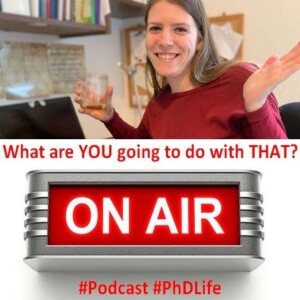
Welcome to this Papa PhD season finale, a special collab with the What Are You Going to Do With That podcast. Right now, if you go to their website you will find the interview I gave for their show! In this second part, Danni Reches talks about her life outside her research. During this conversation we had a great exchange about working versus volunteering and about the importance of non-research activities in terms of networking.
Danni Reches is a PhD fellow and research associate at the Haifa Center for German and European Studies at the University of Haifa. She received her BA in Middle Eastern Studies from Leiden University in the Netherlands, during which she co-established a student society. As part of her BA, she spent a semester at the Hebrew University of Jerusalem on an exchange program. Danni also holds a BA certificate in Peace & Conflict Studies and an MA degree in Diplomacy, a specialization in International Relations, from the University of Haifa.Her PhD dissertation focuses on policy and perceptions of immigrants from the Middle East in Europe. In other research projects, Danni works on refugees and international law in the EU during crises, including the so-called ‘refugee crisis’ and the corona pandemic.
Join the Papa PhD Postgraduate Career Exploration Group!
What you’ll learn about in this episode:
Having activities and projects outside your research is positive, but be careful not to overextend yourselfHow conferences can add to your networking and to your research, besides the fun aspectWorking around your institution or department to supplement your stipend has hidden advantagesVolunteering vs being exploited as a graduate studentWhat organizing seminars can bring you as a graduate researcherThis episode’s pearls of wisdom:“ I, in a way, learned that academia is about rejection. You will have to face rejection. But the positive thing about it, and what I've learned about it is that that's ok. You just nead to find a way for yourself to deal with that, to not take all of that personnally. You not getting a scholarship, you not getting into a conference, or your article being dismissed, doesn't mean that you are a failure. It doesn't mean anything about you as a person.”“ If there would be a university that would say 'Ok – you are our PhD student and you're getting a scholarship for doing the PhD, so now, we're half way through the semester and we want to do a conference but we have no one to do it, so we want you to organize the conference for us – go and ot it – then I would be like "no, this was not part of the contract". This is very easy to ask of someone in this position because they might be afraid to tell you 'No'. It's a lot of extra work that also takes away time to do sports and to do you research. And then I would say "No, this is not ok to ask, this is not a kind of volunteering that I could support".”Danni's links: LinkedIn – LinkedIn.com/in/danni-reches-6b6b7671; What To Do With That Podcast – shows.acast.com/whatareyougoingtodowiththat; Twitter – https://twitter.com/What2doWithTHAT; Instagram – Instagram.com/what2dowiththat.
Leave a review on Podchaser !
Support the show on Patreon !
Launching your podcast?
If you're preparing to launch your podcast, you may be asking yourself what hosting platform to use.
I launched Papa PhD on Bluebrry because I wanted a professional service that would interface with my WordPress website, that would robustly broadcast Papa PhD to all platforms, and that would allow me to grow my podcast in years to come.
And these are the reasons why I'm recommending the Blubrry podcast hosting and syndication platform.
Click on the button below or use the promo code PapaPhDBlue on the Blubrry website to unlock a one month free trial:
Try one free month with Blubrry !
Wednesday Aug 19, 2020
Wednesday Aug 19, 2020
Download "Tools for Your PhD Journey" Now !
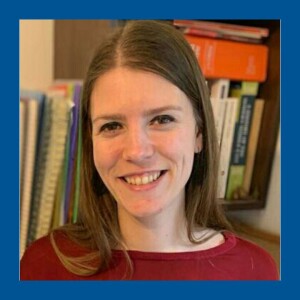
Welcome to this Papa PhD season finale, a special collab with the What Are You Going to Do With That podcast. Right now, if you go to their website you will find the interview I gave for their show! On the Papa PhD mic with me for this interview, I have Danni Reches, host of the W2DWT podcast, talking about her journey up to her PhD and about how she includes other projects and activities in her life as a graduate researcher, namely, working for the Minerva Center for the Study of Law under Extreme Conditions, at the University of Haifa.
Danni Reches is a PhD fellow and research associate at the Haifa Center for German and European Studies at the University of Haifa. She received her BA in Middle Eastern Studies from Leiden University in the Netherlands, during which she co-established a student society. As part of her BA, she spent a semester at the Hebrew University of Jerusalem on an exchange program. Danni also holds a BA certificate in Peace & Conflict Studies and an MA degree in Diplomacy, a specialization in International Relations, from the University of Haifa.Her PhD dissertation focuses on policy and perceptions of immigrants from the Middle East in Europe. In other research projects, Danni works on refugees and international law in the EU during crises, including the so-called ‘refugee crisis’ and the corona pandemic.
Join the Papa PhD Postgraduate Career Exploration Group!
What you’ll learn about in this episode:
Why taking a break between your master's and your PhD can be good for you and allow for some soul-searching, volunteering in your community, and meeting new, like-minded peopleWhat advanteges you can reap from choosing a smaller PhD programHow a PhD in social sciences worksWhy you should connect with peers in a wider circle, in graduate schoolThis episode’s pearl of wisdom:“Traveling and going to the other side of the world might sound very spontaneous and exciting, but I think it,s also allowing yourself to take that time, even if it's just a few weeks. To know that when you start something, you've considered it and it's not something you just jumped into because other people told you it's what you were supposed to do – it was really your own choice. And I think it's muche easier to live with that than any other way.”“I think it's good for PhD students who are just about to start to realize that they can go out and look for peers. They don't have to sit and wait until it comes to them. Because this can feel like a very lonely process and it doesn't necessarily have to be.”Danni's links: LinkedIn – LinkedIn.com/in/danni-reches-6b6b7671; What To Do With That Podcast – shows.acast.com/whatareyougoingtodowiththat; Twitter – https://twitter.com/What2doWithTHAT; Instagram – Instagram.com/what2dowiththat.
Leave a review on Podchaser !
Support the show on Patreon !
Launching your podcast?
If you're preparing to launch your podcast, you may be asking yourself what hosting platform to use.
I launched Papa PhD on Bluebrry because I wanted a professional service that would interface with my WordPress website, that would robustly broadcast Papa PhD to all platforms, and that would allow me to grow my podcast in years to come.
And these are the reasons why I'm recommending the Blubrry podcast hosting and syndication platform.
Click on the button below or use the promo code PapaPhDBlue on the Blubrry website to unlock a one month free trial:
Try one free month with Blubrry !
If you are starting a serious podcast project, do consider one of the first podcasting hosts out there, offering state of the art services, including IAB certified statistics, based on years of experience in the podcasting space.
Happy podcasting!
You might also like the following episodes:
Dana Murchison – Science Outreach: PapaPhD.
Friday Jul 31, 2020
Friday Jul 31, 2020
Téléchargez la "Boîte à outils pour le doctorat" maintenant !
Transcription de l'épisode :
Bonjour à tous !
Nous arrivons à la fin de la première saison de Papa PhD et aujourd'hui, je voulais juste remercier tous les auditeurs qui ont suivi l'émission partout autour de la planète. Ça a été très impressionnant de voir l'émission grandir comme elle l'a fait au cours de cette première année, donc encore une fois, l'une des choses que je voulais faire aujourd'hui, c’est de vous remercier, vous qui êtes là semaine après semaine, et qui pensez à votre doctorat, à votre maîtrise et réfléchissez à ce à quoi votre carrière pourra ressembler à l'avenir. J'espère vraiment que les conversations que j'ai partagées dans sur le podcast vous ont inspiré dans votre parcours.
Au cours de cette première saison, j'ai eu la chance de parler avec tant d'invités intéressants et d'apprendre avec eux, et j'espère avoir pu partager suffisamment de leur sagesse avec vous pour vous aider dans votre planification de vie et dans votre exploration de carrière.
Je suis extrêmement reconnaissant d'avoir eu des invités couvrant tant de domaines académiques différents : des sciences de la vie à l'ingénierie, en passant par la psychologie et la littérature. La portée de ces conversations a de loin dépassé ce que j'avais imaginé quand j’ai décidé de lancer le podcast. Je tiens donc à remercier de tout mon cœur tous les invités qui ont participé à la première saison de Papa PhD.
En repensant à toutes ces conversations et en pensant à vous, qui réfléchissez à votre avenir, à la voie à suivre, aux décisions à prendre, j'ai le sentiment que l'un des fils conducteurs de toutes ces conversations, et c'est peut-être le plus important, a été de vous dire que vous avez le droit d’avoir des expériences diversifiées pendant votre diplôme de 2e ou de 3e cycle. Non seulement dans le cadre de vos recherches, mais aussi, et c'est important, en dehors de celles-ci. Que ce soit en intégrant des associations d'étudiants, en faisant du bénévolat dans des projets de vulgarisation, en intégrant des communautés sportives ou créatives, mais aussi en faisant des stages dans l'industrie ou des pauses où vous essayez quelque chose de complètement différent avant d'entamer un nouveau chapitre de votre vie universitaire.
Un autre point commun qui me semble très important concerne la façon dont vous vous percevez en tant qu'universitaire, en tant que chercheur, en tant que candidat à un emploi. À l’issue de vos études, vous n'êtes peut-être pas conscient de certaines compétences importantes que vous avez développées, mais qui ne sont pas techniques, qui n'ont pas de rapport direct avec votre sujet de recherche. L'une des compétences très importantes que vous développez en rédigeant une thèse de maîtrise ou de doctorat est votre capacité à analyser, à digérer et à donner un sens à des ensembles de données complexes et de grande taille. Celle-ci va de pair avec votre capacité à résoudre des problèmes. Ce sont des compétences qui sont très appréciées par les employeurs.
La gestion de projet est un autre domaine dans lequel vous avez naturellement développé des compétences pendant vos études. De nombreux postes sur le marché du travail exigent la capacité d'entreprendre de grands projets, des projets complexes, et d'être capable de planifier, de fixer des jalons, de définir des objectifs, puis de travailler à la réalisation de ces objectifs. Un autre des aspects qui ont été mentionnés à maintes reprises par les invités que j’ai eu à mon micro.
Si vous réécoutez les différents épisodes, les différentes entrevues, vous trouverez davantage de ces compétences, en rapport avec le domaine spécifique dans lequel chaque invité travaille actuellement. Donc, explorez les entrevues de la Saison 1, écoutez ce qu’avaient à partager les invités qui travaillent dans un domaine qui vous intéresse. Vous verrez, vous trouverez des conseils que vous pourrez utiliser pour commencer à bâtir votre propre p...
Thursday Jul 30, 2020
Thursday Jul 30, 2020
Download "Tools for Your PhD Journey" Now !
Episode transcript:
Hi there!
We're reaching the end of season one of Papa PhD and today, I just wanted to thank all the listeners out there who've been following the show around the world. It's been quite humbling to see the show grow as it did in this first year, so again, one of the things that I wanted to do today is to thank you, you who are out there thinking about your PhD, about your master’s degree and thinking about what your career can look like in the future. I really hope that the conversations that I've been sharing on the show have inspired you in your journey.
In this first season I’ve had the chance of talking with so many interesting guests and learning with them, and hopefully of sharing enough of their wisdom with you to help you in your life and career exploration.
I feel extremely grateful for having had guests that spanned so many different academic domains: from the life sciences to engineering, to psychology, to literature. The reach of these conversations has by far surpassed what I had imagined was possible when I set out to launch the podcast, so I also want to send out my heartfelt thanks to all the guests who have been on Papa PhD on this first season.
Looking back on all these conversations and thinking of you, the listener who is thinking about your future , about what path to take, about what decisions to make, I feel that one of the common threads having come out of all these conversations, and that is maybe the most important, was allowing yourself to experiment during your graduate degree. Not only within your research, but importantly outside of it. This can take the form of getting involved in student societies, volunteering in outreach projects, being part of communities around sports or creativity, but also of internships in industry or of taking breaks where you try something completely different before embarking on a new chapter of your academic life.
Another common thread that I feel is very important has to do with how you perceive yourself as an academic, as a researcher, as a candidate for a job. Coming out of graduate school you may not be aware of a few important skills you have developed, but that are not technical, that don't have to do directly with your subject matter. One of the very important skills that you develop by writing a master’s or PhD thesis is your capacity to analyze, digest, and make sense of large sets of complex data. Hand in hand with this is your capacity for problem solving. And these are skills that are highly prized by employers.
Another area where you organically developed skills during your degree is project management. A lot of positions out there in the job market require the capacity to take on large projects, complex projects, and be able to plan, set milestones, define goals, and then work towards reaching those goals. This is another of the aspects that have again and again being mentioned by guests on the show.
If you listen back to the different episodes, to the different interviews, you will find more of these skills, to do with the specific domain each guest works in currently. So, go and explore the Season 1 interviews, listen to the guests who are working in a domain that interests you. You'll see, you'll find advice you can use to start building a plan for yourself.
Now, a lot was told during season one about transferable skills, but a lot also was told about the blind spots, the things you don't naturally come out of graduate school knowing and being prepared for. One of the main ones has to do with preparing your CV and preparing to interview in a non-academic setting.
If you listen back to the interviews were spoke about jobhunting and interviewing outside of academia the main advice that came up again and again was to tailor your CV to each potential employer and, specifically, to give emphasis to the soft skills you have accrued while performing your research and keeping to a mi...
Wednesday Jul 22, 2020
Wednesday Jul 22, 2020
This is the third and last part of the special series on science communication during the COVID-19 pandemic.
The world is still very much fighting and trying to understand the COVID-19 pandemic at the moment this episode is airing, so I am bringing you the interventions of my guests on a panel that took place in May, titled "Scientists and the News Cycle – What Role Can We Play?"
In this third part, I discuss with Mónica Feliú-Mójer, Ph.D., with Joana Lobo Antunes, and with Adriana Bankston about how governments have been dealing with the pandemic and specifically about what role the interface between goverments and the scientific community can inform decision making and lead to better outcomes.
Another very interesting conversation about a subject that often takes the backstage
#gallery-3 {
margin: auto;
}
#gallery-3 .gallery-item {
float: left;
margin-top: 10px;
text-align: center;
width: 33%;
}
#gallery-3 img {
border: 2px solid #cfcfcf;
}
#gallery-3 .gallery-caption {
margin-left: 0;
}
/* see gallery_shortcode() in wp-includes/media.php */
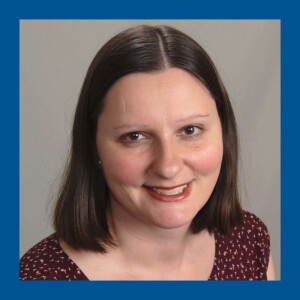
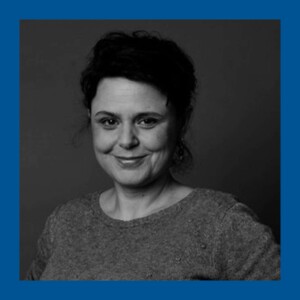
Adriana Bankston, PhD
Joana Lobo Antunes, PhD
Mónica Feliú-Mójer, PhD
Episode transcript:
David Mendes: I think a lot of very important things are being shared around the table, and I hope that people that are on the live, on Facebook, are appreciating that, too. I see little hearts popping up on the Facebook page, so I think it's a good sign. Now, in this part, I've named it "Can Policies Tip the Scales" and my first question is for Adriana: apart from universities and scientific societies and organizations like we've talked up till now, could governments also – and we, all around the table, know the answer to this, and we've even said that only governments can – be the final decider in the end? From your position of being in DC, what does that engagement look like from the federal point of view? What have you seen in terms of, initiatives, programs that have been making a difference ever since the crisis started?
Adriana Bankston: I think a lot of this comes down to funding.
So, governments can support universities and also other entities that relate to research and education. There have been bills and supplements coming out, multiple ones around supporting COVID-19 research, vaccines, testing, community events, a lot of different angles of this. And I think if we're talking about policy makers specifically, obviously they're busy people, they have a lot of priorities, they have, you know, as I said, they like to hear from constituents, they have the ability to appropriate funds for research and so on. So I think a lot of this, sort of the engagement from the government and policy side has been to hear the advocacy that comes in around the COVID issues and also financially supporting universities.
David Mendes: Now, I had the chance of listening to a conversation that Joana had in Portugal, in Portuguese, not so long ag, and Joana talked about what's been happening in Portugal and how government has been doing there in managing the crisis at the pandemic.
So, Joana, I heard you mention that Portuguese government has done a very good job in terms of taking decisions and implementing measures based on the input of specialists and of scientists from the medical and scientific community. Can you share with us what you think worked well in the Portuguese case, so far, and why?
Joana Lobo Antunes: Yeah, well, we are extremely fortunate and we are grateful because as you know, in Europe, we are usually paired more with Italy and France and Spain than with Denmark or Austria, and we actually have numbers more similar to those countries than to the Latin ones. And one of the key factors here was that government listened to scientists and they promoted the lockdown early – the other countries locked down much later. When the government in Portugal locked down,
Wednesday Jul 15, 2020
Wednesday Jul 15, 2020
This is the second of a 3-part series that will close the first season of Papa PhD.
The world is still very much fighting and trying to understand the COVID-19 pandemic at the moment this episode is airing, so I am bringing you the interventions of my guests on a panel that took place in May, titled "Scientists and the News Cycle – What Role Can We Play?"
In this second part, I discuss with Mónica Feliú-Mójer, Ph.D., with Joana Lobo Antunes, and with Adriana Bankston about how to connect with your audience during the COVID-19 crisis, and about what their views are on how the scientific community as a whole can engage in this conversation, at the community level and at the government and policy level.
Part 3, coming up next week, will focus on the what is happening on the science policy side, and on how you, and the scientific community can be heard and contribute to the efforts that are already ongoing.
#gallery-3 {
margin: auto;
}
#gallery-3 .gallery-item {
float: left;
margin-top: 10px;
text-align: center;
width: 33%;
}
#gallery-3 img {
border: 2px solid #cfcfcf;
}
#gallery-3 .gallery-caption {
margin-left: 0;
}
/* see gallery_shortcode() in wp-includes/media.php */
Adriana Bankston, PhD
Joana Lobo Antunes, PhD
Mónica Feliú-Mójer, PhD
Episode transcript:
David Mendes: These last few weeks have seen the surfacing of a host of fake news, misinformed statements by government leaders, conspiracy theories, that have fostered movements of COVID skepticism and resistance to health and safety guidelines.
And, One of the obstacles, of course, one of the things, of course, is to make sure that the news, the right news, the true news are out there and have the spotlight, but there's also the question of bringing the message to the public in a language and in a way that talks to them, right? And that will reach them intellectually and emotionally, and that will make them act upon what they heard. Monica, the question is for you – based on your experience on the ground, and you've already alluded to it a little bit, because you said that the governor was making a statement that was totally not science-based. The question is how well has the scientific community been able to push back against misinformation that's been surfacing about the coronavirus and COVID-19 and, given the problems you've identified and you're dealing with in Puerto Rico, how can scientists develop and deploy culturally appropriate solutions in this context?
Mónica Feliú-Mójer: In Puerto Rico, the scientific community has been incredibly active and engaged in communicating the, the science and the implications and different sectors of society of COVID 19. We're trying our best to address misinformation, but, you know, I can't compete with the secretary of health – that's the person you were thinking about – you know, his platform is way bigger than mine. And so, while we're doing our best, I think in terms of the expressions and the comments he made, that the damage is done. That once misinformation is out there it's hard to combat because people become familiar with it, and so it's a tricky thing to do.
However, we've been very active. I will say I have been really encouraged by the visibility that scientists, in Puerto Rico – you know, that's, my experience is predominantly in Puerto Rico – that scientists have, you know, I never thought I would hear a government official talk about PCRs, pretty much every day. You know, I'm talking about PCRs multiple times a day in the media, and so I think there are some encouraging signs and opportunities in terms of the visibility of scientists, in terms of – people want to hear from scientists. In Puerto Rico, I mentioned there is a lack of credibility in the government, and although we don't really have surveys that tell us the population in Puerto Rico trust in science,
Wednesday Jul 08, 2020
Wednesday Jul 08, 2020
This is the first of a 3-part series that will close the first season of Papa PhD.
The world is still very much fighting and trying to understand the COVID-19 pandemic at the moment this episode is airing, so I am bringing you the interventions of my guests on a panel that took place in May, titled "Scientists and the News Cycle – What Role Can We Play?"
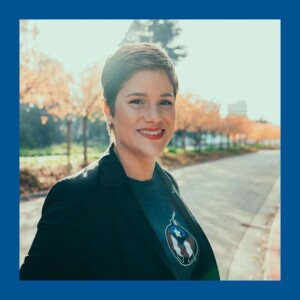
In this first part, I talked with Monica Feliu-Mojer, Ph.D., with Joana Lobo Antunes, and with Adriana Bankston about the impact the pandemic has had on their professional lives and on the lessons they have learned, so far.
Part 2, coming up next week, will focus on the role academic institutions and scientific associations can play, in terms of science communication, in a context such as the ongoing pandemic.
#gallery-3 {
margin: auto;
}
#gallery-3 .gallery-item {
float: left;
margin-top: 10px;
text-align: center;
width: 33%;
}
#gallery-3 img {
border: 2px solid #cfcfcf;
}
#gallery-3 .gallery-caption {
margin-left: 0;
}
/* see gallery_shortcode() in wp-includes/media.php */
Adriana Bankston, PhD
Joana Lobo Antunes, PhD
Mónica Feliú-Mójer, PhD
Episode transcript:
David Mendes: Welcome everyone here. I’m super happy to be here today, discussing the role of the scientific community in today’s, situation, which is the COVID pandemic. We’re going to talk about all the challenges that society and the scientific community has faced during this crisis and what solutions, also have been, working so far. What hasn’t been working and at different levels. I’m going to start by reading a little introduction and then I’ll also introduce the guests who are here.
In the wake of the worldwide spread of SARS-CoV-2, these last few weeks have seen world leaders sending out mixed messages and trying to trace a path on a moving terrain with questions like social distancing, wearing of masks, and lockdown.
On another front, while doctors, epidemiologists and virologists have been working around the clock to understand COVID-19 and take control of the pandemic, and to advise politicians and policy deciders, we’ve seen a movement of disinformation and conspiracy theories that has been gaining traction and visibility with video content circulating and passing on fake news that is tricking the general public into lending it a credibility that it doesn’t deserve.
In our live discussion today, we are going to talk about the challenges this pandemic has faced the scientific community with, we are going to discuss what role researchers and the scientific community at large can play during a world crisis, such as this one and we are going to try and get a wide-angle view of how the scientific community has been impacted at the policy level, at the level of universities and at the community level.
To discuss these issues today I have with me Dr. Adrianna Bankston, Dr. Joana Lobo Antunes and Dr. Mónica Feliú-Mójer. Dr. Adriana Bankston is a principal legislative analyst at the University of California Office of federal governmental relations in Washington, DC. Prior to this position, she was a policy and advocacy fellow at the society for neuroscience where she provided staff support for special and ongoing projects, including SFN’s annual lobby event and the society’s annual meeting. In addition to working at UC, Adriana also serves as the director of communications and outreach for the journal of science policy and governance—JSPG—and is an associate member of the public policy committee with the American society for cell biology.
For the past several years, Adriana has also been an active member in the nonprofit organization Future of Research, where she’s currently the vice president and has previously served as the associate director of fundraising and strategic initiatives. Adriana received her bachelor’s in biological sciences from Clemson University and her PhD in biochemistry,

Thursday Jul 02, 2020
Thursday Jul 02, 2020
In part 2 of my conversation with Graydon Snider, we dug a little deeper into his rationale for exploring career avenues during his postdoc. The strategies and resources he used, the people he met, the notes he took. I also took the opportunity to ask Graydon what the day-to-day of a data scientist looks like today and how to prepare if you want to access this flourishing domain.
Graydon grew up in Ottawa, then moved to Montreal for graduate school for a PhD in chemistry at McGill University, moving to Halifax for work as post doc at Dalhousie University, and finally came back to Montreal where he currently works at SSENSE as a Data Scientist. Formerly a student of atmospheric chemistry, Graydon carried an interest in numbers between various pursuits. His hobbies include running and juggling, occasionally at the same time.
Join the Papa PhD Postgraduate Career Exploration Group!
What you’ll learn about in this episode:
How having informational interviews and collecting narratives of people from your domain who have transitioned out of academia can help you find your path
What you need to unlearn when preparing to interview for a position in industry
The importance of networking and of showing up for events where you might meet people with whom to discuss your professional future
Taking advantage of online training platforms to get your programming skills up to speed
Why you should look for career-related training and seminars in your university
A good starting point for data analysis and programming: R
This episode’s pearls of wisdom:
“The three things that you would want to emphasize in an interview that academic institutions don't teach you by default are: #1 is most interviews end up being "do I want to work with this person"; right under #1 is #2, which is "do they have the specific skills" but that's something you've lost control of. You do have more control over showing how you can network.”
“Learn how to apply to places that you didn't think about, necessarily, initially. What I mean is don't go with the most obvious choice. I fell into this trap myself. Even with all these skills and everything, I was still thinking about chemistry. Why not just apply to all kind of institutions? Big companies have all kinds of special positions like data science.”
Graydon's links: LinkedIn – Linkedin.com/in/GraydonSnider.; Medium.com/Ssense-tech
Leave a review on Podchaser !
Support the show on Patreon !
You might also like the following episodes:
Jonathan Weitzman – Academic Mentoring: PapaPhD.com/48; PapaPhD.com/49
Maryse Thomas – Science Communication: PapaPhD.com/52;PapaPhD.com/53
Nathalie Ross – Medical Writing: PapaPhD.com/50; PapaPhD.com/51
Zoë Ayres – Water Industry: PapaPhD.com/54; PapaPhD.com/55
Launching your podcast?
If you're preparing to launch your podcast, you may be asking yourself what hosting platform to use.
I launched Papa PhD on Bluebrry because I wanted a professional service that would interface with my WordPress website, that would robustly broadcast Papa PhD to all platforms, and that would allow me to grow my podcast in years to come.
And these are the reasons why I'm recommending the Blubrry podcast hosting and syndication platform.
Click on the button below or use the promo code PapaPhDBlue on the Blubrry website to unlock a one month free trial:
Try one free month with Blubrry !
If you are starting a serious podcast project, do consider one of the first podcasting hosts out there, offering state of the art services, including IAB certified statistics, based on years of experience in the podcasting space.
Happy podcasting!