Beyond the Thesis With Papa PhD
Real PhDs. Real Journeys. Beyond Academia.
Listen on:








Episodes
Wednesday Jul 01, 2020
Wednesday Jul 01, 2020
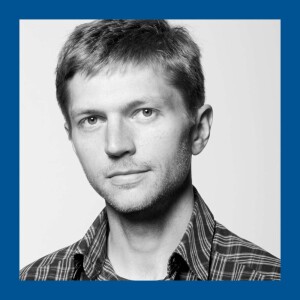
Do you know what it means to be a data scientist? This domain that is attracting more and more PhDs is fairly new, and looking at the job postings out there, it might be difficult to understand exactly what the requirements are and what the job entails. This week you’ll be hearing about Graydon Snider’s journey, from a PhD and postdoc in atmospheric chemistry to a data scientist position in a fashion retail company. With him I’ll try to paint a clearer picture of what being a data scientist means, and of how to prepare yourself to become one.
Graydon grew up in Ottawa, then moved to Montreal for graduate school for a PhD in chemistry at McGill University, moving to Halifax for work as post doc at Dalhousie University, and finally came back to Montreal where he currently works at SSENSE as a Data Scientist. Formerly a student of atmospheric chemistry, Graydon carried an interest in numbers between various pursuits. His hobbies include running and juggling, occasionally at the same time.
Join the Papa PhD Postgraduate Career Exploration Group!
What you’ll learn about in this episode:
You can adapt your academic path to your life goals at the different turning points – Graydon broadened his horizons at the postdoc after feeling too specialized at the end of his PhD
The importance of taking part in activities and having a community outside of research, for your physical and mental health
Blogging as a simple way to develop and express your other interests
During graduate school or in your postdoc there are other researchers around you, your peers, asking themselves the same questions you are - talk to them and think about these questions together
Why you should take part in (or organize) career seminars with guests from different domains
This episode’s pearls of wisdom:
“One of the things I took a step back to assess was how my interests could translate to other things, so what have I learned so far that would be useful in another field. One of those was numbers themselves, my interest in data – analyzing data, looking at data in the field, in the real world, summarizing it. That sort of thing was broadly of interest to me.”
“To have that sort of community of people that kind of give you a sanity check when work is not going as planned or you just need an outlet. It doesn't have to be at any particular caliber. It's just the goal of having this other group that you associate with outside of work. Because academia is dangerous for – you mix your free time and your spare time with your work time and they become blurred.”
Graydon's links: LinkedIn – Linkedin.com/in/GraydonSnider.; Medium.com/Ssense-tech
Leave a review on Podchaser !
Support the show on Patreon !
You might also like the following episodes:
Jonathan Weitzman – Academic Mentoring: PapaPhD.com/48; PapaPhD.com/49
Maryse Thomas – Science Communication: PapaPhD.com/52;PapaPhD.com/53
Nathalie Ross – Medical Writing: PapaPhD.com/50; PapaPhD.com/51
Zoë Ayres – Water Industry: PapaPhD.com/54; PapaPhD.com/55
Launching your podcast?
If you're preparing to launch your podcast, you may be asking yourself what hosting platform to use.
I launched Papa PhD on Bluebrry because I wanted a professional service that would interface with my WordPress website, that would robustly broadcast Papa PhD to all platforms, and that would allow me to grow my podcast in years to come.
And these are the reasons why I'm recommending the Blubrry podcast hosting and syndication platform.
Click on the button below or use the promo code PapaPhDBlue on the Blubrry website to unlock a one month free trial:
Try one free month with Blubrry !
If you are starting a serious podcast project, do consider one of the first podcasting hosts out there, offering state of the art services, including IAB certified statistics, based on years of experience in the podcasting space.
Happy podcasting!

Thursday Jun 25, 2020
Thursday Jun 25, 2020
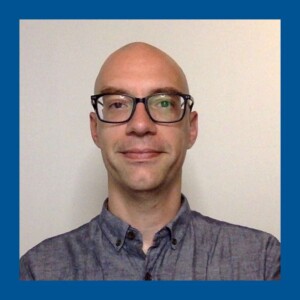
Dans cette deuxième partie de ma conversation avec Jean-Sébastien Provost, on a parlé du chapitre postdoc de son trajet académique et de comment celui-ci l'a propulsé vers la carrière de scientifique des données. On a ensuite plongé dans la question de ce qu'est que la science des données et de comment accéder à ce domaine après les études de troisième cycle.
Jean-Sébastien Provost détient un doctorat en science biomédicale de l'Université de Montréal. Plus précisément, il a étudié la contribution des régions fronto-striatales dans les processus exécutifs en utilisant l'imagerie par résonance magnétique fonctionnelle. Après un postdoctorat et 3 années à travailler comme associé de recherche, il a fait le grand saut dans le milieu de l'industrie en tant que scientifique des données. De plus, il travaille aussi en tant que mentor afin de guider les futurs scientifiques des données dans l'acquisition des connaissances et des aptitudes nécessaires et dans leur préparation aux entrevues, afin de leur permettre d'obtenir un emploi le plus rapidement possible.
Joignez-vous au groupe d'exploration de carrières Papa PhD !
Ce que vous apprendrez dans cet épisode :
L'intérêt de postuler et de mener ses études de troisième cycle dans une plus petite université
Combien rencontrer et parler avec des gens dans votre réseau peut être important pour vous ouvrir les horizons et même pour vous ouvrir des portes vers des emplois potentiels
Les cours en ligne comme outil pour acquérir les connaissances et habiletés qui vous manquent pour le poste que vous désirez
L'importance de faire une recherche des différentes offres d'emploi pour comprendre ce que chaque employeur cherche, car la définition de scientifique des données peut changer considérablement
Une définition générale de ce que font les scientifiques des données et un survol des principaux outils qu'ils utilisent au jour-le-jour
Les perles de sagesse de Jean-Sébastien :
« J'ai vu des candidats qui ont fait des doctorats ou des études graduées dans des universités qui étaient, peut-être, des plus petites universités, mais si le projet de recherche est bien fait, si le projet de recherche est solide, mais si la personne est capable de le vendre correctement, il n'y a aucune raison qu'on ne soit pas capable de vendre ce qu'on a fait pour avoir un postdoc dans une bonne université. »
« J'avais toujours dans l'optique que je voulais devenir professeur bien que j'avais toujours eu un doute. Et c'est ça qui est un peu fâchant : c'est que même quand j'étais au doctorat j'avais toujours le doute – "est-ce que c'est vraiment ça que je veux faire ?" Puis on nous enseigne que c'est pas mal juste ça qu'on peut faire, donc peu importe, on se dit que c'est ça qu'on va faire. Don après ça, quand je n'ai pas eu mon financement, au postdoc, je me suis dit "est-ce que c'est vraiment ça que je veux faire ?" Là, je me disais "Ah... c'est juste moi qui a peur, fait que non, c'est ça que je veux faire." Puis, quand j'étais revenu à Montréal, j'avais commencé à faire des demandes pour faire un autre postdoc. »
Les liens de Jean-Sébastien : Linkedin – Linkedin.com/in/jean-sebastien-provost; Datasciencedreamjob.com; Kaggle.com.
Laissez une évaluation sur Podchaser !
Soutenez Papa PhD sur Patreon !
Vous aimerez aussi ces épisodes :
Boîte à outils pour les études doctorales – Mon cheminement : PapaPhD.com/37
Carine Monat – Journalisme scientifique : PapaPhD.com/40
Olivier Hernandez – Vulgarisation Scientifique : PapaPhD.com/56; PapaphD.com/45
Virginie Levasseur – Développement international : PapaPhD.com/17
Envie de lancer un podcast?
Mon ami et collègue podcasteur Marco Bernard et son Académie du Podcast ont ce qu'il vous faut si vous avez une idée, mais qu'il vous manque les connaissances pour mettre en place votre podcast.
Dans la formation Podcasting 101, Marco a préparé plus de 20 vidéos et des tutoriels où il explique quel équipement se procurer,
Thursday Jun 25, 2020
Thursday Jun 25, 2020
Cette semaine, je vous apporte une entrevue à propos d'un domaine où les détenteurs de doctorats en sciences sont très en demande - la science des données. Pour en parler, j'ai eu le plaisir d'avoir à mon micro Jean-Sébastien Provost, docteur en sciences biomédicales.
Jean-Sébastien Provost détient un doctorat en science biomédicale de l'Université de Montréal. Plus précisément, il a étudié la contribution des régions fronto-striatales dans les processus exécutifs en utilisant l'imagerie par résonance magnétique fonctionnelle. Après un postdoctorat et 3 années à travailler comme associé de recherche, il a fait le grand saut dans le milieu de l'industrie en tant que scientifique des données. De plus, il travaille aussi en tant que mentor afin de guider les futurs scientifiques des données dans l'acquisition des connaissances et des aptitudes nécessaires et dans leur préparation aux entrevues, afin de leur permettre d'obtenir un emploi le plus rapidement possible.
Joignez-vous au groupe d'exploration de carrières Papa PhD !
Ce que vous apprendrez dans cet épisode :
Il n'est jamais trop tard pour retourner aux études et pour se réorienter
Ce qu'on retire du fait de terminer son doctorat
L'importance de se donner le temps d'être prêt lorsqu'on prend des décisions importantes
L'intérêt de trouver un groupe de recherche et un superviseur qui soient familiers avec le milieu de l'industrie
Pourquoi certains employeurs recherchent des candidats ayant un doctorat
Les perles de sagesse de Jean-Sébastien :
« C'est ça qui est fascinant – c'est que tout le monde qui a fait un PhD, en quelque sorte, se retrouve, à un moment donné, à se poser la question "est-ce que je veux continuer en milieu académique ? Sinon, qu'est-ce que je fais ?" Puis, la majorité du temps, s'ils n'ont pas eu la chance de se retrouver dans un milieu comme ça, eh bien, ils vont se retrouver dans le même questionnement que j'ai eu qui est, probablement, le même questionnement dans lequel 90 % des gens qui ont fait un doctorat se retrouvent Donc lorsque tu leur demandes "est-ce que ça serait d'accord si ou pouvait avoir une conversation", habituellement ils disent "Oui, parce que je sais ce que tu vis et oui, je peux te donner un coup de main." »
« Malheureusement, ça, aussi, c'est quelque chose qui est promu et qui est faux, c'est que ce n'est pas un échec, de ne pas continuer dans le milieu académique. Le milieu académique, c'est une voie. C'est juste qu'on ne sait pas qu'il y a d'autres voies ou, du moins, on est moins familier avec les autres voies. »
Les liens de Jean-Sébastien : Linkedin – Linkedin.com/in/jean-sebastien-provost; Datasciencedreamjob.com; Kaggle.com.
Laissez une évaluation sur Podchaser !
Soutenez Papa PhD sur Patreon !
Vous aimerez aussi ces épisodes :
Boîte à outils pour les études doctorales – Mon cheminement : PapaPhD.com/37
Carine Monat – Journalisme scientifique : PapaPhD.com/40
Olivier Hernandez – Vulgarisation Scientifique : PapaPhD.com/56; PapaphD.com/45
Virginie Levasseur – Développement international : PapaPhD.com/17
Envie de lancer un podcast?
Mon ami et collègue podcasteur Marco Bernard et son Académie du Podcast ont ce qu'il vous faut si vous avez une idée, mais qu'il vous manque les connaissances pour mettre en place votre podcast.
Dans la formation Podcasting 101, Marco a préparé plus de 20 vidéos et des tutoriels où il explique quel équipement se procurer, comment faire le montage et comment le mettre en ondes sur les principales plateformes. Cliquez maintenant pour vous inscrire et avoir accès à la communauté !
Formation Podcasting 101 de l'Académie du Podcast
Dans la formation Podcaster Pro, il a pensé aux professionnels et créateurs qui non seulement veulent lancer leur podcast, mais ont des objectifs précis à atteindre avec celui-ci. C'est en pensant à eux qu'il a préparé plus de 80 vidéos et des tutoriels où il explique non seulement comment lancer son podcast,

Thursday Jun 18, 2020
Thursday Jun 18, 2020
In part 2 of this week's interview, Athina Zampara tells her story of investing in learning as an adult and of building her CV to eventually find a position in the European Commission, where she now oversees projects offering support to PhDs and researchers around the globe.Athina Zampara comes from Greece and has lived and worked in Brussels, Belgium, for 10 years. Athina has an interdisciplinary educational background having studied Physics, History and Philosophy of Science, Italian language and Education. She has worked as Project Manager and now holds a position as Project Officer in the European Public Administration.Note: The views expressed in this interview are purely those of my guest and may not in any circumstances be regarded as stating an official position of the European Commission.
Join the Papa PhD Postgraduate Career Exploration Group!
What you’ll learn about in this episode:
What the Marie Slodowka-Curie Actions does and what role Athina plays within the organizationThe difference between the roles of a project manager and a project officerThe fulfillment Athina gets from being able to see the results of the programs she works on and the impact this has on the individual researchersThe paths to a job in the European Commission for people with advanced degreesHow leveraging information that is online can help you map your skills against jobs that interest youThe general structure of the hiring process for the European Commission and how to prepareThis episode’s pearls of wisdom:“When I go to the projects and I discuss with the young researchers, I tell them "Look, what are the skills that you are going to have from this? It's not only the research, the specific scientific knowledge that you are going to learn, but it is: you learn how to work in a collaborative environment, you learn networking, you learn negotiation, you learn project management. So you learn many, many things that you can say to an employer in the future in order to make them understand that woul will be a good employee.”“There are many resources on the internet where people can look and map themselves on these skills. And they can understand better, also for themselves, what they can do. And then, if they understand, they can explain it to the employers.”Athina's links: LinkedIn – LinkedIn.com/in/Athina-Zampara; Twitter – @LifeOfaPOinEU; Marie Skłodowska-Curie actions, European Commission – ec.europa.eu/research/mariecurieactions/node_en.
Leave a review on Podchaser !
Support the show on Patreon !
You might also like the following episodes:
Adriana Bankston – Science Policy: PapaPhD.com/12Jonathan Weitzman – Professorship and Industry: PapaPhD.com/46Rob Hutcheson – Health Economics: PapaPhD.com/4Simon Moore – Postdoc to Industry: PapaPhD.com/18
Launching your podcast?
If you're preparing to launch your podcast, you may be asking yourself what hosting platform to use.
I launched Papa PhD on Bluebrry because I wanted a professional service that would interface with my WordPress website, that would robustly broadcast Papa PhD to all platforms, and that would allow me to grow my podcast in years to come.
And these are the reasons why I'm recommending the Blubrry podcast hosting and syndication platform.
Click on the button below or use the promo code PapaPhDBlue on the Blubrry website to unlock a one month free trial:
Try one free month with Blubrry !
If you are starting a serious podcast project, do consider one of the first podcasting hosts out there, offering state of the art services, including IAB certified statistics, based on years of experience in the podcasting space.
Happy podcasting!

Wednesday Jun 17, 2020
Wednesday Jun 17, 2020
In this week’s episode, you’ll be hearing about gender bias in academia, about the experience of being a first-generation graduate student, and about the daunting question of “is it OK to quit your PhD?” This week’s guest will also talk about her career journey leading to a Project Officer position in the European Commission.Athina Zampara comes from Greece and has lived and worked in Brussels, Belgium, for 10 years. Athina has an interdisciplinary educational background having studied Physics, History and Philosophy of Science, Italian language and Education. She has worked as Project Manager and now holds a position as Project Officer in the European Public Administration.Note: The views expressed in this interview are purely those of my guest and may not in any circumstances be regarded as stating an official position of the European Commission.
Join the Papa PhD Postgraduate Career Exploration Group!
What you’ll learn about in this episode:
It is ok to stop your degree if it's not a good fit for youWhat it was like to be a first-generation woman in graduate school in the 1990sThe challenges of being a first-generation graduate studentThe importance of choosing a path that meets your personal needsThe ressources and communities that exist today at your university, but also online communities like academic TwitterWhy your graduate school experience is a great springboard towards a career in project managementThe importance of giving priority to your mental health whenever you feel it's being negatively affected by your workThis episode’s pearls of wisdom:“You can be whatever. Independently of your studies you can always do project management. And also, I find it very fulfilling because I can use my analytical skills there. You know, putting pieces at their place and making a jigsaw – it's something that soothes my mind, I would say.”“To tell you the truth, I do have something that eats me inside, that I didn't finish my PhD. I have to say that because I like to finish what I start, there is a feeling of failure, this feeling that something was left and was not accomplished. It will always be there. But the thing is that one has to do what is good for him at the specific moments of choice. That was the good thing that I had to do for myself at the time, also taking into account my mental state, which is also another thing that is very important and is something that people look at in academia, right now – the mental health of people, which is very important.”Athina's links: LinkedIn – LinkedIn.com/in/Athina-Zampara; Twitter – @LifeOfaPOinEU; Marie Skłodowska-Curie actions, European Commission – ec.europa.eu/research/mariecurieactions/node_en.
Leave a review on Podchaser !
Support the show on Patreon !
You might also like the following episodes:
Adriana Bankston – Science Policy: PapaPhD.com/12Jonathan Weitzman – Professorship and Industry: PapaPhD.com/46Rob Hutcheson – Health Economics: PapaPhD.com/4Simon Moore – Postdoc to Industry: PapaPhD.com/18
Launching your podcast?
If you're preparing to launch your podcast, you may be asking yourself what hosting platform to use.
I launched Papa PhD on Bluebrry because I wanted a professional service that would interface with my WordPress website, that would robustly broadcast Papa PhD to all platforms, and that would allow me to grow my podcast in years to come.
And these are the reasons why I'm recommending the Blubrry podcast hosting and syndication platform.
Click on the button below or use the promo code PapaPhDBlue on the Blubrry website to unlock a one month free trial:
Try one free month with Blubrry !
If you are starting a serious podcast project, do consider one of the first podcasting hosts out there, offering state of the art services, including IAB certified statistics, based on years of experience in the podcasting space.
Happy podcasting!
Thursday Jun 11, 2020
Thursday Jun 11, 2020
Dans la deuxième partie de mon entrevue avec Olivier Hernandez, nous avons abordé plus en profondeur la question des compétences transversales qu'on développe en tant que doctorant, la question du mentorat aux études de troisième cycle et Olivier a partagé quelques conseils pour ceux d'entre vous qui embarquent dans cette aventure ou la vivent déjà.
Olivier Hernandez est astrophysicien et directeur du Planétarium Rio Tinto Alcan à Montréal depuis mai 2018. Il a d’abord étudié pour devenir ingénieur avant de se tourner vers l’astrophysique et d’obtenir son doctorat de l’Université de Montréal et du laboratoire d’astrophysique de Marseille (France). Il a longtemps travaillé comme chercheur sur les galaxies et concepteur d’instruments astronomiques à l’Université de Montréal. Les instruments sur lesquels il a travaillé se retrouvent sur divers télescopes: l’Observatoire du Mont-Mégantic, le télescope Canada-France-Hawaï ainsi que le futur télescope James Webb. En dehors du travail, Olivier aime aime le théâtre, cuisiner et regarder les étoiles!
Joignez-vous au groupe d'exploration de carrières Papa PhD !
Ce que vous apprendrez dans cet épisode :
Le premier défi qui va main dans la main avec l'autonomie, au doctorat – la procrastination
Le processus du doctorat en physique
Comment participer à des projets un peu externes à votre recherche peut vous ouvrir les horizons, amener à agrandir votre réseau et, éventuellement, à entamer votre trajet professionnel
Ce que les employeurs trouvent et valorisent chez les candidats détenteurs d'un doctorat
Comment un mentor peut façonner votre développement
L'importance de commencer à bâtir son réseau à la maîtrise
Le syndome de l'imposteur dans le milieu universitaire
Les perles de sagesse d'Olivier :
« Ça, c'est un pouvoir qu'on n'aura pas forcément ailleurs dans notre vie – c'est un pouvoir exceptionnel qu'offre le doctorat: on a la main, le contrôle complet sur un sujet que l'on étudie pendant minimum quatre ans. »
« Dans le monde réel et lorsqu'on a un doctorat, en fait, on va être amené, probablement, à gérer des projets d'importance, parce que les employeurs vont se fixer sur notre capacité à avoir cette rigueur et cette capacité de recul sur les projets, mais ils vont avoir besoin, aussi, de la capacité des doctorants à planifier et à établir correctement un lien dans le type de travail qu'on doit faire. Et tout ça, j'ai réussi à l'apprendre non seulement au doctorat, mais aussi dans les étapes après – postdoc et les postes que j'ai eu à l'université. »
« Ce n'est pas évident de trouver la personne avec qui tu vas t'entendre. Et c'est pour ça, aussi, que je pense que, par exemple, faire une maîtrise ça aide énormément. Ça aide parce que ça permet de voir le département, de voir l'ensemble des professeurs – on n'est pas obligé de continuer sa maîtrise avec le professeur ou la professeure que l'on a. Et on peut changer pour pouvoir aller au doctorat – on peut aussi complètement changer de sujet, ou quoi que ce soit, et c'est pour ça que la maîtrise a un effet bénéfique et, en fait, je ne pense pas que la carrière d'une personne doit être en accéléré tout le temps. Et les études supérieures, ça permet de prendre le temps de faire les choses correctement. »
« Prenez le temps de chaque étape – il n'y a rien qui vous presse, dans la vie. Que vous finissiez votre doctorat à 30 ans, 31 ans ou 32 ans, ça ne change rien. Ça ne changera rien sur votre carrière – elle arrivera à se bâtir, quand même. »
Les liens d'Olivier : Linkedin – Linkedin.com/in/olivierhernandez; Twitter – @OlivierHer; Planétarium Rio Tinto Alcan; Espace Pour la Vie.
Laissez une évaluation sur Podchaser !
Soutenez Papa PhD sur Patreon !
Vous aimerez aussi ces épisodes :
Boîte à outils pour les études doctorales – Mon cheminement
: PapaPhD.com/37
Carine Monat – Journalisme scientifique : PapaPhD.com/40
Dana Murchison – Canadian Museum of Nature : PapaPhD.com/1
Wednesday Jun 10, 2020
Wednesday Jun 10, 2020
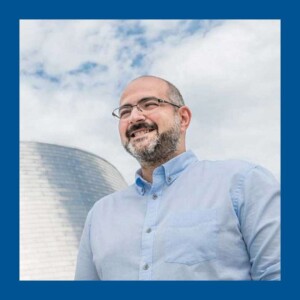
Cette semaine, je vous apporte une passionnante conversation dans l'univers du génie et de l'astrophysique. Au cours de cet échange avec mon invité, Olivier Hernandez, vous apprendrez à quoi peut ressembler un trajet académique du domaine de l'ingénierie au doctorat en astrophysique et on vous amènera dans une intéressante discussion à propos de la réalité du doctorat au jour-le-jour et du rôle que des études de troisième cycle peuvent jouer dans votre vie universitaire, mais aussi dans votre vie professionnelle.
Olivier Hernandez est astrophysicien et directeur du Planétarium Rio Tinto Alcan à Montréal depuis mai 2018. Il a d’abord étudié pour devenir ingénieur avant de se tourner vers l’astrophysique et d’obtenir son doctorat de l’Université de Montréal et du laboratoire d’astrophysique de Marseille (France). Il a longtemps travaillé comme chercheur sur les galaxies et concepteur d’instruments astronomiques à l’Université de Montréal. Les instruments sur lesquels il a travaillé se retrouvent sur divers télescopes: l’Observatoire du Mont-Mégantic, le télescope Canada-France-Hawaï ainsi que le futur télescope James Webb. En dehors du travail, Olivier aime aime le théâtre, cuisiner et regarder les étoiles!
Joignez-vous au groupe d'exploration de carrières Papa PhD !
Ce que vous apprendrez dans cet épisode :
Le trajet académique vers l'astrophysique
La formation des ingénieurs en France
La valeur et le potentiel que peut avoir votre maîtrise dans votre vie académique et l'intérêt de la terminer avant de passer au doctorat
Comment un passage en industrie peut avoir des retombées positives sur votre trajet académique et professionnel
L'intérêt de faire un doctorat en cotutelle
L'autonomie et les compétences de gestion de projet qu'on développe au doctorat
Le trajet de développement de carrière des détenteurs de doctorats dans l'industrie
Les perles de sagesse d'Olivier :
« Je pense que ça a été une des plus belles expériences de ma vie, le doctorat. Je pense que c'est vraiment un moment plaisant, difficile – et je comprends que ce n'est pas tous les jours facile, mais c'est le moment où on a le plus de liberté et le plus de créativité possible pour faire quelque chose. C'est vraiment un moment plaisant et j'encourage tous les gens un peu partout où je suis d'aller faire des études supérieures et de faire le doctorat parce que c'est vraiment une expérience différente de tout ce qu'on connaît. Même par rapport à la maîtrise où la maîtrise est assez régulière – on apprend à faire de la recherche. Le doctorat va vraiment nous pousser à avoir une autonomie incroyable et une créativité qu'on n'a pas ailleurs, et ça, c'est vraiment exceptionnel. »
« En partant, tous les sujets qu'on choisit au début du doctorat, probablement, changent, évolue au fur et à mesure qu'on fait son doctorat, parce qu'on rencontre soit des portes fermées, soit on s'aperçoit que ce qu'on pensait, au début, être une bonne idée n'est pas forcément une bonne idée – quelqu'un d'autre l'a peut-être étudié, aussi. On a beau essayer de faire une revue de la littérature de ce qui existe un peu partout – on s'aperçoit qu'il y a des gens qui touchent plus ou moins le sujet et qui ont tout de suite trouvé une impasse. Donc il faut avoir cette habileté à vraiment être créatif, justement, pour pouvoir embarquer sur une autre voie, essayer de comprendre comment on peut intégrer tout ce qui a été fait. Et puis il y a cette force, chez les doctorants, d'avoir cette capacité de synthèse qu'on n'a pas, forcément, tout de suite, en maîtrise. »
« La maîtrise, c'est un outil vraiment puissant pour comprendre comment on fait de la recherche. Il faut passer, à mon avis, à travers l'outil de la maîtrise de se casser la tête sur des sujets et d'être capable de comprendre comment ça fonctionne et de rédiger, surtout, son rapport pour pouvoir faire en sorte que ce soir utile pour son doctorat. Tout ce qu'on a fait à la maîtrise, ça va servir, un peu,

Thursday May 28, 2020
Thursday May 28, 2020
In Part 2 of my conversation with Zoë Ayres, we discussed her experience transitioning from an industry-led postdoc to her current position in the water industry. We talked about the application and interviewing process and about best practices at this important stage, about what you bring to the table as a candidate when you have a PhD, and also about Zoë's experience so far as a research scientist.
Zoë is an analytical scientist by background. She did her undergraduate in forensic science, before pursuing analytical chemistry, and going on to do her PhD research on the development of electrochemical sensors at the University of Warwick in the UK. She is now an R&D scientist in the water industry, having made the transition from academia to industry just over two years ago. Zoë is also an active mental health advocator, raising awareness around mental health in graduate school and beyond..
Join the Papa PhD Postgraduate Career Exploration Group!
What you’ll learn about in this episode:
You seldom fulfill all the requirements on a job posting - this doesn't mean you're not the right person for the position
The importance of reframing your experience and making your case
Outside of academia, no one looks at your publication record - they're interested in your story, in your skills
Project management, team leading, and communications skills are PhD strong suits
Zoë's experience of the industry culture
The myth that work in industry is devoid of creative freedom is false
Career progression in industry
This episode’s pearls of wisdom:
“When I was writing my CV, I remember thinking "Gosh - my publications aren't really relevant." For me, I tried to really reframe my experience in a way that would be appealing.”
“For my CV, I really made sure that I was drawing on the fact that we think that when we're in the lab and we're doing a PhD and we might be looking after un undergraduate project, for example, and you can write that you supervised some undergraduates. And you can write that as your experience of that supervision, and that you are capable of going into a role where you lead people.”
“One of the things I remember someone saying to me is that you will not be creative like you are here, in academia. And I remember thinking 'I actually enjoy being creative - is that something that I'm going to lose?' Because even though I had industrially sponsored PhD and posdoc research, it was primarily academic. And so I kind of toyed with the concept of whether or not I'd actually have the freedoms to do what I wanted to do - and think it probably varies company by company. But I've been very lucky that I have the creative freedom that I do and that everyday I get into work and I actually enjoy doing the research. It does get me out of bed in the morning, so I think it's a good thing.”
Zoë's links: LinkedIn.com/in/ZJAyres; Twitter – @ZJAyres; www.ZJAyres.com.
Leave a review on Podchaser !
Support the show on Patreon !
You might also like the following episodes:
Dana Murchison – Science Outreach: PapaPhD.com/1
Jonathan Weitzman – Professorship and Industry: PapaPhD.com/46
Liliana Vitorino – Biomedical Industry: PapaPhD.com/31
Simon Moore – Postdoc to Industry: PapaPhD.com/18
Launching your podcast?
If you're preparing to launch your podcast, you may be asking yourself what hosting platform to use.
I launched Papa PhD on Bluebrry because I wanted a professional service that would interface with my WordPress website, that would robustly broadcast Papa PhD to all platforms, and that would allow me to grow my podcast in years to come.
And these are the reasons why I'm recommending the Blubrry podcast hosting and syndication platform.
Click on the button below or use the promo code PapaPhDBlue on the Blubrry website to unlock a one month free trial:
Try one free month with Blubrry !
If you are starting a serious podcast project, do consider one of the first podcasting hosts out there,
Wednesday May 27, 2020
Wednesday May 27, 2020
Do you ever wish you could try your hand at an industry job without putting your academic career on halt? In this week's episode, you'll hear about Zoë Ayres and about how she managed to do exactly that by choosing to do take on industry-backed projects for her master's, her PhD, and her postdoc in the chemistry domain.
Zoë is an analytical scientist by background. She did her undergraduate in forensic science, before pursuing analytical chemistry, and going on to do her PhD research on the development of electrochemical sensors at the University of Warwick in the UK. She is now an R&D scientist in the water industry, having made the transition from academia to industry just over two years ago. Zoë is also an active mental health advocator, raising awareness around mental health in graduate school and beyond.
Join the Papa PhD Postgraduate Career Exploration Group!
What you’ll learn about in this episode:
How an industry-led MSc, PhD, or postdoc can give you a perspective on non-academic research
Industry-backed funding in the UK
The importance of having a positive mindset and of not taking rejection personally when applying and interviewing for different positions
Why your grades and your publications don't matter for non-academic employers
The importance of looking for help on campus or around you when you feel you're struggling with anxiety, depression or any other mental health issues
Zoë's mental health in graduate school poster series
This episode’s pearls of wisdom:
“I've started to look at CVs, now and I'm not just looking to see how many papers people have published. Quite frankly, I don't really care. I care more about skills like team work and the ability to adapt. Papers matter so much for academia and yet, for industry, unless I'm looking at the papers and saying, 'ok, this person clearly can collaborate very well because they're on a paper with seven people', in reality it doesn't count and the weight is not as high. And I thinkj that's something graduate students worry about a lot.”
“[In my industry-sponsored research] I got to work on things like patents, for example, and they are absolutely still applicable to my day job going forward. So there are skillsets there that I developed that actually I could go and hit the ground running when I moved into my industrial position, because I already had that experience.”
“For me, I think, first and foremost, it would be to tell myself that science doesn't always work and that we also make mistakes al lot of the time, and that's completely fine. And it's easy for me to say now – I've got a lot of experience with making a lot of mistakes. And some of the mistakes I've made in my scientific career up to this point have actually led to thing that have been really good. And I mean, I've produced papers on mistakes.”
“Reaching out and speaking to people is so important. It took me about six months to open up to my colleagues and say "I'm not actually doing ok". And I think that was six months that I could have been getting better.”
Zoë's links: LinkedIn.com/in/ZJAyres; Twitter – @ZJAyres; www.ZJAyres.com.
Leave a review on Podchaser !
Support the show on Patreon !
You might also like the following episodes:
Dana Murchison – Science Outreach: PapaPhD.com/1
Jonathan Weitzman – Professorship and Industry: PapaPhD.com/46
Liliana Vitorino – Biomedical Industry: PapaPhD.com/31
Simon Moore – Postdoc to Industry: PapaPhD.com/18
Launching your podcast?
If you're preparing to launch your podcast, you may be asking yourself what hosting platform to use.
I launched Papa PhD on Bluebrry because I wanted a professional service that would interface with my WordPress website, that would robustly broadcast Papa PhD to all platforms, and that would allow me to grow my podcast in years to come.
And these are the reasons why I'm recommending the Blubrry podcast hosting and syndication platform.
Click on the button below or use the promo code PapaPhDBlu...
Thursday May 14, 2020
Thursday May 14, 2020
In Part 2 of my interview with Maryse Thomas, we talk about the role scientists can play in disseminating sound scientific information. We also discuss the UsefulScience.org and how being director of this science popularization platform has beciome an integral part of her academic career.
Maryse Thomas is a post-doctoral research fellow at the Massachussets Eye and Ear and Harvard Medical School in Boston. Originally from Montreal, she received her PhD at McGill University in the field of auditory neuroscience. Maryse is interested in digital media and science communication and has been the Director of the website UsefulScience.org since 2018. Useful Science publishes short summaries of scientific research relevant to everyday life and also produces a podcast that dives into the science behind those studies.
Join the Papa PhD Postgraduate Career Exploration Group!
What you’ll learn about in this episode:
The process of applying for postdocsThe job talk and how to prepare for itThe power of volunteer websites if you want to find projects to contribute toHow student-led initiatives are leading the way turning graduate researchers on to science communication and how some universities are following suitHow you can gain science communication experience while in graduate schoolThis episode’s pearls of wisdom:“I feel like it is, unfortunately, in some ways, the students who have picked up the slack and who have created these opportunities for other students. For example, a workshop that I attended in my last year of my PhD at McGill was run entirely by other graduate students. It was a science communications workshop called 'Spell Your Science'. And so now, I do see those opportunities advertised much more, so I would suggest anyone looking to get into them to scan those newletters that you get from your program. And I think more of them are also university sponsored.”“There are more traditional ways to gain experience in writing that would help you in science communication. For example, I participated in student newspapers - I was a design editor, so I wasn't a typical editor like you might think of, but I was doing the graphic design and the layout, but I got to see the process and how it worked. And after that I also participated in some undergraduate science journals. So those are more established groups that have been around for a longer time, but those can give you the same kind of skills and maybe, even, connections to a scicomm path, eventually.”“The skills that you learn as a researcher, even if you're doing basic research, include analysis of texts, of scientific articles - knowing how to read the artilce and to parse it, and knowing how to look into the statistics. And those skills apply to any field.”“Not every scientist has to be the best communicator to the public, but if at least a fraction of us try to do so and try to develop those skills, then it could make a difference and help us in those conversations that we happen to have with our family, with our friends, or even on the bus. And one way to develop these skills of science communication, maybe through attending an online workhsop or an in person workshop, or reading a bit about it, or practicing by becoming a volunteer for one of these organizations. I think all of it could, in sum, make a difference on how people perceive scientists, both in their community and the ones that they see on TV.” Maryse's links: Linkedin.com/in/maryse-thomas-8a2b9752; UsefulScience.org. To submit an article to Useful Science, go to: www.usefulscience.org/submit; Scicomm Board.
Leave a review on Podchaser !
Support the show on Patreon !
Launching your podcast?
If you're preparing to launch your podcast, you may be asking yourself what hosting platform to use.
I launched Papa PhD on Bluebrry because I wanted a professional service that would interface with my WordPress website,