Beyond the Thesis With Papa PhD
Real PhDs. Real Journeys. Beyond Academia.
Listen on:








Episodes
Wednesday May 13, 2020
Wednesday May 13, 2020
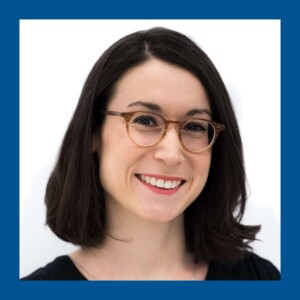
In this episode, we’re going to talk with Maryse Thomas, Director of the Useful Science website and podcast, about science communication and popularization, and about how it can enrich your graduate school experience and your career as a young researcher. We’re also going to hear about her PhD and about her recent experience going abroad for her postdoc and about her insights on how to make the best of this first dive into the academic career.
Maryse Thomas is a post-doctoral research fellow at the Massachussets Eye and Ear and Harvard Medical School in Boston. Originally from Montreal, she received her PhD at McGill University in the field of auditory neuroscience. Maryse is interested in digital media and science communication and has been the Director of the website UsefulScience.org since 2018. Useful Science publishes short summaries of scientific research relevant to everyday life and also produces a podcast that dives into the science behind those studies.
Join the Papa PhD Postgraduate Career Exploration Group!
What you’ll learn about in this episode:
The challenge of balancing starting a postdoc before defending your PhD
The importance of social activities and of staying in contact with your friends and family when adapting to a new city/country
Why you should look for alumni groups from your alma mater around you
Science communication as a platform for graduate researchers to share their knowledge
How side-projects or student communities you're part of in graduate school enrich your experience and can have ripple effects in your professional life
How to articulate a having side-project with reaching your research goals
This episode’s pearls of wisdom:
“I also made a point of getting in touch with people I knew in Boston. There's a big Montreal and McGill community in Boston – there's just this network of researchers who end up going there, often times for postdocs or PhDs. So I had some friends that I either didn't know very well or hadn't spoken to in a few years that I made a point of getting in touch with and so, having those familiar faces around me in Boston also helped, I guess, with that whole experience.”
“I think there has been a growth in this science communication world that has really managed to reach out and has struck a cord with a lot of graduate students who feel like they want to be doing a bit more with the skills that they've learned in grad school, or who might even be looking for other career opportunities, or to change their career paths.”
“If you want to start having Zoom chats with your family it's so easy, now. And now we realize that. In the last two months I've spoken to people who I probably wouldn't have spoken with on a regular basis just because everybody almost feels closer in that way. And so, with my family and with my partner I was definitely speaking more often on the phone and keeping in touch that way.”
Maryse's links: Linkedin.com/in/maryse-thomas-8a2b9752; UsefulScience.org. To submit an article to Useful Science, go to: www.usefulscience.org/submit; Scicomm Board.
Leave a review on Podchaser !
Support the show on Patreon !
Launching your podcast?
If you're preparing to launch your podcast, you may be asking yourself what hosting platform to use.
I launched Papa PhD on Bluebrry because I wanted a professional service that would interface with my WordPress website, that would robustly broadcast Papa PhD to all platforms, and that would allow me to grow my podcast in years to come.
And these are the reasons why I'm recommending the Blubrry podcast hosting and syndication platform.
Click on the button below or use the promo code PapaPhDBlue on the Blubrry website to unlock a one month free trial:
Try one free month with Blubrry !
If you are starting a serious podcast project, do consider one of the first podcasting hosts out there, offering state of the art services, including IAB certified statistics,

Thursday May 07, 2020
Thursday May 07, 2020
In the second part of my conversation with Nathalie Ross, we discussed what brought her to the regulatory affairs domain and I asked her to describe in more detail what the job entails and what the day-to-day of a freelance medical writer looks like.
Nathalie Ross, Ph.D., MWC, a former research scientist, is a bilingual (French & English) Medical and Regulatory writer with over 15 years of experience.
Her curriculum also includes Senior Manager, Regulatory Affairs at Mapi (formely CanReg), where she managed a large number of drug and medical device applications for Health Canada and the FDA in a wide spectrum of therapeutic areas (cardiovascular, dentistry, gastrointestinal, oncology, orthopaedic, paediatrics, and plastic surgery).
Nathalie developed teaching and R&D skills through her positions as a Research Scientist (Environment Canada) and as an Assistant Professor (University of Ottawa). She is a member of the American Medical Writers Association (AMWA), Canadian Association of Professional Regulatory Affairs (CAPRA), and Association des communicateurs scientifiques du Québec (ACS).
She is based in Montreal, Quebec, Canada, where she works in partnership with her local, national, and international clientele.
Join the Papa PhD Postgraduate Career Exploration Group!
What you’ll learn about in this episode:
The importance of playing to your strong suits in choosing your career
Why you should always be growing your professional network
How you can find inspirations in role models or mentors
The pros and cons of being a freelancer
How you can start building a porfolio during your graduate studies
The day-to-day of work as a scientific and medical writer
Important aspects of dealing with clients as a medical writer
This episode’s pearls of wisdom:
“When you are an employee, the responsibility of finding the clients and the projects is not on your shoulders, but when you transition to be on your own, all your good skills remain but it's up to you to find the projects. So you have to add the marketing strategies, you need to think about how you will promote yourself – it might not be something super natural, but it's much needed if you want to be known.”
“When I was asked to do this column, I was talking with a senior friend of mine and said 'well, I don't know if I want to go that way, I might not have time'. And she told me something I will never forget: 'when you finish your PhD, you'll start with your life, you might be a research scientist, you might have kids... you won't have time. So take the time now.”
Nathalie's links: Twitter – @NathalieRoss1; LinkedIn.com/in/NathalieRossWriting; NathalieRoss.com.
Have a Zoom Call With David !
Support the show on Patreon !
You might also like the following episodes:
Clarissa Wright – Publishing: PapaPhD.com/34
Fiona Robinson – Patient education: PapaPhD.com/6
Liliana Vitorino – Industry: PapaPhD.com/31
Tamarah Luk – Entertainment Law: PapaPhD.com/10
Launching your podcast?
If you're preparing to launch your podcast, you may be asking yourself what hosting platform to use.
I launched Papa PhD on Bluebrry because I wanted a professional service that would interface with my WordPress website, that would robustly broadcast Papa PhD to all platforms, and that would allow me to grow my podcast in years to come.
And these are the reasons why I'm recommending the Blubrry podcast hosting and syndication platform.
Click on the button below or use the promo code PapaPhDBlue on the Blubrry website to unlock a one month free trial:
Try one free month with Blubrry !
If you are starting a serious podcast project, do consider one of the first podcasting hosts out there, offering state of the art services, including IAB certified statistics, based on years of experience in the podcasting space.
Happy podcasting!
Thursday May 07, 2020
Thursday May 07, 2020
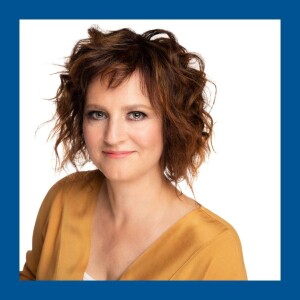
The COVID-19 pandemic we’re going through as this episode is airing has made us more aware than ever of how complex and time-consuming it is to study, test, and approve medical treatments. This week’s guest, Nathalie Ross, is going to share her experience in a domain where, as a PhD, she felt she was actively contributing to the advancement of medical treatments for real patients out there – as a scientific and medical writer in the domain of regulatory affairs.
Nathalie Ross, Ph.D., MWC, a former research scientist, is a bilingual (French & English) Medical and Regulatory writer with over 15 years of experience.
Her curriculum also includes Senior Manager, Regulatory Affairs at Mapi (formely CanReg), where she managed a large number of drug and medical device applications for Health Canada and the FDA in a wide spectrum of therapeutic areas (cardiovascular, dentistry, gastrointestinal, oncology, orthopaedic, paediatrics, and plastic surgery).
Nathalie developed teaching and R&D skills through her positions as a Research Scientist (Environment Canada) and as an Assistant Professor (University of Ottawa). She is a member of the American Medical Writers Association (AMWA), Canadian Association of Professional Regulatory Affairs (CAPRA), and Association des communicateurs scientifiques du Québec (ACS).
She is based in Montreal, Quebec, Canada, where she works in partnership with her local, national, and international clientele.
Join the Papa PhD Postgraduate Career Exploration Group!
What you’ll learn about in this episode:
You can always decide to pivot, professionally
The industry-funded research scientist track if you want to research and teach at the university level outisde of the tenure track
Regulatory affairs as a stimulating career option for PhDs
The advantages of getting a certificate in medical writing to access the domain
This episode’s pearls of wisdom:
“People thought I was crazy to leave a job that was tenure track to go there [regulatory affairs].”
“I didn't start as a senior manager because I was very new in a field where I was learning – I started at the bottom. However, because of all the skills that were already available – you mentioned the writing skills and I can identify a couple. Then I went from an associate to senior associate, manager to senior manager.”
“When you do a PhD, you have to learn how to be organized. Organize your thoughts, organize everything. Specifically, for regulatory affairs, one of the key skills is to be detail-oriented, to be curious, because you will change from one project to another.”
Nathalie's links:@NathalieRoss1; LinkedIn.com/in/NathalieRossWriting; NathalieRoss.com.
Have a Zoom Call With David !
Support the show on Patreon !
You might also like the following episodes:
Clarissa Wright – Publishing: PapaPhD.com/34
Fiona Robinson – Patient education: PapaPhD.com/6
Liliana Vitorino – Industry: PapaPhD.com/31
Tamarah Luk – Entertainment Law: PapaPhD.com/10
Launching your podcast?
If you're preparing to launch your podcast, you may be asking yourself what hosting platform to use.
I launched Papa PhD on Bluebrry because I wanted a professional service that would interface with my WordPress website, that would robustly broadcast Papa PhD to all platforms, and that would allow me to grow my podcast in years to come.
And these are the reasons why I'm recommending the Blubrry podcast hosting and syndication platform.
Click on the button below or use the promo code PapaPhDBlue on the Blubrry website to unlock a one month free trial:
Try one free month with Blubrry !
If you are starting a serious podcast project, do consider one of the first podcasting hosts out there, offering state of the art services, including IAB certified statistics, based on years of experience in the podcasting space.
Happy podcasting!

Thursday Apr 30, 2020
Thursday Apr 30, 2020
Dans la deuxième partie de notre entrevue, Anne-Hélène nous parle de comment s’est déroulé pour elle le passage au marché du travail et de ce qu’elle fait aujourd’hui. Elle nous parlera aussi de l’expérience de publier un essai basé sur sa thèse et partagera avec vous ses conseils pour votre passage au doctorat et pour la construction de votre carrière.
Docteure en littérature française et bachelière en anthropologie, Anne-Hélène est une passionnée des mots, mais aussi d’enseignement dans le domaine des lettres.
Sa vie professionnelle est bien remplie, alliant les rôles de chef de contenu à l'agence 37e AVENUE, d'enseignante de littérature au Collège Ahuntsic et de tutrice en littérature et en rédaction à l'Université TÉLUQ.
Elle a publié en 2018 un essai tiré de sa thèse de doctorat, intitulé Proust à la guerre comme à la fête, aux éditions Honoré-Champion.
Joignez-vous au groupe d'exploration de carrières Papa PhD !
Ce que vous apprendrez dans cet épisode :
Le rôle que peut jouer, plus tard, un stage d'enseignement au collégial
L'importance de se créer un réseau dans son domaine d'expertise
Le bourses et le financement des doctorats en sciences humaines au Canada
L'effet positif de l'activité physique sur la santé mentale
L'expérience de publier un livre basé sur votre thèse
Les programmes d'aide à la publication savante
Il faut reconnaître et accepter le syndrome de l'imposteur, qui revient à différent stades de notre vie professionnelle
Les perles de sagesse d'Anne-Hélène :
« Le fait de tisser des liens autour de notre recherche et dans notre domaine d'expertise, eh bien, ces liens-là, ils peuvent être pertinents, par la suite. On ne les fait pas dans le but de les utiliser, mais c'est juste humain, après . »
« J'ai commencé à faire de la course à pied juste avant de commencer la maîtrise. Je ne suis pas du tout une coureuse rapide, je participe à très peu de courses balisées. Je cours vraiment pour ma santé mentale. Et, vraiment, c'est mon antidépresseur, depuis 15 ans, de courir, en fait. »
Les liens d'Anne-Hélène : Linkedin.
Laissez une évaluation sur Podchaser !
Soutenez Papa PhD sur Patreon !
Vous aimerez aussi ces épisodes :
Carine Monat – Journalisme scientifique : PapaPhD.com/40
Martin Primeau – Communication scientifique : PapaPhD.com/44; PapaphD.com/45
Simon Landry – Courtier de connaissances : PapaPhD.com/14
Valérie Levée – Journalisme : PapaPhD.com/38
Envie de lancer un podcast?
Mon ami et collègue podcasteur Marco Bernard et son Académie du Podcast ont ce qu'il vous faut si vous avez une idée, mais qu'il vous manque les connaissances pour mettre en place votre podcast.
Dans la formation Podcasting 101, Marco a préparé plus de 20 vidéos et des tutoriels où il explique quel équipement se procurer, comment faire le montage et comment le mettre en ondes sur les principales plateformes. Cliquez maintenant pour vous inscrire et avoir accès à la communauté !
Formation Podcasting 101 de l'Académie du Podcast
Dans la formation Podcaster Pro, il a pensé aux professionnels et créateurs qui non seulement veulent lancer leur podcast, mais ont des objectifs précis à atteindre avec celui-ci. C'est en pensant à eux qu'il a préparé plus de 80 vidéos et des tutoriels où il explique non seulement comment lancer son podcast, mais comment y amener des invités de qualité, comment le promouvoir et comment atteindre vos résultats en utilisant cette plateforme. Cliquez maintenant pour vous inscrire si vous voulez créer la meilleure vitrine pour vos affaires ou pour votre contenu !
Formation Podcaster PRO de l'Académie du Podcast
En suivant ces liens affiliés, vous aiderez à la production de Papa PhD, donc assurez-vous d'y accéder à partir des boutons sur cette page ou en utilisant les adresses PapaphD.com/Podcast101 ou PapaPhD.com/PodcastPRO. Merci!
Thursday Apr 30, 2020
Thursday Apr 30, 2020
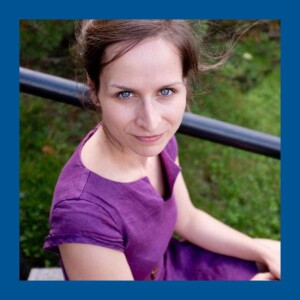
Cette semaine, Papa PhD ouvre une fenêtre sur les lettres. Comment se passe un doctorat en littérature? Est-ce qu’il y a des bourses? Et quelles sont les emplois auxquels il mène? Pour en parler, nous avons aujourd’hui au micro Anne-Hélène Dupont qui, dans un premier temps, nous parlera de son parcours académique et, dans la deuxième partie, nous décrira de quoi a l’air sa vie professionnelle aujourd’hui.
Docteure en littérature française et bachelière en anthropologie, Anne-Hélène est une passionnée des mots, mais aussi d’enseignement dans le domaine des lettres.
Sa vie professionnelle est bien remplie, alliant les rôles de chef de contenu à l'agence 37e AVENUE, d'enseignante de littérature au Collège Ahuntsic et de tutrice en littérature et en rédaction à l'Université TÉLUQ.
Elle a publié en 2018 un essai tiré de sa thèse de doctorat, intitulé Proust à la guerre comme à la fête, aux éditions Honoré-Champion.
Joignez-vous au groupe d'exploration de carrières Papa PhD !
Ce que vous apprendrez dans cet épisode :
L'intérêt de l'enseignement au niveau collégial comme complément au doctorat
Il n'y a qu'un faible nombre de postes de professeur pour le nombre de doctorés, chaque année
L'importance de profiter des stages professionnels, s'ils vous sont offerts
Ce qu'est une agence de production de contenu
Comment accéder au domaine de la communication après un doctorat en lettres
Les compétences transversales qu'on apporte avec nous après un doctorat
Les perles de sagesse d'Anne-Hélène :
« Je pense que c'est important de toujours garder en tête, bien sûr, le côté vulgarisation – c'est ça notre objectif quand on fait du journalisme, sauf qu'il y a, quand-même, une certaine maturité et une certaine capacité à parler avec des chercheurs qui est précieuse dans ce domaine-là, en particulier. Et ce n'est pas seulement vrai pour le milieu des comms, mais je crois qu'un doctorat, mener à bien un projet comme ça, ça nous amène à développer une maturité. Donc même si on commence dans un domaine, je pense qu'on dégage une sorte de maturité professionnelle. »
« Les universités offrent souvent des ateliers de préparation à la carrière. Et, des fois, ça nous dégoute un peu – on ne veut pas penser à ça. Dire " ouach... Il va falloir se vendre... ". En tout cas, moi, j'étais une idéaliste, je pensais que c'était une pure méritocratie, ce monde universitaire, mais il faut savoir que même dans le monde universitaire il faut être capable de la mettre en marché, sa recherche, et de la " vendre " – entre gros guillemets pas beaux. Mais c'est la réalité, donc même si ça fait mal, eh bien, je pense qu'il faut quand même se préparer à ce fait-là qu'il va falloir être capable de vendre un peu nos compétences. Et puis, donc, aller chercher, profiter d'ateliers qui sont offerts par les services d'orientation des universités, essayer de sauter sur quelques occasions. »
Les liens d'Anne-Hélène : Linkedin.
Laissez une évaluation sur Podchaser !
Soutenez Papa PhD sur Patreon !
Vous aimerez aussi ces épisodes :
Carine Monat – Journalisme scientifique : PapaPhD.com/40
Martin Primeau – Communication scientifique : PapaPhD.com/44; PapaphD.com/45
Simon Landry – Courtier de connaissances : PapaPhD.com/14
Valérie Levée – Journalisme : PapaPhD.com/38
Envie de lancer un podcast?
Mon ami et collègue podcasteur Marco Bernard et son Académie du Podcast ont ce qu'il vous faut si vous avez une idée, mais qu'il vous manque les connaissances pour mettre en place votre podcast.
Dans la formation Podcasting 101, Marco a préparé plus de 20 vidéos et des tutoriels où il explique quel équipement se procurer, comment faire le montage et comment le mettre en ondes sur les principales plateformes. Cliquez maintenant pour vous inscrire et avoir accès à la communauté !
Formation Podcasting 101 de l'Académie du Podcast
Dans la formation Podcaster Pro, il a pensé aux professionnels et créateurs qui non seulement veulent lancer leur podcast,

Thursday Apr 23, 2020
Thursday Apr 23, 2020
In part two of our conversation, Jonathan Weitzman talks about how he envisions career building in academia and talks about different projects he's championed at the Université de Paris aimed at preparing his students for their professional life and empowering them during their graduate studies.
Jonathan Weitzman is a professor of genetics at the Université de Paris, founding director of the Centre for Epigenetics and Cell Fate, and director of the Magistère Masters in Genetics Porgram.
Join the Papa PhD Postgraduate Career Exploration Group!
What you’ll learn about in this episode:
Why you shouldn't be afraid of having "holes" in your CVHow interdisplinary projects can enrich your science and open your vistasJonathan's view on the future of academiaThere is no single right way to build your careerThis episode’s pearls of wisdom:“We're experimentalists, we should experiment more with our careers.”“One thing that is really striking every year is that the students want very simple answers to questions like "Do I need to do a PhD or not? Should I do a second master's or not?" And they always ask "do you recruit people with a master's or with a PhD?" And the entrepreneurs always look at them like: "I don't understand the question – we're looking for people with skills".”“There's no golden path. Everyone gets where they're doing differently. There's so many ways to get there and you have to enjoy the journey.”“I really think this is the future of academia, is to create better interdisciplinary. We're seeing it with the whole COVID thing. It's not just about virology and it's not just about drug development, and it's not just about epidemiology, and it's not just about politics. It's about how these things come together.”Jonathan's links: Twitter – @Epigenetique; LinkedIn.com/in/JonathanWeitzman; TEDx Talk – Who am I ? Learning to read the genes in your unique genome book.g
Leave a review on Podchaser !
Support the show on Patreon !
You might also like the following episodes:
Chris Kent – Biotech Startup CEO: PapaPhD.com/11Sathy Rajasekharan – Science communication: PapaPhD.com/16Fábio Rosa (PhD student), Gil Costa (scientific illustrator), Patrícia Monteiro (principal investigator): PapaPhD.com/24Margaret Magdesian – Biotech Startup CEO: PapaPhD.com/21
Launching your podcast?
If you're preparing to launch your podcast, you may be asking yourself what hosting platform to use.
I launched Papa PhD on Bluebrry because I wanted a professional service that would interface with my WordPress website, that would robustly broadcast Papa PhD to all platforms, and that would allow me to grow my podcast in years to come.
And these are the reasons why I'm recommending the Blubrry podcast hosting and syndication platform.
Click on the button below or use the promo code PapaPhDBlue on the Blubrry website to unlock a one month free trial:
Try one free month with Blubrry !
If you are starting a serious podcast project, do consider one of the first podcasting hosts out there, offering state of the art services, including IAB certified statistics, based on years of experience in the podcasting space.
Happy podcasting!
Thursday Apr 23, 2020
Thursday Apr 23, 2020
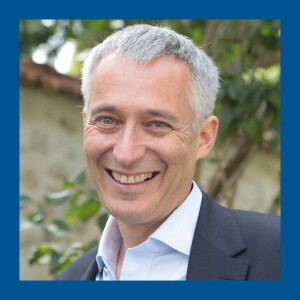
Even academic and professional paths that look straighforward from afar and in hindsight were built on highs and lows, opportunities, obstacles, time-outs. Today's conversation illustrates this perfectly and shows how these irregularities are part of what makes the journey interesting.
Jonathan Weitzman is a professor of genetics at the Université de Paris, founding director of the Centre for Epigenetics and Cell Fate, and director of the Magistère Masters in Genetics Porgram.
Join the Papa PhD Postgraduate Career Exploration Group!
What you’ll learn about in this episode:
Plans can and will change – be ready to adapt
The importance of taking your time to mature as a researcher
What you can gain by taking career training while in graduate school
How universities are changing the way they look at the potential of PhDs
Jonathan's unique approaches to graduate training
The opportunities and outlets that exist today for scientific writing and science communication
The importance of trying different things during graduate school to learn not only what you like, but what you're good at
This episode’s pearls of wisdom:
“When I became a professor, it was the beginning of a transition where we were being more honest with the students about the fact that most of them would not go into academic careers. And what we're trying to defend today is the idea that the PhD is just an excellent training for any career. That being in a lab and having a research project, and all the ups and downs of a PD is just a fantastic training for anything afterwards.”
“I think there is a transition in many science-related careers. If you were the science correspondent of a national newspaper 20 years ago, you didn't need a PhD. Today, you need a PhD. If you were a patent lawyer, even in the life sciences, 20 years ago you didn't need a PhD. Today, you do. So there are many professions where today, if you want to do those successfully and compete you need to have a PhD, whether it is patent law, whether it is science communication, and I could go on and on.”
Jonathan's links: Twitter – @Epigenetique; LinkedIn.com/in/JonathanWeitzman; TEDx Talk – Who am I ? Learning to read the genes in your unique genome book.
Leave a review on Podchaser !
Support the show on Patreon !
You might also like the following episodes:
Chris Kent – Biotech Startup CEO: PapaPhD.com/11
Sathy Rajasekharan– Science communication: PapaPhD.com/16
Fábio Rosa (PhD student), Gil Costa (scientific illustrator), Patrícia Monteiro (principal investigator): PapaPhD.com/24
Margaret Magdesian – Biotech Startup CEO: PapaPhD.com/21
Launching your podcast?
If you're preparing to launch your podcast, you may be asking yourself what hosting platform to use.
I launched Papa PhD on Bluebrry because I wanted a professional service that would interface with my WordPress website, that would robustly broadcast Papa PhD to all platforms, and that would allow me to grow my podcast in years to come.
And these are the reasons why I'm recommending the Blubrry podcast hosting and syndication platform.
Click on the button below or use the promo code PapaPhDBlue on the Blubrry website to unlock a one month free trial:
Try one free month with Blubrry !
If you are starting a serious podcast project, do consider one of the first podcasting hosts out there, offering state of the art services, including IAB certified statistics, based on years of experience in the podcasting space.
Happy podcasting!

Thursday Apr 16, 2020
Thursday Apr 16, 2020
Dans cette deuxième partie de l'entrevue avec Martin Primeau, on a discuté plus en détail de la profession de communicateur scientifique dans le milieu journalistique et dans un milieu institutionnel et Martin a partagé ses conseils pour une transition sereine et productive vers la vie professionnelle après la maîtrise ou le doctorat.
Spécialiste de la communication scientifique, Martin Primeau œuvre présentement comme conseiller en relations médias à Polytechnique Montréal. Titulaire d'un doctorat en biologie cellulaire de l'Université McGill et d'une maîtrise en biochimie de l'Université de Montréal, il avait accroché son sarrau en 2010 pour se consacrer à une carrière en journalisme, écrivant notamment pour LaPresse+, les magazines les Débrouillards et l'hebdomadaire agricole La Terre de Chez Nous. Il a aussi préparé des reportages télé pendant 3 ans pour l'émission de vulgarisation scientifique Le Code Chastenay à Télé-Québec en plus de consacrer une bonne partie de son temps à la rédaction de textes pour le milieu des affaires.
Joignez-vous au groupe d'exploration de carrières Papa PhD !
Ce que vous apprendrez dans cet épisode :
Les défis auxquels peut s'affronter un journaliste scientifique
La question des fausses représentations soi-disant scientifiques ou des instrumentalisations biaisées de résultats scientifiques dans les médias
L'intérêt essayer des choses avec lesquelles on n'est pas familier
L'importance de faire du bénévolat dans votre domaine d'intérêt pour développer des compétences connexes
Le rôle du métier de journaliste
L'effet accélérateur de la bourse Fernand Séguin pour ceux qui désirent faire du journalisme scientifique
Les magazines et autres publications universitaires comme rampes de lancement dans le domaine journalistique
Les perles de sagesse de Martin :
« Oui, nos scientifiques doivent parler. Souvent, ce qui les retient de parler, c'est, justement que comme scientifique on apprend à se limiter aux faits et pas nécessairement à donner notre opinion. Et puis, des fois, ça fait en sorte qu'on pense qu'on n'a pas à dire un mot sur une question qui est d'intérêt public parce que, dans le fond, ça sort un petit peu de notre expertise. »
« Certain que c'est une bonne idée d'aller acquérir des nouvelles compétences parce que par l'exercice, en essayant, par exemple, de rédiger, on acquiert des compétences, on apprend, on vit une expérience qui est différente de celles auxquelles on est confronté dans la vie de tous les jours. Si on n'élargit pas sa zone de confort, eh bien, on ne grandit pas. Il ne faut pas hésiter à repousser les frontières, à essayer des choses avec lesquelles on n'est pas familer. Et puis on se découvre, en même temps. »
Les liens de Martin : Linkedin.
Laissez une évaluation sur Podchaser !
Soutenez Papa PhD sur Patreon !
Vous aimerez aussi ces épisodes :
Carine Monat – Journalisme scientifique : PapaPhD.com/40
Kirsten Sanford – Communication scientifique (anglais) : PapaPhD.com/13
Simon Landry – Courtier de connaissances : PapaPhD.com/14
Valérie Levée – Journalisme : PapaPhD.com/38
Envie de lancer un podcast?
Mon ami et collègue podcasteur Marco Bernard et son Académie du Podcast ont ce qu'il vous faut si vous avez une idée, mais qu'il vous manque les connaissances pour mettre en place votre podcast.
Dans la formation Podcasting 101, Marco a préparé plus de 20 vidéos et des tutoriels où il explique quel équipement se procurer, comment faire le montage et comment le mettre en ondes sur les principales plateformes. Cliquez maintenant pour vous inscrire et avoir accès à la communauté !
Formation Podcasting 101 de l'Académie du Podcast
Dans la formation Podcaster Pro, il a pensé aux professionnels et créateurs qui non seulement veulent lancer leur podcast, mais ont des objectifs précis à atteindre avec celui-ci. C'est en pensant à eux qu'il a préparé plus de 80 vidéos et des tutoriels où il explique non seulement comment lancer son podcast,
Wednesday Apr 15, 2020
Wednesday Apr 15, 2020
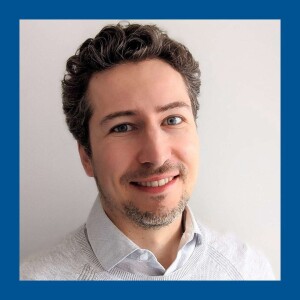
Dans l'épisode d'aujourd'hui de Papa PhD, je partage avec vous la première partie d'une conversation très agréable qui s'est déroulée en personne au Café Java Mythe, dans le quartier de Villeray, à Montréal, avec Martin Primeau. Au long de cette première partie, on a discuté tu trajet académique de Martin et de comment il a cultivé sa passion pour le journalisme et préparé son entrée dans ce domine passionnant de la communication scientifique.
Spécialiste de la communication scientifique, Martin Primeau œuvre présentement comme conseiller en relations médias à Polytechnique Montréal. Titulaire d'un doctorat en biologie cellulaire de l'Université McGill et d'une maîtrise en biochimie de l'Université de Montréal, il avait accroché son sarrau en 2010 pour se consacrer à une carrière en journalisme, écrivant notamment pour LaPresse+, les magazines les Débrouillards et l'hebdomadaire agricole La Terre de Chez Nous. Il a aussi préparé des reportages télé pendant 3 ans pour l'émission de vulgarisation scientifique Le Code Chastenay à Télé-Québec en plus de consacrer une bonne partie de son temps à la rédaction de textes pour le milieu des affaires.
Joignez-vous au groupe d'exploration de carrières Papa PhD !
Ce que vous apprendrez dans cet épisode :
Oui – vous pouvez mettre votre doctorat en pauseLe potentiel d'initiatives telles que la bourse Fernand SéguinLa valeur des stages et des formations pour la réorientation de votre carrièreComment ce que vous faites aujourd'hui peut avoir des retombées inattendues plus tard dans votre parcours professionnelLe cheminement académique n'est pas pour tous – et c'est OK.Se détacher de ses résultats comme technique pour maintenir l'équilibre émotionnel et mentalL'effet pernicieux que peut avoir la vie dans le microcosme qu'est un laboratoire de recherche pour notre image de nous-même et de notre succèsLes perles de sagesse de Martin :« Il y a de la science, encore, dans nos médias écrits, mais il y en a de moins en moins et une façon d'en parler, à mon avis, c'est à travers le cahier "Affaires" où on a à parler d'entreprises de haute technologie, des pharmaceutiques, des biotechs. »« Les gens de l'extérieur ne perçoivent pas une personne qui a abandonné un doctorat ou qui a arrêté à la maîtrise comme étant une personne qui a vécu un échec. Et puis la vie nous prépare – il y a tellement à apprendre dans le milieu du travail, des choses qu'on n'apprend pas en étant aux études que de multiplier le nombres d'expériences, c'est vraiment là qu'on fait des gains, dans le fond. »« [En tant que PhD] des gens que j'ai croisé avaient comme appréhension, par exemple, que dans mon style d'écriture, comme journaliste, j'allais être très froid, très cartésien. Je suis quand même cartésien, mais je vis quand même des émotions et je suis capable de transposer des émotions dans mes textes. Et ça, on me disait qu'on avait été surpris de ça, mais c'est ça – on n'est pas des robots, on est des humains comme d'autres. »« Il faut se le dire: il y a une forme de plafond de verre – on forme des étudiants au doctorat, c'est-à-dire, puis des doctorants et puis, au final, il y a seulement une partie de ceux-là qui ont une place en académie. Les professeurs qui sont embauchés ont des postes à vie, donc les places sont limitées. Je n'avais pas le goût de m'éloigner de Montréal, ma vie est ici. Et puis j'avais des amis, aussi, qui étaient partis, plus âgés, qui avaient fait des post-doc, puis qui restaient à l'étranger pendant plusieurs années. Ils cherchaient à revenir – impossible pour eux... Je ne voulais pas vivre ça. »Les liens de Martin : Linkedin.
Laissez une évaluation sur Podchaser !
Soutenez Papa PhD sur Patreon !
Vous aimerez aussi ces épisodes :
Carine Monat – Journalisme scientifique : PapaPhD.com/40Kirsten Sanford – Communication scientifique (anglais) : PapaPhD.com/13Simon Landry – Courtier de connaissances : Pap...

Thursday Apr 09, 2020
Thursday Apr 09, 2020
Warning: Please note that this episode mentions different mental health issues, including suicidal ideation.
Susanna L. Harris is a PhD student at the University of North Carolina in Chapel Hill where she studies how different types of bacteria stick to the roots of plants. Susanna started PhD Balance to empower academics during and after Grad School, with a special focus on supporting academics' mental health. Susanna can be found on Instagram and Twitter at @susannalharris while PhD Balance can be found at @PhD_Balance and at www.PhDBalance.com.
Join the Papa PhD Postgraduate Career Exploration Group!
What you’ll learn about in this episode:
How Susanna learned a significant proportion of graduate students were struggling with mental health issues
How she decided to establish a platform to connect with them and how it grew into a community
The important skill of accepting help and support from others
Upcoming PhD Balance initiatives
This episode’s pearls of wisdom:
“I just wanted to make a little space where peolpe could come together and some of us could share our stories – kind of get that catharsis of just saying something out loud.”
“I'm not one in a hundred people – I mean, if there is ten people in a room, there's four of us that are currently struggling.”
“For people who don't know what impostor syndrome is, it's basically the idea that you have somehow ended up in this place where you are at a lower caliber or quality than everyone else around you, and that you're probably about three missteps away from everyone turning and looking at you and outwardly saying "you just don't belong here. You're fraud and suddenly, everything that you have said comes into question and we've realized that you're a liar".”
“The first two steps of getting help for your mental health and building a healthier space for yourself are: first realizing something might not be right or something might be holding you back in terms of your mood, your productivity, your ability to sleep and build relationships. And the second piece is really deciding that it's worth it to get that help, that you're worth it to try to get that help.”
“An advisor is somebody that you go to for a specific situation, a specific set of questions. A mentor is somebody who is going to see your success as, in some way, fulfilling to them and understands that your success does not look like their success. They're not acting as a guide to get you through their path, but rather somebody that can maybe be on the lookout and look around and say "Hey! That might be a good opportunity", or "I seem to see that you're struggling with this obstacle – can I give you some of my perspective?"”
Susanna's links: Twitter – @SusannaLHarris @PhD_Balance; Instagram – @SusannaLHarris @PhD_Balance; LinkedIn.com/in/SusannaLHarris; PhDBalance.com; Susanna's YouTube channel.
Leave a review on Podchaser !
Support the show on Patreon !
You might also like the following episodes:
Élodie Chabrol – Science communication (French): PapaPhD.com/33
Fiona Robinson – Patient education: PapaPhD.com/6
Kelly Bullock – Science illustration: PapaPhD.com/9
Kirsten Sanford – Science communication: PapaPhD.com/13
Launching your podcast?
If you're preparing to launch your podcast, you may be asking yourself what hosting platform to use.
I launched Papa PhD on Bluebrry because I wanted a professional service that would interface with my WordPress website, that would robustly broadcast Papa PhD to all platforms, and that would allow me to grow my podcast in years to come.
And these are the reasons why I'm recommending the Blubrry podcast hosting and syndication platform.
Click on the button below or use the promo code PapaPhDBlue on the Blubrry website to unlock a one month free trial:
Try one free month with Blubrry !
If you are starting a serious podcast project, do consider one of the first podcasting hosts out there, offering state of the art services,